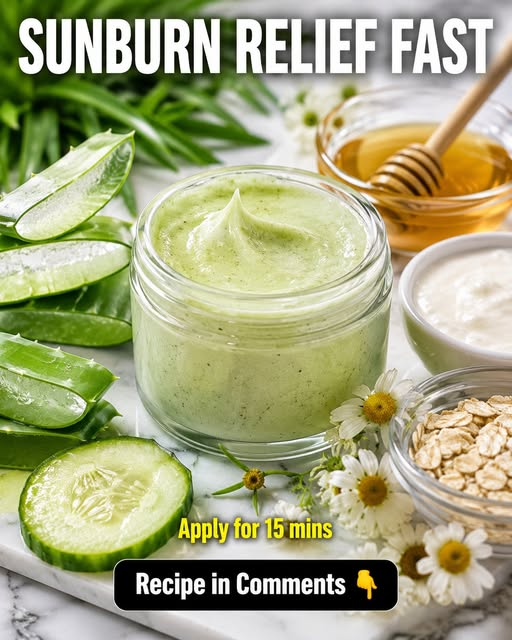
Sunburn is an inflammatory skin injury caused by excessive ultraviolet exposure. The affected skin may feel hot, painful, tight, itchy or swollen, and deeper burns can blister. Cooling the skin and restoring lost moisture can ease discomfort within one to three days, but no homemade paste can reverse ultraviolet damage in 15 minutes. Mild sunburn commonly improves within about seven days. The remedies below are intended only for mild sunburn on intact skin; do not apply homemade mixtures to open blisters, infected areas or severely burned skin. (American Academy of Dermatology)
The strongest clinical guidance supports cool baths or compresses, fragrance-free moisturising care, colloidal oatmeal and moisturisers containing aloe vera or soy. Aloe is commonly recommended for soothing, although one controlled sunburn trial found that aloe cream was not more effective than placebo. It should therefore be viewed as a cooling moisturising ingredient, not a cure. The complete mixtures below have not been studied as finished medical treatments, but their core ingredients have evidence supporting hydration, barrier protection or relief of irritation. (PubMed)
Remedy 1: Cooling Aloe and Oat Gel for Normal Skin
Ingredients and Their Scientific Working
- Pure aloe vera gel – 1 tablespoon: Aloe provides lightweight moisture and a cooling sensation. Research supports its moisturising properties, although evidence specifically for treating sunburn is mixed.
- Colloidal oatmeal – 1 teaspoon: Oat compounds support the skin barrier and have demonstrated anti-inflammatory, moisturising and itch-relieving effects.
- Vegetable glycerin – ¼ teaspoon: Glycerin attracts water into the outer skin layer and reduces dryness and tightness.
- Rice starch – ½ teaspoon: Rice starch forms a soft protective film and has been shown to support recovery of a damaged skin barrier.
- Strong cooled green tea – 1 teaspoon: Green-tea polyphenols have demonstrated anti-inflammatory effects against ultraviolet injury in experimental human research.
- Cooled boiled water – 1 teaspoon: It thins the gel and provides immediate gentle cooling.
How This Remedy Works Scientifically
The cool water removes some surface heat, while aloe and glycerin improve hydration. Oatmeal and rice starch form a soothing layer that reduces the rough, tight feeling caused by barrier damage. Green-tea research has primarily examined standardised extracts rather than homemade tea, so it should be considered an antioxidant addition rather than a proven sunburn treatment. (PubMed)
Procedure
Mix the oatmeal and rice starch in a clean bowl. Add the aloe, glycerin, green tea and water. Refrigerate the mixture for five minutes, but do not freeze it.
Apply a thin layer to intact sunburned skin without rubbing. Leave it on for 10–15 minutes and rinse gently with cool or lukewarm water. Pat dry with a soft towel.
How Often to Apply
Apply two or three times daily for three to five days.
Initial Results
Heat and tightness may begin easing after the first application. Mild tenderness may improve within one to three days, although redness and peeling can take several more days to settle.
Remedy 2: Two-Zone Rice and Green-Tea Compress for Combination Skin
Ingredients and Their Scientific Working
- Cooled green tea – 2 tablespoons: Its catechins provide antioxidant and anti-inflammatory activity.
- Pure aloe vera gel – 1 tablespoon: Adds non-greasy hydration to both dry and oily areas.
- Rice starch – 1 teaspoon: Produces a light gel that does not heavily coat oilier areas.
- Colloidal oatmeal – ½ teaspoon: Helps protect drier sections and reduce itching.
- Vegetable glycerin – ⅛ teaspoon: A small quantity improves hydration without excessive stickiness.
- Cooled boiled water – 1 tablespoon: Reduces the concentration and keeps the preparation cool.
How This Remedy Works Scientifically
Combination skin may become oily around the forehead and nose while feeling dry over the cheeks. This formula uses water-based ingredients rather than thick oils. Rice starch keeps the treatment light, while oatmeal and glycerin provide additional comfort to dry or tight areas. Human studies indicate that topical green-tea extracts can reduce ultraviolet-induced redness, but ordinary brewed tea is less concentrated and should not be expected to produce the same clinical effect. (PubMed)
Procedure
Combine all ingredients and soak a clean, soft cotton cloth in the liquid. Wring it out gently.
Place the compress over the burned area for 10 minutes. Apply a little aloe-oat mixture afterward to dry cheeks or other tight areas, using less over naturally oily regions.
How Often to Apply
Use twice daily for three to five days.
Initial Results
The cool compress may provide immediate temporary relief. Dryness and surface tightness may improve within 24–72 hours.
Remedy 3: Oil-Free Aloe and Oat Relief Gel for Oily Skin
Ingredients and Their Scientific Working
- Pure aloe vera gel – 1½ tablespoons: Hydrates without leaving a thick oily coating.
- Colloidal oatmeal – 1 teaspoon: Reduces irritation and supports the damaged barrier.
- Rice starch – 1 teaspoon: Helps control the sticky sensation and creates a smooth gel.
- Cooled green tea – 1 tablespoon: Supplies cooling moisture and antioxidant polyphenols.
- Vegetable glycerin – ⅛ teaspoon: Prevents dehydration without making the mixture excessively heavy.
- Cooled boiled water – 1 teaspoon: Adjusts the consistency for easy application.
How This Remedy Works Scientifically
Oily skin can still become dehydrated after ultraviolet exposure. Applying strong cleansers or drying ingredients may worsen irritation and make the skin produce an uncomfortable tight feeling. This oil-free mixture focuses on cooling, hydration and barrier support. Colloidal oatmeal has produced significant clinical improvements in skin hydration, dryness and barrier function, although those studies were not conducted specifically on sunburn. (PubMed)
Procedure
Stir the dry ingredients together, then add aloe, tea, glycerin and water. Apply a very thin layer without massaging the skin.
Leave it on for 10 minutes and rinse. Do not use a facial scrub, cleansing brush or exfoliating acid afterward.
How Often to Apply
Apply twice daily for three days, then once daily until the skin feels comfortable.
Initial Results
The skin may feel cooler and less tight after the first treatment. Redness may begin settling in two or three days, depending on burn severity.
Remedy 4: Oat and Glycerin Recovery Mask for Dry Skin
Ingredients and Their Scientific Working
- Colloidal oatmeal – 1 tablespoon: Helps relieve dryness, scaling and itching while supporting barrier repair.
- Pure aloe vera gel – 1 tablespoon: Provides lightweight water-based moisture.
- Vegetable glycerin – ¼ teaspoon: Draws water into the outer layer of the skin.
- Rice starch – ½ teaspoon: Forms a gentle protective layer.
- Cooled boiled water – 1½ tablespoons: Cools the skin and prevents the mask from becoming thick or abrasive.
- Sunflower seed oil – 2 drops: Provides a small amount of emollient support, but it should be added only after the skin is no longer hot and at least 24 hours have passed.
How This Remedy Works Scientifically
Dry skin often becomes very tight after sunburn because the damaged barrier loses water. Glycerin and aloe improve hydration, while oatmeal and rice starch support the surface barrier. Avoid heavy oils during the hot, early stage of sunburn because they may trap heat. The two drops of sunflower oil are optional and should only be used later, when the skin has cooled and has no blisters. (HSE.ie)
Procedure
For the first 24 hours, mix all ingredients except sunflower oil. Apply a thin layer for 10–15 minutes and rinse gently.
After the heat has disappeared, two drops of sunflower oil may be mixed into a fresh portion for additional softness. Never apply it over open or weeping skin.
How Often to Apply
Use twice daily for three to five days.
Initial Results
Dryness may feel better after one or two applications. Tightness and flaking may begin improving within two to three days, although peeling should never be pulled off.
Remedy 5: Minimal Colloidal Oatmeal Soak for Sensitive Skin
Ingredients and Their Scientific Working
- Colloidal oatmeal – 1 tablespoon: Provides soothing, protective and anti-inflammatory activity.
- Rice starch – 1 teaspoon: Supports a soft barrier without fragrance.
- Cooled boiled water – ½ cup: Gently cools the affected skin.
- Vegetable glycerin – ⅛ teaspoon: Improves hydration in a very low concentration.
- Pure aloe vera gel – 1 teaspoon: Provides extra moisture but may be omitted if aloe has caused reactions previously.
How This Remedy Works Scientifically
Sensitive skin is more likely to react when several herbs, fragrances or foods are combined. This simplified treatment relies mainly on oatmeal and cooling, both of which are included in dermatological sunburn guidance. Oatmeal has demonstrated improvements in dryness, roughness and itching in clinical studies. (American Academy of Dermatology)
Procedure
Mix the oatmeal and rice starch into the water. Add glycerin and aloe only when previously tolerated.
Soak a clean cloth, wring it gently and hold it over the sunburn for 10 minutes. Do not rub or massage. Stop immediately if the skin starts burning or itching more intensely.
How Often to Apply
Use two or three times daily for three to five days.
Initial Results
Cooling relief may be noticeable immediately. Sensitivity and tightness may begin improving within one to three days.
Final Tips for Safe and Faster Sunburn Relief
Get out of the sun immediately and protect the affected area with loose, soft clothing. Take cool showers or baths, but never apply ice directly because extreme cold can cause additional tissue injury. Drink extra water, as sunburn can shift fluid toward the skin and contribute to dehydration. (American Academy of Dermatology)
Do not use lemon juice, vinegar, baking soda, toothpaste, undiluted essential oils or alcohol-based products. Avoid raw honey on blistered or broken skin; honey used medically for burns is sterilised medical-grade honey, not ordinary kitchen honey. Do not pop blisters or pull peeling skin.
Once the sunburn has settled, prevent another burn with shade, protective clothing and broad-spectrum, water-resistant sunscreen with SPF 30 or higher. Repeated sunburn contributes to premature skin ageing and increases the risk of skin cancer. (American Academy of Dermatology)
Diet Plan During Sunburn Recovery
No food can erase sunburn, but adequate fluids and balanced meals support normal tissue recovery.
Morning: Drink water and eat oatmeal with plain yoghurt and berries, or eggs with whole-grain bread.
Mid-morning: Choose a water-rich fruit such as watermelon, orange, melon, strawberries or cucumber.
Lunch: Eat lentils, beans, fish or chicken with vegetables and brown rice or whole-grain roti.
Snack: Have plain yoghurt, fruit or a small handful of nuts.
Dinner: Choose fish, eggs, beans or lean meat with leafy vegetables and soup.
Hydration: Drink water regularly throughout the day. During hot weather, heavy sweating or mild dehydration, an oral rehydration drink may be appropriate, particularly when advised by a healthcare professional.
Continue cooling care and hydration until the skin is comfortable and fully healed, usually about three to seven days for a mild burn. See a doctor if the burn is not improving after a week.
Seek medical attention sooner for large blisters, blisters on the face, hands or genitals, severe swelling, worsening pain, pus, red streaks, fever, chills, nausea, dizziness, confusion, dehydration, faintness, eye pain or vision changes. Babies and young children with sunburn should also receive medical advice. (American Academy of Dermatology)
References for the above remedy
- American Academy of Dermatology Association. How to Treat Sunburn.
https://www.aad.org/public/everyday-care/injured-skin/burns/treat-sunburn - Mayo Clinic. Sunburn: Symptoms and Causes.
https://www.mayoclinic.org/diseases-conditions/sunburn/symptoms-causes/syc-20355922 - Health Service Executive. Sunburn: Treatment and Warning Signs.
https://www2.hse.ie/conditions/sunburn/ - Puvabanditsin P, Vongtongsri R. Efficacy of Aloe Vera Cream in Prevention and Treatment of Sunburn and Suntan.
https://pubmed.ncbi.nlm.nih.gov/16623024/ - Dal’Belo SE, et al. Moisturizing Effect of Cosmetic Formulations Containing Aloe Vera Extract.
https://pubmed.ncbi.nlm.nih.gov/17026654/ - Capone K, et al. Effects of Colloidal Oatmeal on Skin Barrier Function and Hydration.
https://pubmed.ncbi.nlm.nih.gov/32484623/ - Reynertson KA, et al. Anti-Inflammatory Activities of Colloidal Oatmeal.
https://pubmed.ncbi.nlm.nih.gov/25607907/ - Breternitz M, et al. Glycerol-Based Emollient Improves Skin Hydration and Barrier Function.
https://pubmed.ncbi.nlm.nih.gov/18025807/ - De Paepe K, et al. Effect of Rice Starch on Damaged Skin-Barrier Function.
https://pubmed.ncbi.nlm.nih.gov/12353708/ - Elmets CA, et al. Cutaneous Photoprotection from Ultraviolet Injury by Green Tea Polyphenols.
https://pubmed.ncbi.nlm.nih.gov/11209110/