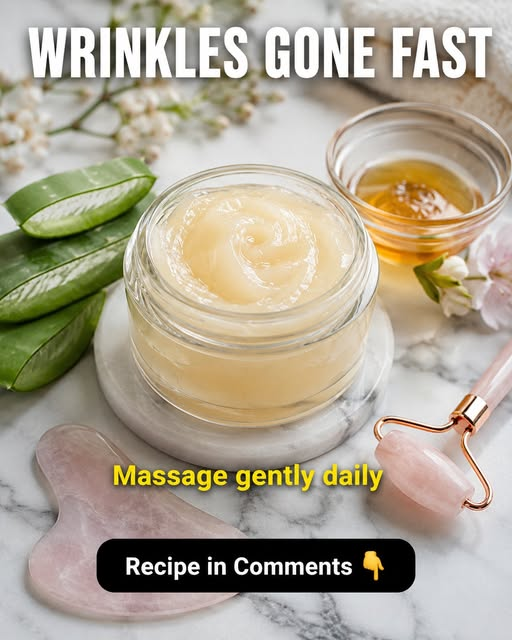
Fine lines often look deeper when the skin is dry, irritated or repeatedly exposed to sunlight. A moisturising mask can temporarily plump the surface, soften rough texture and create a fresher appearance within one to three days. However, natural remedies cannot permanently erase established wrinkles overnight because deeper lines involve gradual changes in collagen, elastin, facial movement and skin thickness. Dermatologists note that moisturisers may soften fine lines within days, whereas meaningful anti-ageing results usually require at least six weeks and sometimes three months. Daily sun protection remains more effective for preventing premature wrinkles than any homemade facial mask. (American Academy of Dermatology)
The individual ingredients below have research supporting hydration, barrier protection or photoageing care. The complete homemade mixtures have not been tested as finished clinical treatments, so results will be milder and less predictable than standardised formulations used in studies.

Remedy 1: Centella, Cucumber and Aloe Mask for Normal Skin
Ingredients and Their Scientific Benefits
- Centella asiatica powder – ¼ teaspoon: Centella contains triterpenes associated with collagen support. A systematic review found promising improvements in lip and eye-area wrinkles, although formulations and study quality varied.
- Pure aloe vera gel – 1 tablespoon: Provides water-binding polysaccharides that improve surface hydration.
- Fresh cucumber juice – 1 tablespoon: Cools the skin and supplies water, helping relieve temporary dryness.
- Rice starch – 1 teaspoon: Creates a smooth film and supports a softer surface appearance.
- Colloidal oatmeal – ½ teaspoon: Helps strengthen the moisture barrier and calm irritation.
- Vegetable glycerin – ¼ teaspoon: Attracts water into the outer skin layer and temporarily plumps dehydration lines. (Europe PMC)
How This Remedy Works Scientifically
Centella is the main age-supporting botanical, while aloe, cucumber and glycerin improve hydration. Rice starch and oatmeal make rough surface cells lie more evenly, helping the face reflect light more smoothly. Ordinary Centella powder is less standardised than the extracts studied clinically, so it should not be expected to reproduce clinical-trial results.
Procedure
Mix all ingredients into a smooth paste. Apply a thin layer to freshly cleansed skin, avoiding the eyelids and lips. Leave it on for eight to ten minutes and rinse with lukewarm water. Apply moisturiser while the face is still slightly damp.
How Often to Apply
Use three times weekly for six to eight weeks.
Initial Results
The face may feel softer after one use. Dehydration lines may look less visible within two or three days, while structural wrinkles require considerably longer.
Remedy 2: Soy and Green-Tea Firming Veil for Combination Skin
Ingredients and Their Scientific Benefits
- Unsweetened soy milk – 1 tablespoon: Soy compounds have been studied for improvements in photoaged skin texture, uneven tone and fine wrinkles.
- Strong cooled green tea – 1 tablespoon: Supplies antioxidant and anti-inflammatory catechins.
- Pure aloe vera gel – 1 tablespoon: Hydrates dry cheeks without heavily coating the T-zone.
- Rice starch – 1 teaspoon: Absorbs some surface oil and forms a lightweight mask.
- Colloidal oatmeal – ½ teaspoon: Protects dry or easily irritated areas.
- Sunflower seed oil – 2 drops: Adds a small amount of barrier-supporting linoleic acid to drier sections. (PMC)
How This Remedy Works Scientifically
A 12-week study of a stabilised soy moisturiser reported improvements in skin tone and texture, while clinical green-tea research found changes in elastic tissue but no clearly visible improvement after eight weeks. Therefore, this remedy primarily provides hydration and antioxidant support rather than rapid wrinkle removal.
Procedure
Combine the rice starch and oatmeal. Add soy milk, green tea and aloe, followed by the sunflower oil. Apply a little more to dry cheeks and less to the forehead and nose. Leave for ten minutes and rinse without scrubbing.
How Often to Apply
Apply on alternate days for five days, then continue two or three times weekly.
Initial Results
Dry areas may feel smoother after one or two applications. The complexion may appear more balanced within three days, but deeper lines will remain.
Remedy 3: Green-Tea and Rice Gel for Oily Skin
Ingredients and Their Scientific Benefits
- Strong cooled green tea – 2 tablespoons: Green-tea polyphenols help limit oxidative and inflammatory stress associated with ultraviolet exposure.
- Pure aloe vera gel – 1 tablespoon: Supplies lightweight moisture without a rich oil coating.
- Rice starch – 1 teaspoon: Thickens the gel and reduces excess surface shine.
- Cucumber juice – 1 teaspoon: Adds cooling hydration.
- Colloidal oatmeal – ½ teaspoon: Prevents the treatment from becoming overly drying.
- Vegetable glycerin – ⅛ teaspoon: Maintains hydration at a low, non-heavy concentration. (PubMed)
How This Remedy Works Scientifically
Oily skin can still be dehydrated, and dehydration makes fine lines and uneven texture more noticeable. Green tea provides antioxidant activity, while aloe and glycerin add water. Rice starch reduces temporary shine, and oatmeal helps prevent the irritation that can follow excessive cleansing.
Procedure
Blend all ingredients until no lumps remain. Apply a very thin layer to clean skin without rubbing active pimples. Leave it on for eight minutes, rinse and use a lightweight moisturiser.
How Often to Apply
Use three times weekly for four to six weeks.
Initial Results
Excess shine may appear reduced after the first application. Skin may look smoother and better hydrated within two to three days.
Remedy 4: Flaxseed, Avocado and Sunflower Mask for Dry Skin
Ingredients and Their Scientific Benefits
- Fresh flaxseed gel – 1 tablespoon: Its mucilage creates a flexible, moisture-holding film over dry skin.
- Finely mashed avocado – 1 tablespoon: Supplies emollient plant lipids that soften rough surface cells.
- Sunflower seed oil – ½ teaspoon: Supports the skin barrier and reduces moisture loss.
- Raw honey – ½ teaspoon: Functions as a humectant and prevents the mask from drying hard.
- Vegetable glycerin – ¼ teaspoon: Draws water into the outer skin layer.
- Colloidal oatmeal – 1 teaspoon: Improves barrier comfort and reduces dryness.
- Pure aloe vera gel – 1 teaspoon: Balances the oil-rich ingredients with water-based hydration. (PubMed)
How This Remedy Works Scientifically
Dryness exaggerates wrinkles because rough surface cells reflect light unevenly. Flaxseed gel, honey and glycerin hold moisture near the surface, while avocado and sunflower oil slow its evaporation. Oatmeal supports the weakened barrier. These effects can temporarily plump fine lines, but they do not replace lost dermal collagen.
Procedure
Combine the flaxseed gel, avocado and oatmeal until smooth. Add aloe, honey, glycerin and sunflower oil. Apply to clean, slightly damp skin for ten minutes. Rinse before it becomes completely dry and follow with moisturiser.
How Often to Apply
Apply three times weekly for four weeks.
Initial Results
Tightness may improve after the first treatment. Dry fine lines may appear softer within one to three days.
Remedy 5: Oat and Rice Barrier Mask for Sensitive Skin
Ingredients and Their Scientific Benefits
- Colloidal oatmeal – 1 tablespoon: Supports hydration and barrier recovery while calming irritation.
- Rice starch – 1 teaspoon: Forms a gentle protective layer without fragrance.
- Cooled boiled water – 1½ tablespoons: Creates a simple hydrating base.
- Vegetable glycerin – ⅛ teaspoon: Helps retain water without using concentrated botanical extracts.
- Sunflower seed oil – 2 drops: Supplies a minimal amount of emollient lipid.
- Pure aloe vera gel – 1 teaspoon: Adds hydration but should be omitted when aloe has caused previous reactions. (PubMed)
How This Remedy Works Scientifically
Sensitive skin often looks older when irritation damages its barrier and increases dryness. This simplified mixture avoids turmeric, citrus juice, essential oils and fragrance. Oatmeal, glycerin and rice starch focus on restoring hydration rather than aggressively stimulating or exfoliating the skin.
Procedure
Mix all ingredients and patch-test the preparation on the inner arm for four to five days before facial use. When no reaction develops, apply it for five minutes and rinse gently. Stop immediately if it causes burning, itching or swelling.
How Often to Apply
Use every other day for five days, then twice weekly when well tolerated.
Initial Results
The skin may feel calmer and less tight within one to three days. Persistent wrinkles will require longer-term care.
Final Tips for Reducing Wrinkles
Apply broad-spectrum, water-resistant sunscreen with SPF 30 or higher every morning. Sunlight plays a major role in premature skin ageing, and repeated unprotected exposure can deepen lines and produce uneven pigmentation. Use shade, sunglasses and a wide-brimmed hat outdoors. (American Academy of Dermatology)
Cleanse gently and avoid sugar scrubs, lemon juice, baking soda, undiluted essential oils and vigorous facial massage. Irritation can make ageing signs more visible. A jade roller or gua sha tool may feel relaxing, but it cannot permanently remove wrinkles. Use clean tools with very light pressure and never massage inflamed, broken or sunburned skin.
Introduce only one remedy at a time. Wash bowls and applicators carefully, prepare water-containing masks fresh and discard leftovers. Visible hydration may begin within two or three days, but continue a tolerated routine for six to twelve weeks before judging changes in fine lines.
Sleep regularly, avoid smoking, limit alcohol and moisturise after cleansing. Established expression lines, deep forehead creases and sagging skin commonly require dermatologist-guided treatments rather than home masks.
Diet Plan for Younger-Looking Skin
Follow this balanced eating pattern for at least eight to twelve weeks.
Breakfast: Oatmeal with berries, ground flaxseed and plain yoghurt, or eggs with whole-grain bread and vegetables.
Mid-morning: Choose guava, kiwi, orange, papaya or berries. Vitamin C supports normal collagen formation, but eating extra vitamin C cannot instantly rebuild wrinkles. (PubMed)
Lunch: Eat lentils, beans, chicken or fish with leafy vegetables, salad and brown rice or whole-grain roti.
Snack: Have a small portion of walnuts, almonds, pumpkin seeds or unsweetened yoghurt.
Dinner: Choose fish, tofu, beans, eggs or lean meat with colourful vegetables.
Hydration: Drink according to thirst, activity and climate. Adequate fluid intake supports normal hydration, but excessive water will not erase wrinkles.
A healthy diet should include varied fruits, vegetables, legumes, nuts, seeds, whole grains and suitable protein sources while limiting excessive free sugars and highly processed foods. (World Health Organization)
Continue the selected remedy for six to twelve weeks and maintain sunscreen and gentle skincare long term. See a dermatologist when wrinkles or skin changes are accompanied by persistent redness, severe itching, scaling, sudden pigmentation, bleeding, a non-healing sore or a changing mole. Medical consultation is also appropriate when established wrinkles remain a major concern after three months of consistent care.
References for the above remedy
- American Academy of Dermatology Association. “11 Ways to Reduce Premature Skin Aging.”
https://www.aad.org/public/everyday-care/skin-care-secrets/anti-aging/reduce-premature-aging-skin - American Academy of Dermatology Association. “How to Maximize Results from Anti-Aging Skin-Care Products.”
https://www.aad.org/public/everyday-care/skin-care-secrets/anti-aging/maximize-anti-aging-products - Kongkaew C, et al. “Efficacy and Safety of Centella asiatica on Wrinkles: A Systematic Review.”
https://pubmed.ncbi.nlm.nih.gov/33413787/ - Wallo W, et al. “Efficacy of a Soy Moisturizer in Photoaging: A Double-Blind, Vehicle-Controlled Study.”
https://pubmed.ncbi.nlm.nih.gov/17941363/ - Chiu AE, et al. “Double-Blinded, Placebo-Controlled Trial of Green Tea Extracts in Photoaging Skin.”
https://pubmed.ncbi.nlm.nih.gov/16029678/ - Zamil DH, et al. “Dermatological Uses of Rice Products: Trend or True?”
https://pubmed.ncbi.nlm.nih.gov/35587098/ - Capone K, et al. “Effects of Colloidal Oatmeal on Skin Barrier Function and Hydration.”
https://pubmed.ncbi.nlm.nih.gov/32484623/ - Danby SG, et al. “Effect of Olive and Sunflower Seed Oil on the Adult Skin Barrier.”
https://pubmed.ncbi.nlm.nih.gov/22995032/ - Pullar JM, et al. “The Roles of Vitamin C in Skin Health.”
https://pubmed.ncbi.nlm.nih.gov/28805671/ - World Health Organization. “Healthy Diet.”
https://www.who.int/news-room/fact-sheets/detail/healthy-diet