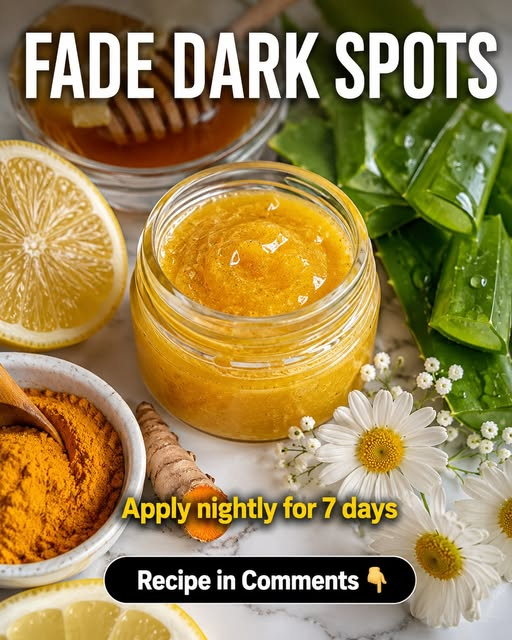
Dark spots can appear after acne, irritation, sun exposure, insect bites, hormonal changes or minor skin injuries. They develop when inflammation or light exposure stimulates excess melanin production. Although the image promises results in seven days, established pigmentation rarely disappears that quickly. Mild surface spots may gradually improve over several weeks, while deeper post-inflammatory pigmentation can take months. The first week should be viewed as the beginning of a gentle routine that reduces irritation, improves hydration and prevents new discoloration. Daily sun protection remains the most important step because ultraviolet and visible light can keep existing marks dark. (American Academy of Dermatology)
The ingredient evidence below comes mainly from studies of standardized aloe, soy, licorice, turmeric and oat formulations. Homemade masks are weaker and less predictable than tested cosmetic preparations, so they should support—not replace—dermatological treatment.
Why Raw Lemon Juice Is Not Included
The image shows lemon, but fresh lemon juice should not be applied directly to facial skin. Citrus juice contains light-sensitive plant compounds that can react with ultraviolet radiation and cause redness, burning, blisters or irregular pigmentation known as phytophotodermatitis. This can make the original dark spots worse rather than fading them. (PubMed)
Remedy 1: Aloe, Soy and Oat Brightening Mask for Normal Skin
Ingredients and Their Scientific Working
- Pure clear aloe vera gel, 1 teaspoon: Aloe contains aloesin-related compounds that can interfere with tyrosinase, an enzyme involved in melanin formation. A small human study found that isolated aloesin reduced ultraviolet-induced pigmentation, although whole homemade aloe gel may not provide the same concentration.
- Plain unsweetened soy milk, 1 teaspoon: Soy contains proteins that may reduce the transfer of melanin-containing structures into surface skin cells. Clinical evidence is strongest for stabilized soy extracts rather than kitchen soy milk.
- Colloidal oatmeal, 1 teaspoon: Oatmeal supports the skin barrier and reduces dryness and irritation that can contribute to post-inflammatory marks.
- Cooled green tea, 1 teaspoon: Green-tea polyphenols provide antioxidant and calming support.
- Vegetable glycerin, 2 drops: Glycerin attracts water into the outer skin layer, making dull, dehydrated skin look smoother.
- Pure honey, ¼ teaspoon: Honey helps retain moisture and gives the mask a soft consistency.
Aloesin and soy have some of the stronger clinical evidence among naturally derived pigmentation ingredients. Oatmeal and glycerin mainly improve hydration and barrier function rather than directly bleaching spots. (PubMed)
Procedure
Mix all ingredients in a clean bowl. Apply a thin layer to cleansed skin, avoiding the eyes, nostrils and lips. Leave it on for 8–10 minutes, then rinse gently with lukewarm water. Do not scrub the skin while removing it.
How Often to Apply
Apply on alternate evenings for five days. Thereafter, use it two or three times weekly.
Initial Results
Within one to three days, the skin may feel softer and appear more hydrated. Actual fading of dark spots usually requires several weeks of consistent care and sun protection.
Remedy 2: Licorice and Aloe Zone Mask for Combination Skin
Ingredients and Their Scientific Working
- Food-grade licorice-root powder, ¼ teaspoon: Licorice contains compounds such as glabridin and liquiritin that can influence melanin production and pigment distribution. Clinical studies have used measured licorice extracts, not ordinary powder.
- Pure aloe vera gel, 1 teaspoon: Provides soothing hydration while supplying naturally occurring aloesin-related compounds.
- Cooled green tea, 2 teaspoons: Creates a lightweight base suitable for the oily T-zone.
- Colloidal oatmeal, ½ teaspoon: Helps calm dry or irritated cheek areas.
- Vegetable glycerin, 2 drops: Supports hydration without adding a heavy oil layer.
- Jojoba oil, 1 drop: Provides light emollient support for dry areas only.
Licorice-containing formulations have demonstrated improvement in melasma and uneven pigmentation in clinical research, but meaningful changes were measured over several weeks rather than a few nights. (PubMed)
Procedure
Combine the licorice powder, aloe, tea, oatmeal and glycerin. Apply a thin layer across the face for five to eight minutes. Rinse thoroughly. Press one drop of jojoba oil onto dry cheeks only; avoid applying it heavily to the forehead and nose.
How Often to Apply
Use on alternate nights for five days, then continue twice weekly for four to eight weeks.
Initial Results
Dry zones may look smoother within two or three days. The T-zone should feel hydrated rather than greasy. Dark spots will require longer and should not be expected to disappear during the first week.
Remedy 3: Turmeric, Aloe and Green Tea Mask for Oily Skin
Ingredients and Their Scientific Working
- Turmeric powder, one very small pinch: Curcumin has antioxidant and anti-inflammatory activity and has affected melanogenesis pathways in laboratory research. Human evidence for kitchen turmeric masks remains limited.
- Pure aloe vera gel, 1 teaspoon: Supplies lightweight hydration and soothing support.
- Cooled green tea, 1 tablespoon: Provides a non-oily liquid base and antioxidant polyphenols.
- Colloidal oatmeal, ½ teaspoon: Reduces the need for harsh scrubbing and supports the barrier.
- Vegetable glycerin, 1 drop: Prevents excessive tightness after cleansing.
- Cooled boiled water, 1 teaspoon: Dilutes the mixture and reduces stickiness.
Turmeric research suggests possible dermatological benefits, but most positive studies involve controlled curcumin preparations. Using extra powder will not produce quicker fading and may stain or irritate the skin. (PubMed)
Procedure
Mix the ingredients into a thin paste. Apply lightly over dark marks and surrounding skin without covering inflamed or broken pimples. Leave it on for five minutes during the first use. Rinse well and cleanse away any yellow residue gently.
How Often to Apply
Apply every other evening for three to five days. Continue no more than twice weekly if the skin tolerates it.
Initial Results
The skin may appear calmer and less dull within three days. Acne marks will not vanish in seven days. Stop using the mixture if it causes burning, new pimples or persistent yellow staining.
Remedy 4: Honey, Licorice and Sunflower Mask for Dry Skin
Ingredients and Their Scientific Working
- Pure honey, 1 teaspoon: Helps hold moisture against the skin and softens flaky areas.
- Pure aloe vera gel, 1 teaspoon: Adds water-based hydration before oil is applied.
- Licorice-root infusion, 1 teaspoon: Provides a mild household source of licorice compounds, though it is less concentrated than clinical extracts.
- Colloidal oatmeal, 1 teaspoon: Supports a dry or weakened skin barrier.
- Vegetable glycerin, 3 drops: Increases water retention in the outer skin layer.
- Sunflower seed oil, 2 drops: Supplies linoleic-acid-rich emollient support and slows moisture loss.
Keeping dry skin comfortable is important because repeated irritation can stimulate additional pigmentation. Clinical oatmeal and glycerin preparations improve hydration and barrier measurements, while licorice extracts offer more direct pigment-modulating potential. (PubMed)
Procedure
Prepare the licorice infusion by steeping a small pinch of licorice-root powder in hot water for five minutes, then cool and strain it. Mix one teaspoon with honey, aloe, oatmeal and glycerin. Apply for 10 minutes and rinse. Press two drops of sunflower oil onto the damp face.
How Often to Apply
Use nightly for three days, then every other night for another two weeks.
Initial Results
Flaking and tightness may begin to improve within one to three days. Better hydration can make the complexion look brighter, but pigmentation usually fades much more slowly.
Remedy 5: Minimal Oat Barrier Mask for Sensitive Skin
Ingredients and Their Scientific Working
- Colloidal oatmeal, 1 teaspoon: Helps soothe dryness, roughness and irritation.
- Cooled boiled water, 1 tablespoon: Provides a simple, low-risk liquid base.
- Vegetable glycerin, 1 drop: Improves hydration when properly diluted.
- Pure aloe vera gel, ½ teaspoon: May calm the skin, although aloe can still cause allergy in some individuals.
- Sunflower seed oil, 1 drop: Reduces moisture loss without requiring vigorous massage.
Sensitive skin can develop new dark marks whenever it is irritated. This remedy therefore focuses on barrier support rather than aggressive “lightening.” Dermatologists advise stopping any skincare ingredient that burns or stings because irritation can worsen hyperpigmentation. (American Academy of Dermatology)
Procedure
Mix the oatmeal, water, glycerin and aloe. Patch-test before facial use. Apply a thin layer for three to five minutes without rubbing. Rinse with cool-to-lukewarm water and press one drop of sunflower oil onto dry areas.
How Often to Apply
Use once daily for three days. Continue on alternate days only when no itching, swelling, burning or redness develops.
Initial Results
The skin may feel calmer and less tight within two or three days. Preventing irritation may help stop new discoloration, but existing sensitive-skin pigmentation needs patience.
Final Tips
Patch-test every complete mixture for 24–48 hours. Prepare a fresh portion each time and discard leftovers because water-containing homemade masks lack preservatives. Keep bowls, spoons, towels and hands clean, and never scrub dark marks with sugar, salt, lemon peel or coarse turmeric.
Apply broad-spectrum sunscreen with SPF 30 or higher every morning. For persistent facial pigmentation, tinted sunscreen containing iron oxide provides added protection from visible light. Reapply during extended outdoor exposure and wear a hat when possible. (American Academy of Dermatology)
A healthier glow and smoother texture may begin within two to three days. Fine dehydration lines may also appear softer, but these remedies cannot remove deep wrinkles. Continue the suitable routine for four to eight weeks to assess pigmentation realistically.
Diet Plan to Support Healthy Skin
Breakfast: Oatmeal or whole-grain bread with eggs, plain yogurt or lentils. Add guava, orange, papaya, berries or another vitamin-rich fruit.
Mid-morning: Drink water and eat a small handful of almonds, walnuts, pumpkin seeds or roasted chickpeas.
Lunch: Choose whole-grain roti or brown rice with beans, lentils, fish or chicken. Add leafy vegetables, carrots, tomatoes and salad.
Evening snack: Select fresh fruit or unsweetened yogurt instead of sugary drinks and highly processed snacks.
Dinner: Eat cooked vegetables with a moderate portion of protein and whole grains.
Follow this diet pattern for at least four to eight weeks. A balanced diet supports general skin health, but no food can selectively erase dark spots. WHO recommends a varied eating pattern based on fruits, vegetables, pulses, whole grains, nuts, seeds and suitable protein while limiting free sugars, excess salt and unhealthy fats. (World Health Organization)
See a dermatologist if the spots spread, change shape or colour, bleed, itch continuously, become raised, or fail to improve after eight to twelve weeks. Seek professional care sooner for pregnancy-related melasma, severe acne, scarring or sudden unexplained pigmentation.
References for the above remedy
- American Academy of Dermatology. How to fade dark spots in darker skin tones.
URL: https://www.aad.org/public/everyday-care/skin-care-secrets/routine/fade-dark-spots - Choi S, et al. Aloesin inhibits hyperpigmentation induced by UV radiation. Clinical and Experimental Dermatology. 2002.
URL: https://pubmed.ncbi.nlm.nih.gov/12372097/ - Leyden J, et al. The mechanism of action and clinical benefits of soy for the treatment of hyperpigmentation. International Journal of Dermatology. 2011.
URL: https://pubmed.ncbi.nlm.nih.gov/21332714/ - Hollinger JC, et al. Are natural ingredients effective in the management of hyperpigmentation? A systematic review. Journal of Clinical and Aesthetic Dermatology. 2018.
URL: https://pubmed.ncbi.nlm.nih.gov/29552273/ - Costa A, et al. Association of emblica, licorice and belides as an alternative to hydroquinone in the clinical treatment of melasma. Anais Brasileiros de Dermatologia. 2010.
URL: https://pubmed.ncbi.nlm.nih.gov/21152784/ - Vaughn AR, Branum A, Sivamani RK. Effects of turmeric on skin health: A systematic review of the clinical evidence. Phytotherapy Research. 2016.
URL: https://pubmed.ncbi.nlm.nih.gov/27213821/ - Capone K, et al. Effects of colloidal oatmeal topical cream on skin microbiome and skin-barrier properties. Journal of Drugs in Dermatology. 2020.
URL: https://pubmed.ncbi.nlm.nih.gov/32484623/ - Korponyai C, et al. Effects of locally applied glycerol on skin hydration and skin-barrier function. International Journal of Cosmetic Science. 2017.
URL: https://pubmed.ncbi.nlm.nih.gov/27349297/ - Harshman J, et al. Lemons in the Arizona sunshine: Furocoumarins leading to phytophotodermatitis and burn-like injuries. Journal of Burn Care and Research. 2018.
URL: https://pubmed.ncbi.nlm.nih.gov/29324427/ - World Health Organization. Healthy diet.
URL: https://www.who.int/news-room/fact-sheets/detail/healthy-diet