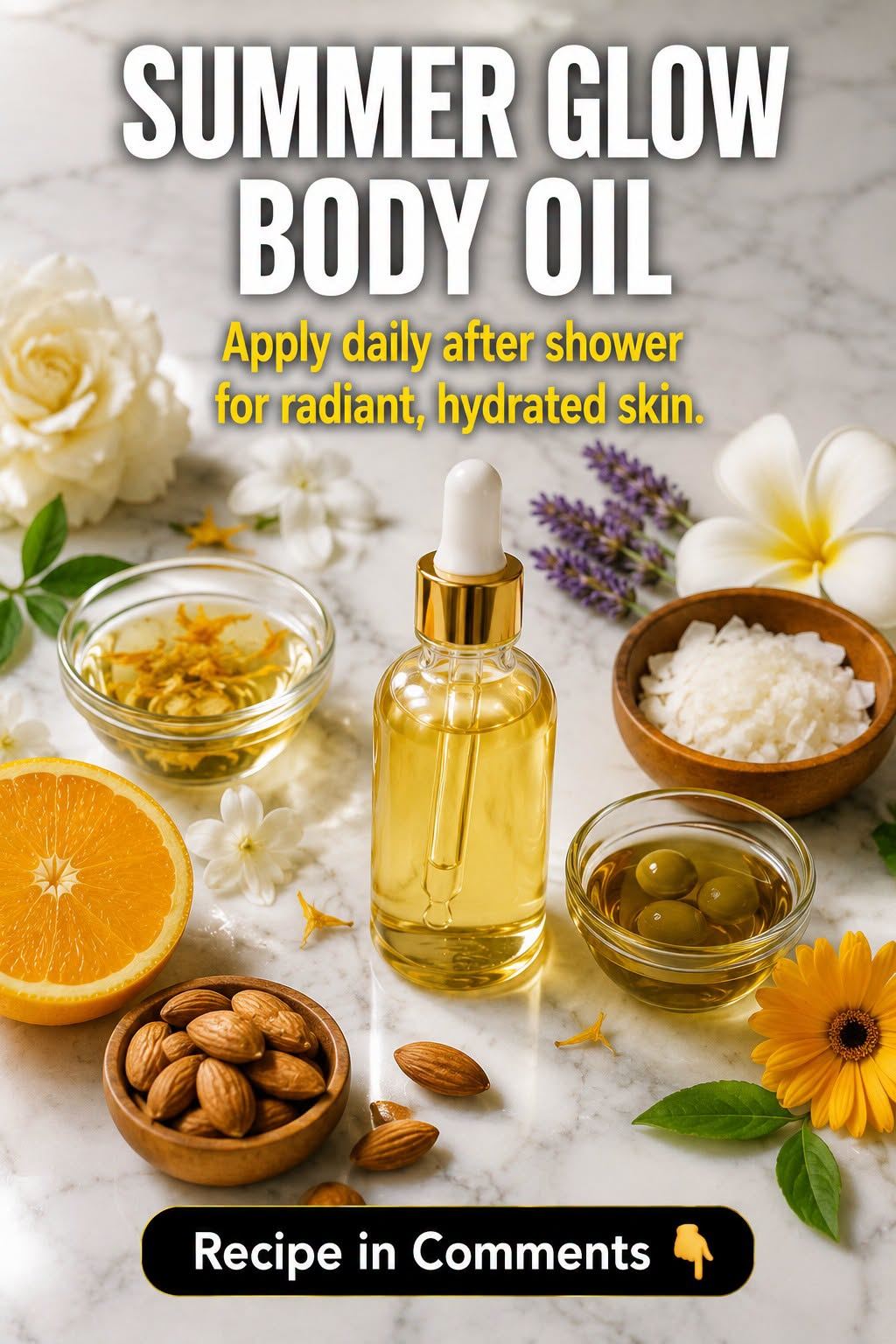
Summer heat, air-conditioning, frequent showers, swimming and sun exposure can leave body skin looking dry, rough or dull. A natural body oil can make the skin appear smoother and more radiant by reducing water loss and improving the way light reflects from the surface. However, oil does not add water to dehydrated skin by itself. It works best when applied immediately after bathing while the skin is still slightly damp, allowing it to seal in existing moisture. Body oils cannot bleach the skin, remove deep wrinkles or replace sunscreen. (American Academy of Dermatology)
The oranges and flowers shown in the image may look attractive, but citrus juice and citrus essential oils are not necessary for glowing skin. Certain plant chemicals can cause a burn-like reaction, blistering or persistent discoloration when citrus-treated skin is exposed to sunlight. The remedies below therefore use fragrance-free oils and hydrating ingredients with stronger human evidence. (DermNet®)
No complete homemade body-oil recipe has been clinically tested as a finished treatment. These routines combine individual ingredients supported by human research. Prepare water-containing mixtures fresh for each application and complete a 24–48-hour patch test before covering a large area.
Remedy 1: Marula and Sunflower Glow Oil for Normal Skin
Ingredients and Scientific Benefits
- Marula oil, 1 teaspoon: Human testing found moisturizing, hydrating and occlusive properties on dry skin.
- Sunflower seed oil, 1 teaspoon: Supports the protective barrier and helps reduce moisture loss.
- Jojoba oil, ½ teaspoon: Provides lightweight wax esters that lubricate the surface without a very heavy finish.
- Pure aloe vera gel, 1 teaspoon: Adds water-based hydration before the oils are applied.
- Plant-derived glycerin, 2 drops: Attracts water to the outer skin layer.
- Cooled green tea, 1 teaspoon: Supplies antioxidant polyphenols and creates a lighter texture.
Why This Remedy Works Scientifically
Marula oil has demonstrated moisturizing and moderate occlusive effects in clinical evaluation. Sunflower oil improved hydration while preserving barrier integrity in an adult study. Glycerin and jojoba-derived esters have also been studied together for prolonged moisturization, while aloe-containing cosmetic formulations increased skin hydration. (PubMed)
Procedure
Mix the aloe, glycerin and green tea in a small bowl. Add the three oils and whisk vigorously. The mixture will separate because it contains no emulsifier, so use it immediately.
After showering, pat the skin lightly while leaving it damp. Apply a thin layer to the arms, legs, shoulders and other dry areas. Massage gently for two minutes and allow ten minutes for absorption before dressing.
How Often to Apply
Apply once daily after showering for five days. Continue four or five times weekly for at least one month.
Initial Results
The skin may feel softer and look more luminous within one to three days. The effect comes from improved hydration and surface smoothness, not permanent skin lightening.
Remedy 2: Argan and Grapeseed Body Serum for Combination Skin
Ingredients and Scientific Benefits
- Argan oil, 1 teaspoon: Topical use has been associated with improved hydration and elasticity.
- Grapeseed oil, ½ teaspoon: Provides lightweight emollient fatty acids.
- Pure aloe vera gel, 1 tablespoon: Hydrates without leaving oily areas heavily coated.
- Rice starch, ½ teaspoon: Supports the skin barrier and reduces the greasy feel.
- Plant-derived glycerin, 2 drops: Improves moisture retention.
- Boiled and cooled water, 1 teaspoon: Creates a lighter, spreadable consistency.
Why This Remedy Works Scientifically
Studies involving postmenopausal women found that topical argan oil improved skin hydration and elasticity. A grapeseed-oil nanoemulgel also improved facial skin measurements, although that professionally formulated product is not equivalent to plain grapeseed oil. Rice starch, aloe and glycerin mainly support hydration and barrier comfort. (PubMed)
Procedure
Mix the aloe, rice starch, glycerin and cooled water. Add the argan and grapeseed oils and stir well.
Apply a slightly richer layer to dry arms, knees and lower legs. Use only a very small amount on areas that become sweaty or oily. Avoid applying the mixture to an acne-prone chest or back.
How Often to Apply
Use on alternate days for the first five days. Continue three times weekly if the skin remains clear and comfortable.
Initial Results
Dry areas may become smoother within two applications, while naturally oilier areas should not feel heavily coated.
Remedy 3: Lightweight Green Tea Glow Serum for Oily or Acne-Prone Skin
Ingredients and Scientific Benefits
- Pure aloe vera gel, 1 tablespoon: Supplies lightweight surface hydration.
- Cooled green tea, 1 tablespoon: Green-tea polyphenols have demonstrated anti-inflammatory and sebum-modulating activity.
- Rice starch, 1 teaspoon: Leaves a soft, less shiny finish.
- Plant-derived glycerin, 1 drop: Helps prevent dehydration.
- Jojoba oil, 2 drops: Provides minimal emollient protection.
- Sunflower seed oil, 1 drop: Supports the barrier without creating a rich oil layer.
Why This Remedy Works Scientifically
Small human studies of formulated topical green tea have reported reductions in sebum and acne-related inflammation. Aloe, rice starch and glycerin improve hydration, while only three total drops of oil are used. Oilier or acne-prone skin generally benefits from products labelled oil-free or non-comedogenic, so discontinue this homemade serum if it increases bumps. (American Academy of Dermatology)
Procedure
Mix the aloe, tea, rice starch and glycerin until smooth. Add the oils and stir immediately before use.
Apply a very thin layer to damp arms and legs. Do not apply over active body acne, inflamed follicles or a sweaty chest and back. Shower after exercise rather than repeatedly layering oil over perspiration.
How Often to Apply
Use on day one, day three and day five. Continue two or three times weekly only when it does not clog the skin.
Initial Results
The skin may look less dull within one to three days because dehydration is reduced. Oil production and body acne will not disappear from this treatment.
Remedy 4: Coconut, Almond and Oat Treatment for Dry Skin
Ingredients and Scientific Benefits
- Virgin coconut oil, 1 teaspoon: Clinically studied as a moisturizer for mild-to-moderate dry skin.
- Sunflower seed oil, 1 teaspoon: Improves hydration while supporting barrier integrity.
- Sweet almond oil, 1 teaspoon: Functions as an emollient and has shown hydration benefits in clinical research.
- Unrefined shea butter, 1 teaspoon: Forms a rich layer that slows moisture loss.
- Colloidal oatmeal, 1 teaspoon: Helps improve dryness, roughness and itching.
- Pure aloe vera gel, 1 tablespoon: Supplies water-based hydration.
- Plant-derived glycerin, 3 drops: Draws additional moisture to the surface.
Why This Remedy Works Scientifically
Virgin coconut oil performed comparably to mineral oil as a moisturizer in people with xerosis. Sunflower oil preserved the adult skin barrier, while almond and sunflower oils increased skin hydration in a randomized infant study. Colloidal-oatmeal formulations have repeatedly improved dryness, moisturization and barrier measurements. (PubMed)
Procedure
First mix the aloe, glycerin and oatmeal. Apply this hydrating layer to clean, damp skin.
Separately soften the shea butter and mix it with coconut, sunflower and almond oils. Massage a thin layer over the hydrating mixture to seal in moisture. Concentrate on elbows, knees, heels and lower legs.
How Often to Apply
Apply nightly for five days. Continue daily or at least four nights weekly for eight weeks.
Initial Results
Tightness and flaking may improve within one or two applications. Continued use can soften rough texture and dehydration lines, but it will not remove established wrinkles.
Remedy 5: Fragrance-Free Oat and Sunflower Routine for Sensitive Skin
Ingredients and Scientific Benefits
- Colloidal oatmeal, 1 tablespoon: Supports irritated, itchy and dry skin.
- Boiled and cooled water, 2 tablespoons: Creates a simple fragrance-free base.
- Pure aloe vera gel, 1 teaspoon: Adds lightweight hydration when tolerated.
- Plant-derived glycerin, 1 drop: Helps retain surface water.
- Sunflower seed oil, ½ teaspoon: Supports moisture-barrier integrity.
- Jojoba oil, 2 drops: Reduces friction during gentle application.
Why This Remedy Works Scientifically
Colloidal-oatmeal products have improved dryness, scaling, roughness, itching and barrier function in clinical studies. Sunflower oil preserved the skin barrier without causing the redness observed with olive oil in one adult trial. Aloe and glycerin can improve hydration, although either ingredient should be omitted if it causes stinging. (PubMed)
Procedure
Combine the oatmeal, water, aloe and glycerin. Apply as a thin compress for five minutes, then rinse gently.
While the skin remains damp, mix the sunflower and jojoba oils and press a few drops over the treated area. Do not rub vigorously.
How Often to Apply
Use on day one. When no reaction occurs, repeat on day three and day five. Continue three times weekly.
Initial Results
Dryness and irritation may feel calmer within one to three days. Stop immediately if the skin becomes redder, swollen, itchy or painful.
Final Tips for a Lasting Summer Body Glow
Take short showers with warm rather than very hot water. Pat the body dry instead of rubbing, leave a little moisture on the surface and apply the selected oil within a few minutes. This helps trap water and produces a smoother appearance. (American Academy of Dermatology)
Do not add lemon juice, orange juice, lime, perfume oils or citrus essential oils to a daytime body treatment. Avoid applying rich oils over body acne, heat rash or inflamed follicles. Keep containers, spoons and hands clean, and discard every water-containing mixture after one application.
Apply broad-spectrum, water-resistant SPF 30 or higher to exposed shoulders, arms, chest, back and legs. Body oil provides no reliable ultraviolet protection. Early softness and glow may begin within two or three days, while continued hydration can make dryness and fine surface lines less visible over several weeks.
Diet Plan for Radiant, Hydrated Skin
Follow the diet plan for at least eight weeks alongside the topical routine.
Breakfast: Eat eggs, plain yogurt, unsweetened soy food or oatmeal with guava, orange, kiwi or berries.
Lunch: Choose lentils, beans, fish or chicken with leafy vegetables, tomatoes and a whole-grain carbohydrate.
Snack: Eat whole fruit with almonds, walnuts, sunflower seeds, pumpkin seeds or roasted chickpeas.
Dinner: Include fish, tofu, eggs, beans or lean meat with colourful vegetables.
Healthy fats: Include nuts, seeds, avocado, fish and moderate quantities of plant oils. These foods support overall nutrition but do not work as an internal body oil.
Fluids: Drink according to thirst, climate and physical activity. Adequate fluid intake supports general health, but excessive water cannot replace topical moisturization.
Continue the home body-oil routine for four to eight weeks when it causes no irritation. See a dermatologist if dryness remains severe, cracks or bleeds, repeatedly becomes infected, or occurs with intense itching, widespread rash, swelling, blisters or unexplained colour changes. Persistent symptoms may indicate eczema, contact allergy, psoriasis or another condition requiring treatment.
References for the above remedy
- American Academy of Dermatology Association. Dermatologists’ Top Tips for Relieving Dry Skin.
https://www.aad.org/public/everyday-care/skin-care-basics/dry/dermatologists-tips-relieve-dry-skin - Komane B, et al. Safety and Efficacy of Marula Oil: A Clinical Perspective.
https://pubmed.ncbi.nlm.nih.gov/26528587/ - Danby SG, et al. Effect of Olive and Sunflower Seed Oil on the Adult Skin Barrier.
https://pubmed.ncbi.nlm.nih.gov/22995032/ - Agero ALC, Verallo-Rowell VM. Virgin Coconut Oil Compared with Mineral Oil as a Moisturizer for Xerosis.
https://pubmed.ncbi.nlm.nih.gov/15724344/ - Capone K, et al. Effects of Colloidal Oatmeal on Skin Barrier Function and Hydration.
https://pubmed.ncbi.nlm.nih.gov/32484623/ - Dal’Belo SE, et al. Moisturizing Effect of Cosmetic Formulations Containing Aloe Vera Extract.
https://pubmed.ncbi.nlm.nih.gov/17026654/ - Boucetta KQ, et al. The Effect of Argan Oil on Skin Elasticity.
https://pubmed.ncbi.nlm.nih.gov/25673976/ - Boucetta KQ, et al. Argan Oil and Skin Hydration in Postmenopausal Women.
https://pubmed.ncbi.nlm.nih.gov/26327867/ - Caglar S, et al. Effect of Sunflower Seed and Almond Oil on Skin Hydration.
https://pubmed.ncbi.nlm.nih.gov/32697476/ - DermNet New Zealand. Phytophotodermatitis.
https://dermnetnz.org/topics/phytophotodermatitis