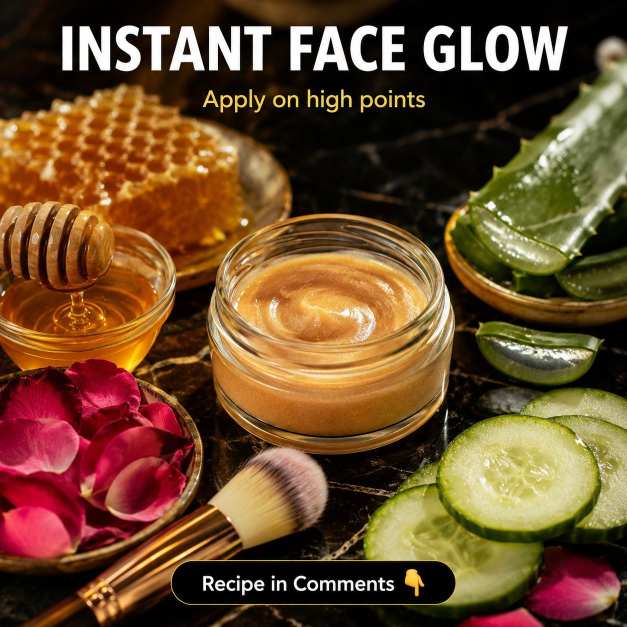
Dull skin can make the face look tired, uneven and less refreshed, especially after poor sleep, dehydration, excessive sun exposure or an unsuitable skincare routine. A natural mask cannot permanently brighten the complexion in one application, but it can improve surface hydration, soften dry patches and create a temporary dewy finish. This added moisture allows the skin to reflect light more evenly, which is usually what people notice as an “instant glow.” The following remedies are tailored to different skin types and use ingredients supported by research for hydration, barrier care or oil control. However, the complete homemade recipes have not been clinically tested as finished formulations, so realistic expectations and careful patch-testing remain essential.
What Creates an Instant Natural Face Glow?
A fast glow usually comes from three temporary effects: increased water in the outer skin layer, a smoother skin surface and a light emollient film. Humectants such as glycerin attract moisture, while plant oils reduce rapid water loss. Clinical studies show that improved hydration can make the skin look smoother and more radiant, although it does not permanently lighten natural skin colour or remove deep pigmentation. (PubMed)
Remedy 1: Aloe, Honey and Jojoba Dew Mask for Normal Skin
Ingredients and Their Scientific Benefits
- 1 tablespoon pure aloe vera gel: Helps increase water content in the outer skin layer.
- ½ teaspoon pasteurised honey: Acts as a humectant and provides soothing antioxidant compounds.
- ¼ teaspoon vegetable glycerin: Attracts and retains water, helping the skin appear smoother.
- 1 teaspoon rice starch: Gives the mask a silky texture and may support barrier recovery.
- 3 drops jojoba oil: Provides lightweight emollience through naturally occurring wax esters.
- 1 teaspoon cooled boiled water: Dilutes the glycerin and helps create an even gel.
Scientific Working of the Remedy
Aloe, glycerin and honey supply water-binding support, while jojoba reduces surface roughness without producing a very heavy finish. Rice starch can improve the feel of the mask and has shown benefits for damaged skin-barrier recovery. This balanced mixture suits skin that is neither very oily nor severely dry. (PubMed)
Procedure
Combine the aloe, honey, glycerin and water in a clean bowl. Slowly mix in the rice starch, followed by the jojoba oil. Apply a thin layer to freshly washed skin, avoiding the eyelids and lips. Leave it on for 10 to 12 minutes without allowing it to dry completely. Rinse with lukewarm water and pat the face dry.
For an immediate dewy finish, mix one drop of jojoba oil with two drops of aloe gel and tap it lightly over the cheekbones, brow bones and cupid’s bow.
How Often to Apply
Apply once daily for three days, followed by two or three times weekly.
Initial Results
The skin may feel softer after the first use. Within one to three days, mild dehydration lines and rough areas may look less visible.
Remedy 2: Green Tea and Argan Balancing Mask for Combination Skin
Ingredients and Their Scientific Benefits
- 1 tablespoon cooled green tea: Contains catechins with antioxidant and sebum-regulating potential.
- 1 teaspoon aloe vera gel: Hydrates without adding a thick oily layer.
- 1 teaspoon rice starch: Helps create a light, non-greasy finish.
- ¼ teaspoon vegetable glycerin: Supports moisture retention in dry facial zones.
- 2 drops argan oil: Supplies emollient lipids for dry cheeks and jaw areas.
- ½ teaspoon finely ground oats: Helps soothe and support the skin barrier.
Scientific Working of the Remedy
Combination skin often becomes oily around the nose and forehead but remains dry around the cheeks. Green tea has been studied in topical formulations for reducing excess facial sebum, while argan oil has evidence supporting skin hydration and elasticity. Aloe, glycerin and oats help prevent the drier areas from feeling tight. (PubMed)
Procedure
Mix the cooled tea with aloe and glycerin. Add the rice starch and oat powder, then stir in the argan oil. Apply a thinner layer over the forehead, nose and chin and a slightly thicker layer over the cheeks. Leave it on for 10 minutes and rinse gently.
After rinsing, place one drop of argan oil between the fingertips and press it only over the high points of dry areas. Avoid applying it heavily around an oily nose.
How Often to Apply
Use on alternate days for five to seven days, then twice weekly.
Initial Results
Dry areas may feel more comfortable after the first two applications. The oily zone may look less shiny, while the cheeks appear smoother and more luminous.
Remedy 3: Green Tea, Oat and Rice Glow Gel for Oily Skin
Ingredients and Their Scientific Benefits
- 1 tablespoon strongly brewed, cooled green tea: May help reduce sebum and calm inflammatory acne.
- 1 teaspoon pure aloe vera gel: Provides lightweight hydration.
- 1 teaspoon colloidal oatmeal: Supports the skin barrier and reduces irritation.
- 1 teaspoon rice starch: Helps absorb some surface moisture without harsh scrubbing.
- ¼ teaspoon pasteurised honey: Supplies humectant and soothing properties.
- 2 drops jojoba oil: Prevents the mask from becoming excessively drying.
Scientific Working of the Remedy
Oily skin can still be dehydrated, particularly after frequent cleansing or acne treatments. Green tea has shown potential benefits for oil control and inflammatory acne in topical studies. Oatmeal supports the barrier, while aloe and honey add moisture without requiring a thick layer of oil. (PubMed)
Procedure
Blend the ingredients into a smooth gel. Apply a thin layer to the face, avoiding active broken pimples. Leave it on for eight to ten minutes. Wet the fingertips and rinse gently without scrubbing the skin.
For a subtle glow, tap the smallest possible amount of aloe gel onto the cheekbones. Skip facial oil if the skin already looks shiny.
How Often to Apply
Use once daily for three days and then two times weekly.
Initial Results
The face may feel fresher and less greasy after the first application. Within two or three days, dehydrated areas may look smoother without creating a heavy shine.
Remedy 4: Argan, Sunflower and Honey Comfort Mask for Dry Skin
Ingredients and Their Scientific Benefits
- 1 teaspoon argan oil: Helps improve skin hydration and elasticity.
- ½ teaspoon high-linoleic sunflower seed oil: Supports the lipid barrier and reduces moisture loss.
- 1 teaspoon aloe vera gel: Adds water-based hydration.
- ¼ teaspoon vegetable glycerin: Draws moisture into the outer skin layer.
- ½ teaspoon pasteurised honey: Works as a moisture-binding ingredient.
- 1 teaspoon colloidal oatmeal: Calms rough, dry or mildly irritated skin.
Scientific Working of the Remedy
Dry skin needs both water-attracting ingredients and emollient lipids. Aloe, glycerin and honey increase surface moisture, while argan and sunflower oils help slow evaporation. Oatmeal adds starches, lipids and soothing compounds that support the protective barrier. Research on adult skin found that sunflower oil preserved barrier integrity and improved hydration more effectively than olive oil. (PubMed)
Procedure
Combine the aloe, glycerin and honey first. Add the oatmeal and mix until smooth. Finish with the two oils. Apply a thin, even layer to the face and leave it on for 12 to 15 minutes. Rinse with lukewarm water.
While the skin is still slightly damp, mix one drop of argan oil with a small amount of aloe gel. Press it over the cheekbones and brow bones for a temporary highlighted glow.
How Often to Apply
Use nightly for three to five days, then three times weekly.
Initial Results
Tightness may improve after one use. Dry patches may become softer within two or three days, making the face appear smoother and more radiant.
Remedy 5: Fragrance-Free Oat and Rice Pack for Sensitive Skin
Ingredients and Their Scientific Benefits
- 1 tablespoon colloidal oatmeal: Helps calm itching, dryness and barrier discomfort.
- 1 teaspoon rice starch: Supports impaired barrier recovery and thickens the pack gently.
- 1 teaspoon pure aloe vera gel: Provides lightweight hydration when tolerated.
- ½ teaspoon high-linoleic sunflower oil: Offers gentle emollient support.
- 1 tablespoon cooled boiled water: Creates a soft, non-abrasive consistency.
- 2 drops vegetable glycerin: Adds water-binding support without making the mixture excessively sticky.
Scientific Working of the Remedy
Sensitive skin benefits from a minimal, fragrance-free mixture. Oatmeal has clinical evidence for improving barrier-related symptoms, while rice starch has been studied on irritated and atopic skin. Diluted glycerin improves hydration, and sunflower oil helps reduce roughness without the barrier concerns associated with some other culinary oils. (PubMed)
Procedure
Mix the oatmeal and rice starch. Add the water, aloe and glycerin, followed by the sunflower oil. Apply a thin layer without rubbing or massaging. Leave it on for five to eight minutes and rinse gently.
Do not apply a homemade highlighter over irritated, burning or inflamed skin. Wait until the barrier feels calm.
How Often to Apply
Begin every other day for three to five days. Stop immediately if redness, itching, swelling or burning develops.
Initial Results
Mild dryness and tightness may improve after one or two applications. Persistent redness, eczema or unexplained facial burning requires professional assessment.
Safe Way to Apply a Natural Glow on the High Points
The high points are the parts of the face that naturally catch light: the upper cheekbones, brow bones, bridge of the nose and cupid’s bow. After moisturising, mix one drop of jojoba or argan oil with three drops of aloe gel. Tap a very small amount onto these areas rather than covering the entire face.
Do not apply oil over active acne, irritated skin or directly under the eyes. This technique creates temporary shine and smoother light reflection; it does not change pigmentation or produce permanent skin brightening.
Final Tips for Maintaining a Healthy Face Glow
Always prepare water-based remedies fresh and discard leftovers. Homemade mixtures do not contain tested preservatives and should not be stored for future use. Use clean spoons, bowls and applicators to reduce contamination.
Patch-test every new ingredient before applying it to the face. Dermatologists recommend testing a skincare preparation on a small area repeatedly for seven to ten days to check for delayed redness, itching or swelling. (American Academy of Dermatology)
Avoid lemon juice, baking soda, toothpaste, undiluted apple-cider vinegar, cinnamon and essential oils on the face. These ingredients can irritate the barrier and make dullness or pigmentation look worse.
Apply broad-spectrum SPF 30 or higher every morning. Daily sunscreen has stronger evidence for preventing premature ageing, uneven pigmentation and loss of clarity than any homemade brightening mask. A randomized trial found that regular sunscreen use slowed visible photoageing. (PubMed)
Visible hydration and softness may begin within two or three days. Long-term improvement in texture, dullness and uneven tone generally requires several weeks of gentle cleansing, moisturising and consistent sun protection.
Diet Plan for Naturally Healthy-Looking Skin
Breakfast
Eat oatmeal with berries and plain yoghurt, or eggs with whole-grain bread and a serving of fruit. Berries, guava, citrus fruit and peppers provide vitamin C, while eggs and yoghurt supply protein.
Mid-Morning Snack
Choose one fruit with a small handful of unsalted almonds, walnuts, sunflower seeds or pumpkin seeds.
Lunch
Include lentils, beans, fish or chicken with a large portion of colourful vegetables and a moderate serving of brown rice or whole-grain bread.
Evening Snack
Have plain yoghurt, cucumber slices, carrots or fresh fruit instead of heavily salted packaged snacks.
Dinner
Choose fish, tofu, beans or lean chicken with leafy vegetables, sweet potato or vegetable soup. Oily fish and certain seeds provide useful dietary fatty acids.
Hydration and Duration
Drink water regularly according to thirst, weather and activity. Additional water may slightly improve hydration in people who previously consumed too little, but excessive water cannot remove pigmentation or replace moisturiser. (PubMed)
Continue the skincare routine and balanced diet for at least three to four weeks. Consult a doctor or dermatologist if persistent dullness occurs with severe fatigue, pallor, hair loss, unexplained weight changes, itching, facial swelling, painful acne or pigmentation that continues to worsen.
References for the above remedy
- Fluhr JW, Darlenski R, Surber C. Glycerol and the skin: holistic approach to its origin and functions.
https://pubmed.ncbi.nlm.nih.gov/18510666/ - Dal’Belo SE, Gaspar LR, Maia Campos PMBG. Moisturising effect of cosmetic formulations containing Aloe vera extract.
https://pubmed.ncbi.nlm.nih.gov/17026654/ - De Paepe K, Hachem JP, Vanpee E, et al. Effect of rice starch on damaged skin-barrier function.
https://pubmed.ncbi.nlm.nih.gov/12353708/ - Capone K, Kirchner F, Klein SL, Tierney NK. Effects of colloidal oatmeal on skin-barrier properties.
https://pubmed.ncbi.nlm.nih.gov/32484623/ - Mahmood T, Akhtar N, Moldovan C. Topical green tea and facial sebum control.
https://pubmed.ncbi.nlm.nih.gov/23935347/ - Pazyar N, Yaghoobi R, Ghassemi MR, Kazerouni A. Jojoba in dermatology: a succinct review.
https://pubmed.ncbi.nlm.nih.gov/24442052/ - Boucetta KQ, Charrouf Z, Aguenaou H, Derouiche A, Bensouda Y. Argan oil and skin hydration.
https://pubmed.ncbi.nlm.nih.gov/26327867/ - Danby SG, AlEnezi T, Sultan A, et al. Effect of olive and sunflower seed oil on the adult skin barrier.
https://pubmed.ncbi.nlm.nih.gov/22995032/ - Jull AB, Cullum N, Dumville JC, et al. Honey as a topical treatment for wounds.
https://pubmed.ncbi.nlm.nih.gov/25742878/ - Hughes MCB, Williams GM, Baker P, Green AC. Sunscreen and prevention of skin ageing: a randomized trial.
https://pubmed.ncbi.nlm.nih.gov/23732711/