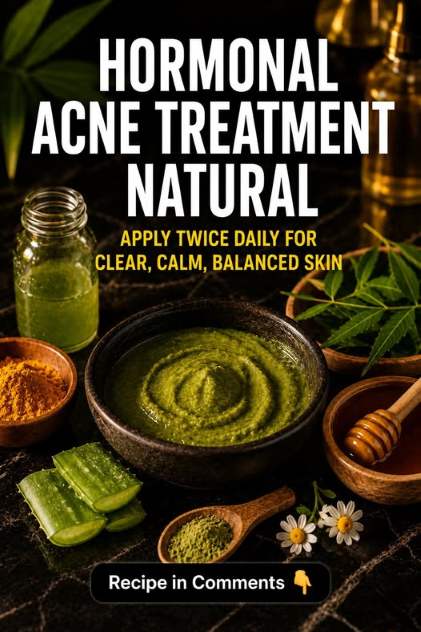
Hormonal acne often appears as tender, inflamed breakouts around the chin, jawline, cheeks, or lower face. Changes in androgen activity can increase oil production and contribute to clogged pores and inflammation, which is why these breakouts may repeatedly return. While gentle natural ingredients may help calm inflammation, support the skin barrier, or reduce oiliness, it is important to set realistic expectations: a home remedy cannot reliably “balance hormones” or cure hormonal acne within a few days. Current dermatology guidelines recommend proven acne treatments and, when appropriate, hormonal therapies for persistent hormonally driven acne. (American Academy of Dermatology)
The remedies below therefore focus on supporting acne-prone skin rather than claiming to correct the hormonal cause. Evidence is strongest for ingredients such as topical tea tree oil and green-tea preparations, while aloe vera has supportive clinical evidence when used alongside standard acne therapy. (PubMed) Always patch-test a new mixture first and stop if burning, swelling, or persistent redness develops.
Remedy 1: For Normal Skin – Green Tea, Aloe and Oat Calming Mask
Ingredients and Scientific Benefits
2 tablespoons cooled brewed green tea: Green tea contains catechins, including EGCG. Clinical evidence suggests that topical green-tea preparations may reduce inflammatory acne lesions. (PubMed)
1 tablespoon pure aloe vera gel: Aloe provides a soothing, water-rich base. In one clinical trial, an aloe-containing topical preparation used with tretinoin improved acne outcomes and tolerability compared with the control treatment. (PubMed)
1 teaspoon finely ground oats: Creates a mild, non-abrasive paste and helps make the application gentler.
1 teaspoon plain unsweetened yogurt: Adds moisture and improves the consistency of the mask. Skip it if dairy-containing topical products irritate your skin.
1 teaspoon cucumber puree: Provides water and a cooling sensation that can make inflamed skin feel more comfortable.
How This Remedy Works Scientifically
The most evidence-supported component here is green tea. A systematic review and meta-analysis found that topical green-tea extract significantly reduced inflammatory acne lesions. Aloe vera is included primarily for soothing and skin comfort rather than as a stand-alone hormonal-acne cure. (PubMed)
Procedure
Brew green tea and allow it to cool completely. Mix two tablespoons with the aloe, finely ground oats, yogurt, and cucumber until you have a smooth paste. Apply a thin layer to clean skin without scrubbing. Leave it for about 10 minutes, then rinse gently with lukewarm water.
How Often to Apply
Use once daily or every other day for the first 5 days if your skin tolerates it.
Initial Results
Within 1–3 days, you may notice temporary soothing, softer-feeling skin, and less visible surface redness. Do not expect hormonal acne lesions to disappear in three days; clinical acne improvement generally requires weeks.
Remedy 2: For Combination Skin – Green Tea and Aloe Balancing Gel
Ingredients and Scientific Benefits
Use 2 tablespoons cooled green tea, 1 tablespoon aloe vera gel, 1 teaspoon cucumber juice, 1 teaspoon finely ground oats, and ½ teaspoon vegetable glycerin.
Green tea supplies antioxidant catechins and has clinical evidence supporting topical use for inflammatory acne. Aloe provides hydration without requiring a heavy oily base. Cucumber contributes water, oats improve the texture of the mixture, and glycerin is a humectant that helps retain moisture.
Scientific Working of the Ingredients
Combination skin needs a remedy that does not aggressively strip oily areas while further drying the cheeks. The green-tea component is particularly useful because research on topical green-tea extract shows reductions in inflammatory lesions. (PubMed) Aloe-based preparations may also improve skin tolerability when acne treatments cause irritation. (PubMed)
Procedure
Combine all ingredients in a clean bowl. Apply a thin layer, concentrating on acne-prone areas while avoiding the eyelids and lips. Leave for 10 minutes and rinse.
How Often to Apply
Apply once daily for 3–5 days initially. If dryness develops, reduce to alternate days.
Initial Results
Skin may feel calmer and better hydrated within several applications. Active pimples may look less irritated, but meaningful reductions in lesion numbers should be judged over several weeks rather than days.
Remedy 3: For Oily Skin – Carefully Diluted Tea Tree and Aloe Spot Gel
Ingredients and Scientific Benefits
Use 2 tablespoons aloe vera gel, 1 tablespoon cooled green tea, 1 teaspoon cucumber juice, 1 teaspoon vegetable glycerin, ½ teaspoon finely ground oats, and only enough tea tree oil to produce approximately a 2–3% final dilution.
Tea tree oil is one of the better-studied natural ingredients for acne. A randomized double-blind study found 5% tea tree oil gel significantly more effective than placebo for mild-to-moderate acne. Another clinical study also reported improvements during tea-tree treatment. (PubMed)
Why This Remedy May Work
Tea tree oil has antimicrobial and anti-inflammatory properties relevant to acne. However, the clinical research studied standardized formulations rather than homemade essential-oil mixtures, so DIY preparations should not be assumed to produce identical results.
Aloe and green tea create a lighter, water-based base instead of using pore-clogging heavy oils.
Procedure
Mix the aloe, cooled tea, cucumber, glycerin, and oats. Add only properly diluted tea tree oil. Apply a very small amount to acne-prone areas after patch testing. Keep it away from eyes and lips and rinse after 10 minutes the first few times.
Never apply undiluted tea tree essential oil directly to facial skin.
How Often to Apply
Start once daily for 3–5 days. Do not automatically use it twice daily; irritation can worsen the appearance of acne.
Initial Results
Reduced surface oiliness or redness may occur within several days, but the clinical tea-tree studies assessed acne improvement over much longer periods—roughly 6–12 weeks. (PubMed)
Remedy 4: For Dry Skin – Aloe, Oat and Green Tea Hydration Mask
Ingredients and Scientific Benefits
Use 2 tablespoons pure aloe vera gel, 1 tablespoon finely ground oats, 1 tablespoon cooled green tea, 1 teaspoon cucumber puree, ½ teaspoon vegetable glycerin, and ½ teaspoon plain yogurt.
Aloe and glycerin help provide hydration, while the soft oat base avoids the aggressive scrubbing that can make dry acne-prone skin feel worse. Green tea provides the main acne-directed botanical component.
Scientific Working
Dryness does not protect someone from hormonal acne. In fact, over-cleansing acne-prone skin can damage the skin barrier and make irritation more noticeable. This remedy is deliberately free from lemon juice, baking soda, undiluted essential oils, and abrasive sugar or salt.
Green tea’s topical benefits have been evaluated across randomized clinical trials, while aloe has supportive evidence as an adjunct to conventional acne treatment. (PubMed)
Procedure
Mix everything into a soft gel-like paste. Spread gently over clean skin without rubbing. Leave for 10–15 minutes and rinse with lukewarm water.
How Often to Apply
Use once daily or on alternate days for at least 5 days according to tolerance.
Initial Results
Dry, tight skin may feel softer within the first few applications. Redness may also appear calmer. Deep hormonal lesions, however, require substantially more time to improve.
Remedy 5: For Sensitive Skin – Minimal Aloe and Green Tea Compress
Sensitive skin benefits from fewer ingredients, not stronger DIY treatments.
Ingredients and Scientific Benefits
Use 2 tablespoons cooled green tea, 1 tablespoon pure aloe vera gel, 1 tablespoon clean cool water, 1 teaspoon finely ground oats, and 1 teaspoon cucumber juice.
Green tea provides antioxidant polyphenols with evidence supporting topical use in acne. (PubMed) Aloe provides a soothing base, while water and cucumber dilute the preparation further.
Scientific Working
The goal is to reduce unnecessary exposure to potential irritants while retaining the best-supported botanical ingredient. For this reason, this sensitive-skin formula deliberately excludes essential oils, lemon, cinnamon, baking soda, vinegar, and harsh scrubs.
Procedure
Combine the ingredients and patch-test the mixture on a small area first. If there is no reaction, spread a thin layer over affected areas. Leave for 5–10 minutes before rinsing.
How Often to Apply
Start every other day for 3–5 days. Increase only if the skin remains comfortable.
Initial Results
The most realistic early benefit is reduced tightness or temporary redness and improved skin comfort. Stop immediately if itching, burning, swelling, or worsening redness occurs.
Final Tips for Hormonal Acne
Keep your routine simple. Wash gently rather than repeatedly scrubbing pimples, keep pillowcases, makeup brushes, and facial tools clean, avoid picking or squeezing lesions, drink enough water, and maintain regular sleep. Patch-test every homemade treatment.
Do not use lemon juice, undiluted apple-cider vinegar, toothpaste, baking soda, garlic, or undiluted essential oils on acne. Irritating the skin can worsen inflammation and increase the likelihood of post-acne dark marks.
You may notice skin comfort or reduced redness within 2–3 days, but this should not be confused with treating hormonal acne itself. Controlled studies of botanical acne interventions generally evaluate outcomes over several weeks. (PubMed)
Diet Plan to Support Acne-Prone Skin
Diet is supportive rather than a replacement for treatment. The American Academy of Dermatology notes that small studies suggest a low-glycemic diet may reduce acne, although evidence is not conclusive. Some observational research also links cow’s milk with breakouts in certain people. (American Academy of Dermatology)
For breakfast, choose steel-cut oats or another minimally processed whole grain with berries and nuts or seeds. At lunch, combine vegetables with beans, lentils, chickpeas, fish, eggs, or another protein source and a moderate serving of whole grains. For snacks, choose whole fruit, nuts, cucumber, carrots, or unsweetened yogurt if it does not appear to trigger your acne. Dinner can include vegetables, lentils or fish/chicken, and a modest portion of brown rice or another whole grain.
Reduce frequent sugary drinks, sweets, refined pastries, and highly processed high-glycemic snacks. Rather than automatically eliminating dairy, monitor whether milk consistently corresponds with worsening breakouts and discuss major dietary restrictions with a qualified healthcare professional.
Continue these dietary habits for 8–12 weeks before judging their effect on acne; diet studies showing benefits generally lasted weeks, not days. (American Academy of Dermatology)
If acne is deep, painful, cystic, rapidly worsening, leaving scars, or persisting despite 6–8 weeks of appropriate care, see a dermatologist or doctor. Persistent hormonal acne may require medical treatment. Current acne guidelines include treatments such as topical retinoids, benzoyl peroxide, salicylic acid, azelaic acid, antibiotics when appropriate, and hormonal therapies such as combined oral contraceptives or spironolactone for suitable patients. (American Academy of Dermatology)
References for the above remedy
- Enshaieh S, Jooya A, Siadat AH, Iraji F. The efficacy of 5% topical tea tree oil gel in mild to moderate acne vulgaris: a randomized, double-blind placebo-controlled study. Indian Journal of Dermatology, Venereology and Leprology.
URL: https://pubmed.ncbi.nlm.nih.gov/17314442/ - Bassett IB, Pannowitz DL, Barnetson RS. A comparative study of tea-tree oil versus benzoyl peroxide in the treatment of acne. Medical Journal of Australia.
URL: https://pubmed.ncbi.nlm.nih.gov/2145499/ - Kim S, et al. The effects of green tea on acne vulgaris: A systematic review and meta-analysis of randomized clinical trials.
URL: https://pubmed.ncbi.nlm.nih.gov/32812270/ - Hajheydari Z, Saeedi M, Morteza-Semnani K, Soltani A. Effect of Aloe vera topical gel combined with tretinoin in treatment of mild and moderate acne vulgaris: a randomized, double-blind prospective trial.
URL: https://pubmed.ncbi.nlm.nih.gov/23336746/ - Malhi HK, Tu J, Riley TV, Kumarasinghe SP, Hammer KA. Tea tree oil gel for mild to moderate acne; a 12 week uncontrolled, open-label phase II pilot study.
URL: https://pubmed.ncbi.nlm.nih.gov/27000386/ - Mazzarello V, et al. Treatment of acne with a combination of propolis, tea tree oil, and Aloe vera compared to erythromycin cream: two double-blind investigations.
URL: https://pubmed.ncbi.nlm.nih.gov/30588129/ - Lu PH, Hsu CH. Does supplementation with green tea extract improve acne in post-adolescent women? A randomized, double-blind, placebo-controlled clinical trial.
URL: https://pubmed.ncbi.nlm.nih.gov/27062963/ - American Academy of Dermatology. Can the right diet get rid of acne?
URL: https://www.aad.org/public/diseases/acne/causes/diet - American Academy of Dermatology. American Academy of Dermatology issues updated guidelines for the management of acne.
URL: https://www.aad.org/news/updated-guidelines-acne-management