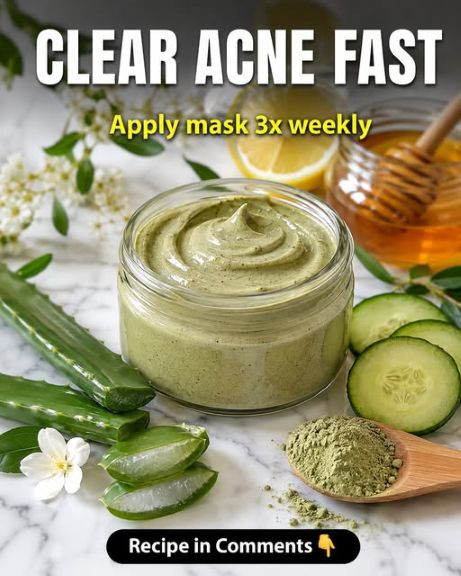
Acne is one of the most common skin concerns affecting teenagers and adults. It develops when excess oil (sebum), dead skin cells, bacteria, inflammation, and hormonal changes block hair follicles. Pimples, blackheads, whiteheads, and redness can affect both appearance and confidence. The image highlights a natural green acne mask containing ingredients commonly used in skincare, such as aloe vera, cucumber, and green clay. While natural remedies cannot permanently remove acne overnight, some ingredients may support clearer-looking skin by reducing excess oil, soothing irritation, and improving the skin barrier.
Scientific acne care focuses on controlling inflammation, maintaining hydration, protecting the skin barrier, and avoiding harsh ingredients that trigger more irritation. The following remedies are designed according to different skin types and use naturally available ingredients with research-supported benefits.
Remedy 1: For Normal Skin — Aloe Vera and Green Clay Acne Control Mask
Scientific Working of Each Ingredient
Aloe Vera Gel — 2 tablespoons
Aloe vera contains polysaccharides, antioxidants, and anti-inflammatory compounds. Research suggests aloe vera may support acne treatment by reducing skin irritation and helping maintain hydration without clogging pores.
Green Clay (French Clay) — 1 tablespoon
Green clay contains minerals such as magnesium, calcium, and silica. It absorbs excess sebum from the skin surface, helping reduce oily shine and the appearance of clogged pores.
Honey — 1 teaspoon
Honey contains natural antimicrobial compounds and antioxidants. Medical-grade honey has been studied for supporting wound healing and reducing microbial activity.
Green Tea Powder — ½ teaspoon
Green tea provides catechins, especially EGCG, which have antioxidant and anti-inflammatory properties. Topical green tea has been researched for reducing sebum production.
Cucumber Juice — 1 tablespoon
Cucumber contains water, antioxidants, and soothing compounds that help provide a cooling effect and support skin hydration.
Rose Water — 1 tablespoon
Rose water contains aromatic plant compounds and may provide mild soothing benefits for irritated skin.
Procedure
- Mix green clay with aloe vera gel.
- Add honey, green tea powder, cucumber juice, and rose water.
- Blend into a smooth paste.
- Apply a thin layer to clean skin.
- Leave for 10–15 minutes.
- Rinse gently with lukewarm water.
How Often to Apply
Apply 3 times weekly.
Initial Results
Within 1–3 applications, skin may feel cleaner, softer, and less oily. Reduction in acne lesions usually requires several weeks of consistent skincare.
Remedy 2: For Oily Skin — Tea Tree Aloe Acne Balancing Gel Mask
Scientific Working of Each Ingredient
Aloe Vera Gel — 2 tablespoons
Provides hydration without heavy oils and may reduce acne-related redness.
Tea Tree Oil — 2 drops
Tea tree oil contains terpinen-4-ol, which has antimicrobial activity. Clinical studies have shown topical tea tree oil can reduce mild-to-moderate acne lesions.
Kaolin Clay — 1 tablespoon
Kaolin clay absorbs excess oil while being gentler than some stronger clays.
Niacinamide Powder — ¼ teaspoon
Niacinamide (vitamin B3) has research supporting its ability to improve skin barrier function, reduce inflammation, and regulate oil production.
Chamomile Water — 1 tablespoon
Chamomile contains flavonoids such as apigenin that provide antioxidant and calming properties.
Honey — ½ teaspoon
Supports moisture balance and provides natural antimicrobial compounds.
Procedure
- Combine aloe vera and kaolin clay.
- Add diluted tea tree oil, niacinamide, chamomile water, and honey.
- Apply to acne-prone areas.
- Leave for 10 minutes.
- Wash gently.
How Often to Apply
Use 2–3 times weekly.
Initial Results
Oiliness may appear reduced after several uses. Active acne generally improves gradually over weeks.
Remedy 3: For Combination Skin — Matcha Aloe Pore-Balancing Mask
Scientific Working of Each Ingredient
Matcha Powder — 1 teaspoon
Matcha contains concentrated green tea catechins. These antioxidants may help reduce oxidative stress and support balanced oil production.
Aloe Vera Gel — 2 tablespoons
Maintains hydration while reducing dryness in certain areas.
Bentonite Clay — 1 teaspoon
Bentonite clay has strong absorption properties and can help remove excess surface oil.
Yogurt — 1 tablespoon
Yogurt contains lactic acid, an alpha-hydroxy acid that helps remove dead skin buildup gently.
Honey — 1 teaspoon
Provides hydration and antioxidant activity.
Cucumber Juice — 1 tablespoon
Helps cool and hydrate the skin.
Procedure
- Mix matcha powder and clay.
- Add aloe vera gel and yogurt.
- Add honey and cucumber juice.
- Apply mainly on oily areas such as the forehead and nose.
- Leave for 10 minutes.
- Rinse.
How Often to Apply
Apply 2 times weekly.
Initial Results
Skin texture may appear smoother within several applications. Continued use is needed for acne improvement.
Remedy 4: For Dry Acne-Prone Skin — Oat Aloe Barrier Repair Mask
Scientific Working of Each Ingredient
Colloidal Oatmeal — 1 tablespoon
Oatmeal contains beta-glucans and avenanthramides that support skin barrier repair and reduce irritation.
Aloe Vera Gel — 2 tablespoons
Provides hydration while calming discomfort.
Honey — 1 tablespoon
Acts as a humectant, helping retain moisture.
Yogurt — 1 tablespoon
Provides gentle lactic acid exfoliation.
Jojoba Oil — ½ teaspoon
Jojoba oil resembles natural skin sebum and helps prevent excessive dryness.
Green Tea Water — 1 tablespoon
Adds antioxidant support.
Procedure
- Mix oatmeal powder with aloe vera gel.
- Add yogurt, honey, jojoba oil, and green tea water.
- Apply evenly.
- Leave for 15 minutes.
- Wash gently.
How Often to Apply
Use 2 times weekly.
Initial Results
Dryness and tightness may improve within days. Acne improvement requires consistent care.
Remedy 5: For Sensitive Skin — Cucumber Aloe Calming Acne Mask
Scientific Working of Each Ingredient
Aloe Vera Gel — 2 tablespoons
Helps soothe irritation and provides lightweight moisture.
Cucumber Pulp — 2 tablespoons
Provides water content and cooling properties.
Colloidal Oatmeal — 1 tablespoon
Supports sensitive skin by improving barrier function.
Chamomile Tea — 1 tablespoon
Contains antioxidant compounds that may calm irritated skin.
Honey — ½ teaspoon
Provides gentle moisturizing and antimicrobial benefits.
Rice Water — 1 tablespoon
Contains starches and minerals that may provide a smooth skin feel.
Procedure
- Blend cucumber pulp with aloe vera.
- Add oatmeal, chamomile tea, honey, and rice water.
- Apply gently without rubbing.
- Leave for 10 minutes.
- Rinse with cool water.
How Often to Apply
Apply 1–2 times weekly.
Initial Results
Skin may feel calmer and more hydrated after the first few uses.
Scientific Truth About Natural Acne Remedies
Natural ingredients can support acne-prone skin, but they do not replace proven acne treatments such as benzoyl peroxide, retinoids, or prescription medications when acne is moderate or severe.
The main benefits of natural masks include:
- Supporting the skin barrier
- Reducing excess oil
- Improving hydration
- Providing antioxidant protection
- Reducing temporary irritation
Consistency and gentle skincare are more important than using many different remedies.
Final Tips for Clearer Skin
- Wash your face gently twice daily.
- Avoid harsh scrubbing because it can increase inflammation.
- Do not squeeze pimples because it increases the risk of scars.
- Change pillowcases regularly.
- Clean makeup brushes frequently.
- Choose non-comedogenic skincare products.
- Always perform a patch test before applying new ingredients.
- Use sunscreen daily because acne marks can darken with sun exposure.
- Sleep properly because stress hormones can influence acne.
Visible improvements often begin within 2–3 weeks, while acne control may require several months.
Diet Plan for Acne-Prone Skin
Morning
- Warm water
- Fruit rich in vitamin C (orange, guava, kiwi)
- Protein source such as eggs or yogurt
Breakfast
Choose:
- Oatmeal with nuts and berries
- Eggs with whole-grain bread
- Greek yogurt with seeds
Lunch
Include:
- Fish, chicken, lentils, or beans
- Green vegetables
- Whole grains
Evening Snack
- Nuts
- Green tea
- Fresh fruit
Dinner
- Protein source
- Vegetables
- Healthy fats such as olive oil or avocado
Foods That May Support Healthy Skin
- Omega-3 rich fish
- Nuts and seeds
- Vegetables
- Fruits
- Whole grains
- Fermented foods containing probiotics
Reduce:
- Excess sugar
- Highly processed foods
- Excess dairy if you notice it worsens your acne
How Long Should You Continue?
Continue a suitable remedy for 6–8 weeks before judging results.
If acne persists, becomes painful, develops deep cysts, causes scarring, or suddenly worsens, consult a dermatologist.
Medical evaluation may be needed for:
- Hormonal acne
- Severe inflammatory acne
- Persistent cysts
- Acne scars
References for the above remedy
- American Academy of Dermatology Association — Acne: Diagnosis and Treatment
https://www.aad.org/public/diseases/acne/derm-treat/treat - Bassino E, et al. Green tea catechins and skin health: antioxidant and anti-inflammatory effects.
https://pubmed.ncbi.nlm.nih.gov/25607900/ - Enshaieh S, et al. The efficacy of 5% topical tea tree oil gel in mild to moderate acne vulgaris.
https://pubmed.ncbi.nlm.nih.gov/17314442/ - Ali S, et al. Aloe vera: Biological activities and dermatological applications.
https://www.ncbi.nlm.nih.gov/pmc/articles/PMC2763764/ - Draelos ZD. Niacinamide: mechanisms of action and cosmetic applications.
https://pubmed.ncbi.nlm.nih.gov/16029679/ - Grice EA, Segre JA. The skin microbiome and acne-related microorganisms.
https://pubmed.ncbi.nlm.nih.gov/21382896/ - Bae JY, et al. Honey and its dermatological applications.
https://www.ncbi.nlm.nih.gov/pmc/articles/PMC3611628/ - Pazyar N, et al. Jojoba oil: A review of chemistry and dermatological uses.
https://pubmed.ncbi.nlm.nih.gov/24442052/ - Sur R, et al. Avenanthramides and the anti-inflammatory properties of oats.
https://pubmed.ncbi.nlm.nih.gov/22421643/ - Mayo Clinic — Acne: Symptoms and Treatment
https://www.mayoclinic.org/diseases-conditions/acne/diagnosis-treatment/drc-20368048