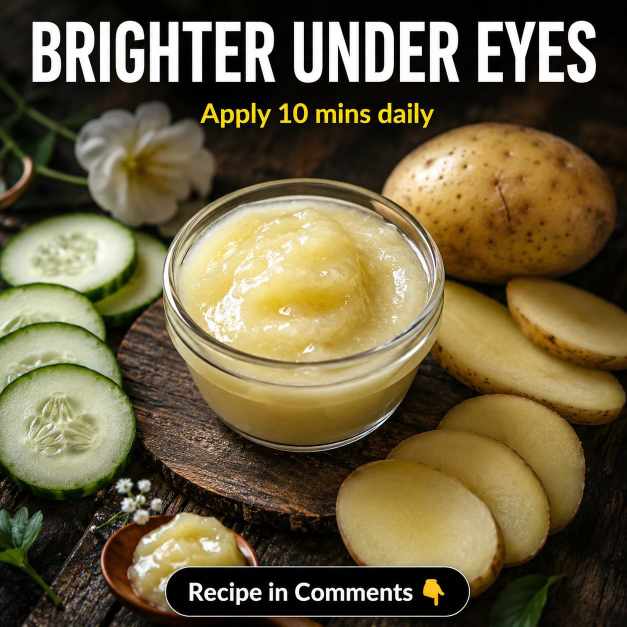
Dark under-eye circles can make the face appear tired, dull or older, but they are not always caused by insufficient sleep. The area may look darker because of inherited pigmentation, visible blood vessels beneath thin skin, allergies, repeated rubbing, puffiness or shadows created by tear troughs. Clinical studies classify dark circles as pigmentary, vascular, structural or mixed, so no single home remedy works for everyone. Chilled potato and cucumber may temporarily refresh puffy eyes, but raw potato has not been clinically proven to bleach under-eye pigmentation. Meaningful improvement usually requires identifying the cause, protecting the area from sunlight and following a gentle routine for several weeks. (PubMed)
The following remedies use potato or cucumber cautiously alongside ingredients with stronger evidence for hydration and barrier support. They should be prepared fresh, applied below the lower lash line and rinsed off rather than left overnight.
Remedy 1: For Normal Skin
Chilled Potato, Green Tea and Aloe Brightening Compress
Ingredients
- 2 thin, freshly cut chilled potato slices
- 1 tablespoon strongly brewed, cooled green tea
- 1 teaspoon plain aloe vera gel
- 1 teaspoon colloidal oatmeal
- ½ teaspoon pure honey
- 1 drop vegetable glycerin
Scientific Working of Each Ingredient
Chilled potato acts mainly as a cool, moist compress that may temporarily reduce the appearance of morning puffiness. There is insufficient clinical evidence that potato juice removes melanin or permanently brightens dark circles.
Green tea naturally contains caffeine and antioxidant catechins. A clinical under-eye study found that a prepared pad containing caffeine and vitamin K reduced the appearance of dark circles and wrinkles after four weeks, although ordinary brewed tea is weaker than the standardized preparation. Aloe vera and glycerin increase surface hydration, while oatmeal supports the protective barrier. Honey contributes moisture-binding sugars that can soften dry-looking skin. (PubMed)
Procedure
Mix the green tea, aloe, honey and glycerin, then stir in the oatmeal. Apply a paper-thin layer over the orbital bone, keeping it away from the lashes. Place one chilled potato slice beneath each closed eye without pressing or rubbing.
Leave the compress on for five to seven minutes. Remove the slices, rinse with cool water and pat dry.
How Often to Apply
Apply once daily for three days. Continue three times weekly for four weeks if no irritation develops.
Initial Results
Puffiness may appear temporarily reduced after the first use. Within one to three days, the skin may feel smoother, but established pigmentation will not disappear.
Remedy 2: For Combination Skin
Cucumber, Soy and Green Tea Balancing Mask
Ingredients
- 1 teaspoon freshly strained cucumber juice
- 1 teaspoon unsweetened soy milk
- 1 teaspoon cooled green tea
- 1 teaspoon plain aloe vera gel
- 1 teaspoon rice starch
- 2 drops sunflower seed oil
Scientific Working of Each Ingredient
Cucumber provides water and a cooling sensation, which may temporarily refresh tired-looking skin. It has not been proven to correct hereditary or structural dark circles.
A clinical trial found that a moisturizer containing stabilized soy compounds gradually improved mottled pigmentation, texture and overall skin tone over 12 weeks. Kitchen soy milk is not standardized and will probably have a much milder effect. Green tea provides caffeine and antioxidant compounds, while aloe offers lightweight hydration. Rice starch creates a non-greasy texture, and two drops of sunflower oil help support dry outer corners. Human research found that sunflower oil preserved barrier integrity and improved hydration. (PubMed)
Procedure
Mix the cucumber juice, soy milk, green tea and aloe. Add the rice starch, followed by the sunflower oil. Apply slightly more over dry outer corners and less near the oilier sides of the nose.
Leave the mask on for six to eight minutes and rinse gently. Do not massage the delicate under-eye skin.
How Often to Apply
Use on days one, three and five. Continue twice weekly for six weeks when well tolerated.
Initial Results
Dry outer corners may feel more comfortable within two or three applications. Any improvement in pigmentation will require several weeks.
Remedy 3: For Oily Skin
Black Tea, Potato Water and Oat Gel
Ingredients
- 1 tablespoon strongly brewed, cooled black tea
- 1 teaspoon freshly strained potato water
- 1 teaspoon aloe vera gel
- 1 teaspoon colloidal oatmeal
- 1 teaspoon rice starch
- 1 drop vegetable glycerin
Scientific Working of Each Ingredient
Black tea contains caffeine, but a homemade tea compress is not equivalent to a clinically tested caffeine eye preparation. Its cool temperature may temporarily reduce the appearance of puffiness, while caffeine may offer a mild supportive effect.
Fresh potato liquid mainly supplies water and starch; it is not a proven depigmenting treatment. Aloe and glycerin hydrate without creating a heavy oily coating. Colloidal oatmeal supports the skin barrier, while rice starch gives the mask a light texture. Hydration can make fine dryness lines look smoother, but it cannot fill a tear trough or remove hereditary darkness. (PubMed)
Procedure
Grate a small piece of washed and peeled potato, squeeze it through clean cloth and use one teaspoon immediately. Mix it with the cooled tea, aloe and glycerin. Add the oatmeal and rice starch.
Dip two clean cotton pads into the mixture and squeeze out excess liquid. Place them below closed eyes for five minutes. Discard the pads and all remaining mixture.
How Often to Apply
Apply once daily for three to five days. Continue three times weekly for four weeks if no dryness occurs.
Initial Results
The area may feel fresher and temporarily less puffy within one to three days. Deep pigment or structural shadows will remain.
Remedy 4: For Dry Skin
Honey, Aloe and Diluted Castor-Oil Moisture Mask
Ingredients
- 1 teaspoon plain aloe vera gel
- ½ teaspoon pure honey
- 1 teaspoon colloidal oatmeal
- 1 drop cold-pressed castor oil
- 2 drops sunflower seed oil
- 1 drop vegetable glycerin
Scientific Working of Each Ingredient
A small exploratory clinical study reported improvements in infraorbital darkness, melanin measurements, wrinkles and laxity after participants used a formulated castor-oil cream twice daily for two months. However, the study had no placebo group and did not test undiluted castor oil, so its findings are preliminary. (PubMed)
Aloe, honey and glycerin provide humectant support, while oatmeal helps reduce roughness. Sunflower oil supplies barrier-supporting lipids and dilutes the castor oil. This may soften dehydration lines, but it cannot rebuild volume beneath the eyes or permanently correct deep hollows.
Procedure
Blend the castor oil thoroughly with the sunflower oil. Separately mix the aloe, honey, oatmeal and glycerin, then add the diluted oils.
Apply an extremely thin layer over the orbital bone for eight minutes. Rinse carefully and pat dry. Never place castor oil inside the eye or leave this homemade preparation on overnight.
How Often to Apply
Apply once daily for three days. Continue on alternate nights for six to eight weeks if no bumps, itching or swelling appear.
Initial Results
Dryness and tightness may improve within one to three uses. Pigment changes, when they occur, take several weeks.
Remedy 5: For Sensitive Skin
Minimal Oat and Cucumber Cooling Compress
Ingredients
- 1 tablespoon cooled boiled water
- 1 teaspoon freshly strained cucumber juice
- 1½ teaspoons colloidal oatmeal
- 1 teaspoon rice starch
- 1 drop vegetable glycerin
- 1 drop sunflower seed oil
Scientific Working of Each Ingredient
Sensitive skin may become darker after inflammation, rubbing or allergic irritation. This remedy therefore focuses on calming and hydration instead of aggressive lightening.
Clinical research found that a 1% colloidal-oatmeal cream improved hydration, skin pH and barrier function. Glycerin supports water retention, while sunflower oil provides a small amount of protective lipid. Cucumber offers a mild cooling effect but should not be considered a proven pigmentation treatment. (PubMed)
Procedure
Mix the cooled water and cucumber juice. Add the oatmeal and rice starch and allow them to soften for two minutes. Stir in the glycerin and sunflower oil.
Patch-test beside the jaw for 24 hours. Apply a very thin layer beneath the eyes for three to five minutes and rinse using only the fingertips.
How Often to Apply
Use every other day for five days. Continue once or twice weekly only when the area remains completely calm.
Initial Results
Sensitive skin may feel less dry within one to three applications. Stop immediately if burning, swelling, itching, excessive tearing or prolonged redness occurs.
Final Tips for Brighter Under Eyes
Apply every mixture over the orbital bone rather than directly against the lash line. Use clean hands, fresh ingredients and a new cotton pad for every application. Do not store potato, cucumber, aloe or tea mixtures because homemade preparations lack controlled preservatives.
Avoid lemon juice, baking soda, toothpaste, undiluted essential oils, harsh scrubs and direct ice. Do not rub itchy eyes, as repeated rubbing and allergic inflammation are associated with periorbital darkness. (PubMed)
Use broad-spectrum sunscreen around the eyes and wear sunglasses in strong sunlight. A randomized trial found that regular sunscreen use produced 24% less measurable skin aging than discretionary use over approximately four and a half years. (PubMed)
A fresher, better-hydrated appearance may begin within two or three days. Fine dehydration lines may look softer with continued care, but true wrinkles, deep hollows and hereditary pigment require professional options. Continue a tolerated routine for six to eight weeks. See a dermatologist if the circles remain unchanged after two to three months.
Consult a doctor sooner if darkness develops suddenly on one side or occurs with eye pain, vision changes, severe swelling, persistent fatigue, dizziness, breathlessness or unusual paleness.
Diet Plan for Healthy-Looking Under-Eye Skin
Follow this balanced plan for at least six to eight weeks.
Breakfast: Choose eggs, beans, lentils, oatmeal or unsweetened yogurt with guava, orange, berries or papaya.
Lunch: Eat fish, chicken, eggs, chickpeas or lentils with leafy vegetables and whole-grain bread or brown rice.
Snack: Choose fruit with a small handful of unsalted almonds, walnuts, pumpkin seeds or sunflower seeds.
Dinner: Include protein with spinach, broccoli, carrots, tomatoes, beans or pumpkin.
Drink according to thirst and reduce very salty evening meals when morning puffiness is common. Maintain regular sleeping hours and manage allergies with appropriate medical guidance. Do not begin iron, vitamin B12, vitamin D or other supplements solely for dark circles without blood tests and professional advice.
Continue the diet and under-eye routine for two months. If the problem persists, see a doctor or dermatologist to determine whether it is pigmentary, vascular, allergic, nutritional or structural.
References for the above remedy
- Huang YL, et al. Clinical analysis and classification of dark eye circle.
https://pubmed.ncbi.nlm.nih.gov/23879616/ - Sarkar R, et al. Periorbital Hyperpigmentation: A Comprehensive Review.
https://pubmed.ncbi.nlm.nih.gov/26962392/ - Ahmadraji F, Shatalebi MA. Evaluation of an eye pad containing caffeine and vitamin K for dark circles and wrinkles.
https://pubmed.ncbi.nlm.nih.gov/25625116/ - Parvizi MM, et al. Efficacy of castor oil cream in treating infraorbital hyperpigmentation.
https://pubmed.ncbi.nlm.nih.gov/37927123/ - Capone K, et al. Effects of colloidal oatmeal cream on skin-barrier properties.
https://pubmed.ncbi.nlm.nih.gov/32484623/ - Dal’Belo SE, Gaspar LR, Maia Campos PMBG. Moisturizing effects of cosmetic formulations containing Aloe vera.
https://pubmed.ncbi.nlm.nih.gov/17026654/ - Fluhr JW, Darlenski R, Surber C. Glycerol and the skin: hydration and barrier functions.
https://pubmed.ncbi.nlm.nih.gov/18510666/ - Danby SG, et al. Effect of sunflower seed oil on the adult skin barrier.
https://pubmed.ncbi.nlm.nih.gov/22995032/ - Wallo W, et al. Efficacy of a soy moisturizer in pigmentation, skin tone and photoaging.
https://pubmed.ncbi.nlm.nih.gov/17941363/ - Hughes MCB, et al. Sunscreen and prevention of skin aging: a randomized trial.
https://pubmed.ncbi.nlm.nih.gov/23732711/