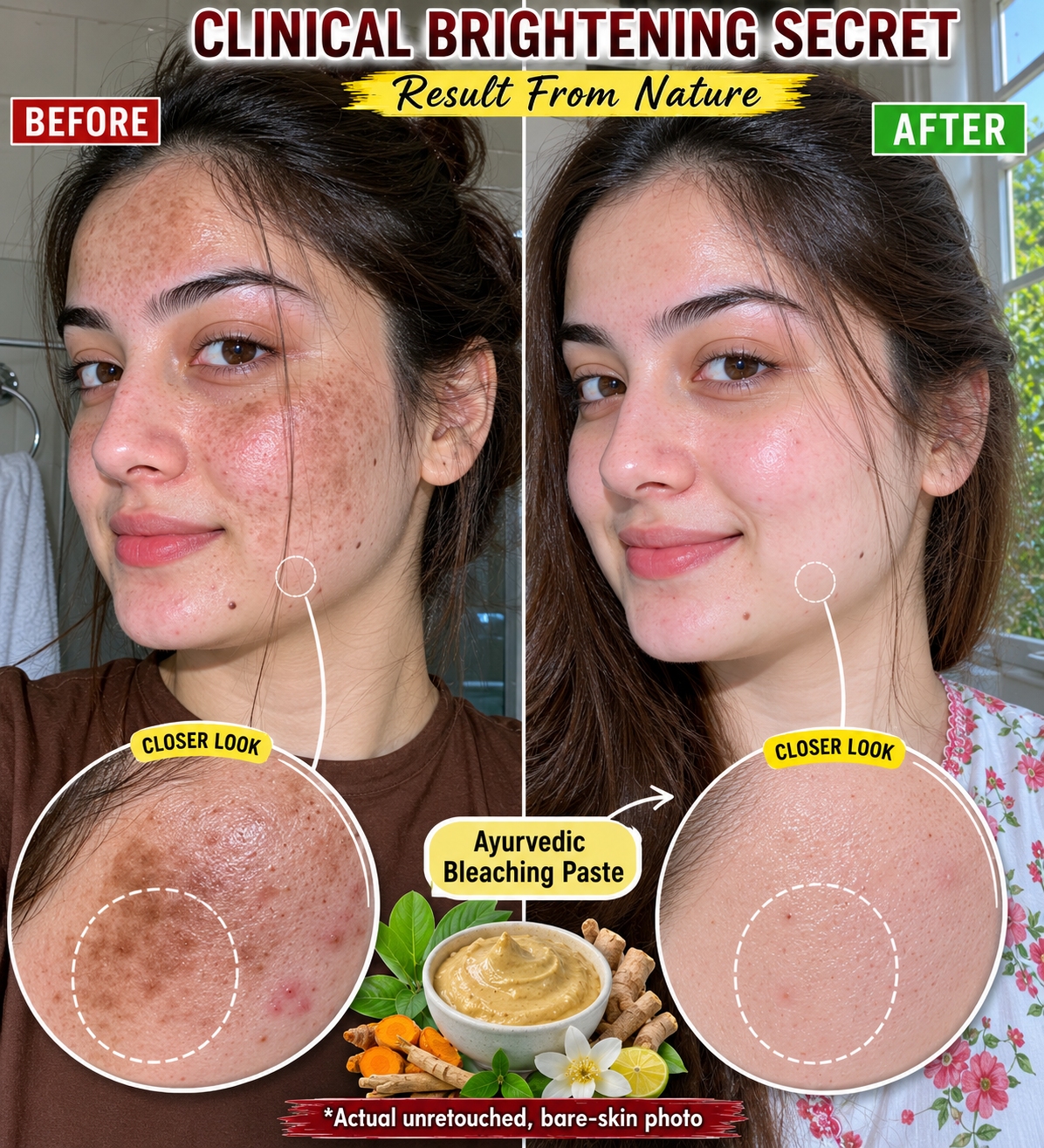
Pigmentation, acne marks, sun spots, and dull skin can affect facial freshness and confidence, especially when the skin looks uneven in natural light. A safe brightening routine should not “bleach” the skin harshly; it should calm inflammation, reduce excess melanin triggers, support the skin barrier, and gently remove dead cells. The remedies below use natural, easy-to-find ingredients selected according to skin type. They are evidence-informed, but results vary, and deep melasma or long-term pigmentation usually needs dermatologist care. Daily sun protection is still essential because dark spots often return or worsen with UV and visible light exposure. (American Academy of Dermatology)
Remedy 1: For Normal Skin
Ingredients
Turmeric powder, 1/8 teaspoon: Curcumin has antioxidant and anti-inflammatory activity and has been studied for photoaging and facial hyperpigmentation support.
Licorice root powder or strong licorice tea, 1 teaspoon: Glabridin from licorice can reduce tyrosinase activity, which is involved in melanin production.
Fresh aloe vera gel, 1 teaspoon: Aloe helps calm irritation and supports skin repair through anti-inflammatory pathways.
Plain yogurt, 1 teaspoon: Natural lactic acid gently loosens dull surface cells.
Raw honey, 1 teaspoon: Honey provides antibacterial, antioxidant, and soothing effects.
Cooled green tea, 1 teaspoon: Green tea catechins help reduce oxidative stress and inflammation.
Scientific Working of Ingredients
This paste works by combining pigment-control support with barrier repair. Licorice and turmeric target melanin-related pathways, aloe and honey reduce irritation that can worsen post-acne marks, yogurt gives mild exfoliation, and green tea adds antioxidant protection. Clinical and dermatology reviews support turmeric, licorice, aloe, honey, and green tea as useful topical supportive ingredients, although they are not a replacement for prescription treatment in stubborn melasma. (PMC)
Procedure
Mix all ingredients into a smooth paste. Apply a thin layer on clean skin, avoiding the eyes and lips. Leave it for 8–10 minutes, then rinse with cool water. Apply a gentle moisturizer afterward.
How Often to Apply
Use once daily for 3 days, then 2–3 times weekly.
Initial Results
Within 1–3 days, skin may look calmer, smoother, and less tired. Dark spots will not disappear fully in 3 days, but the face may appear fresher.
Remedy 2: For Combination Skin
Ingredients
Oat flour, 1 teaspoon: Colloidal oatmeal has anti-inflammatory and barrier-supporting effects.
Aloe vera gel, 1 teaspoon: Hydrates dry areas without feeling heavy.
Green tea, 1 teaspoon: Helps oily areas look calmer.
Licorice tea, 1 teaspoon: Supports uneven-tone care.
Honey, 1/2 teaspoon: Soothes dry patches and helps calm blemish-prone zones.
Yogurt, 1/2 teaspoon: Gives mild exfoliation without over-scrubbing.
Scientific Working of Ingredients
Combination skin needs balance. Oat flour protects and softens dry patches, green tea supports oilier areas, and aloe keeps hydration lightweight. Licorice and yogurt help with dullness and uneven tone, while honey reduces the risk of irritation from mild exfoliation. Oatmeal’s anti-inflammatory effect is supported by dermatology research, and green tea has clinical evidence for improving acne-prone skin when used topically. (PubMed)
Procedure
Blend the ingredients into a creamy mask. Apply more thinly on the T-zone and slightly thicker on dry cheek areas. Keep for 7–9 minutes. Rinse gently without rubbing.
How Often to Apply
Use on alternate days for 5 days.
Initial Results
The T-zone may feel less greasy, while cheeks may look softer and less patchy within 2–3 days.
Remedy 3: For Oily Skin
Ingredients
Bentonite or multani mitti clay, 1 teaspoon: Absorbs excess surface oil.
Green tea, 1–2 teaspoons: Helps calm acne-related inflammation.
Aloe vera gel, 1 teaspoon: Prevents the mask from becoming overly drying.
Neem leaf powder, 1/4 teaspoon: Traditionally used for acne-prone skin and studied for antimicrobial and anti-inflammatory potential.
Honey, 1/2 teaspoon: Supports a healthier skin surface.
Turmeric powder, a tiny pinch: Helps calm redness and post-acne marks.
Scientific Working of Ingredients
Oily skin often needs oil control without damaging the skin barrier. Clay absorbs extra sebum, green tea supports acne-prone skin, neem adds antibacterial and anti-inflammatory botanical support, aloe reduces dryness, and honey keeps the mask soothing. A clinical study on clay masks reported improvements in oily and acne-prone skin parameters, while neem reviews suggest potential benefits in infections, inflammation, wounds, and pigmentation. (PMC)
Procedure
Mix clay with green tea first, then add aloe, honey, neem, and turmeric. Apply a thin layer only until semi-dry; do not let it crack completely. Rinse after 6–8 minutes.
How Often to Apply
Use once daily for 3 days if very oily, then twice weekly.
Initial Results
Oiliness may reduce within 1–2 days. Active pimples may look calmer, but acne marks need longer care.
Remedy 4: For Dry Skin
Ingredients
Aloe vera gel, 1 tablespoon: Hydrates and calms dry skin.
Honey, 1 teaspoon: Helps retain moisture and soothe irritation.
Oat flour, 1 teaspoon: Supports the skin barrier and reduces roughness.
Mashed ripe banana, 1 teaspoon: Adds a soft, moisturizing texture.
Licorice tea, 1 teaspoon: Helps with uneven tone.
A few drops of almond oil or olive oil, 3–4 drops: Adds emollient support for dry patches.
Scientific Working of Ingredients
Dry skin can look darker and duller because rough dead cells scatter light unevenly. This remedy focuses on moisture first. Aloe and honey soothe, oatmeal supports the barrier, oil reduces tightness, and licorice supports tone correction. Honey has documented anti-inflammatory and healing properties, while oatmeal has antioxidant and anti-inflammatory benefits useful for irritated, dry skin. (PMC)
Procedure
Mash everything into a soft paste. Apply to clean skin for 10 minutes. Remove with damp fingers, then rinse lightly. Seal with a gentle moisturizer.
How Often to Apply
Apply daily for 3–5 days, then 2 times weekly.
Initial Results
Skin may feel softer and look more luminous within 1–3 days. Fine dryness lines may appear reduced because the skin is better hydrated.
Remedy 5: For Sensitive Skin
Ingredients
Colloidal oatmeal or very fine oat flour, 1 tablespoon: Soothes redness and supports the skin barrier.
Aloe vera gel, 1 teaspoon: Calms heat and irritation.
Cooled chamomile tea, 1 teaspoon: Provides a gentle calming base.
Honey, 1/2 teaspoon: Supports healing and comfort.
Licorice tea, 1/2 teaspoon: Helps uneven tone gently.
Cucumber juice, 1 teaspoon: Adds cooling hydration.
Scientific Working of Ingredients
Sensitive skin should not be treated with strong acids, lemon juice, harsh scrubs, or long mask times. Oatmeal reduces inflammatory signaling, aloe soothes, honey supports repair, and licorice offers gentle brightening support. This remedy is designed to reduce redness first because irritation can worsen pigmentation. Aloe’s anti-inflammatory action and colloidal oatmeal’s barrier-supportive activity are both supported in dermatology literature. (PMC)
Procedure
Mix into a soft gel-like paste. Apply only for 5–7 minutes. Rinse with cool water. Do not rub. Apply a bland moisturizer.
How Often to Apply
Use every other day for 5 days.
Initial Results
Redness and tightness may reduce in 1–2 days. Pigmentation improvement is gradual and usually needs weeks.
Final Tips
Do a patch test behind the ear or on the jawline 24 hours before using any remedy. Avoid lemon juice, baking soda, toothpaste, strong essential oils, and aggressive scrubbing because irritation can make pigmentation darker. Keep towels, brushes, and pillowcases clean. Drink enough water, sleep 7–8 hours, and avoid picking pimples. Use daily broad-spectrum sunscreen, especially if treating dark spots; dermatology guidance says sunscreen is the first step for fading and preventing dark spots. (American Academy of Dermatology)
Visible freshness may begin within 2–3 days, but real pigmentation fading usually needs 6–8 weeks of consistent care. Continue the suitable remedy 2–3 times weekly after the first 3–5 days. If spots spread, itch, bleed, become very dark, appear suddenly, or do not improve after 6–8 weeks, see a dermatologist.
Diet Plan
Follow this diet plan for at least 4–6 weeks along with the home remedy.
Morning: Drink water and eat vitamin C-rich fruit such as orange, guava, berries, or amla. Vitamin C supports collagen formation and antioxidant defense.
Breakfast: Choose oats, eggs, yogurt, nuts, or whole-grain toast instead of sugary cereal.
Lunch: Eat lentils, beans, fish, chicken, or paneer with vegetables and whole grains.
Snack: Take walnuts, almonds, pumpkin seeds, or fruit instead of sweets.
Dinner: Keep it light with vegetables, protein, and a low-glycemic carbohydrate such as brown rice, roti, quinoa, or sweet potato.
Avoid: Too much sugar, frequent fried food, and high-glycemic snacks. For acne-prone skin, a low-glycemic diet may help some people, and cow’s milk may worsen breakouts in some individuals. (American Academy of Dermatology)
References for the above remedy
- Hollinger JC, Angra K, Halder RM. “Are Natural Ingredients Effective in the Management of Hyperpigmentation?” Journal of Clinical and Aesthetic Dermatology, 2018. URL: https://pmc.ncbi.nlm.nih.gov/articles/PMC5843359/
- Parvizi MM, et al. “Clinical Trials Conducted on Herbal Remedies for the Treatment of Melasma.” 2024. URL: https://pmc.ncbi.nlm.nih.gov/articles/PMC11837239/
- Yokota T, et al. “The inhibitory effect of glabridin from licorice extracts on melanogenesis and inflammation.” Pigment Cell Research, 1998. URL: https://pubmed.ncbi.nlm.nih.gov/9870547/
- Kim S, et al. “The effects of green tea on acne vulgaris: A systematic review and meta-analysis.” Phytotherapy Research, 2021. URL: https://pubmed.ncbi.nlm.nih.gov/32812270/
- Surjushe A, Vasani R, Saple DG. “Aloe Vera: A Short Review.” Indian Journal of Dermatology, 2008. URL: https://pmc.ncbi.nlm.nih.gov/articles/PMC2763764/
- Reynertson KA, et al. “Anti-inflammatory activities of colloidal oatmeal.” Journal of Drugs in Dermatology, 2015. URL: https://pubmed.ncbi.nlm.nih.gov/25607907/
- Yaghoobi R, Kazerouni A, Kazerouni O. “Evidence for Clinical Use of Honey in Wound Healing as an Anti-bacterial, Anti-inflammatory Anti-oxidant and Anti-viral Agent.” Jundishapur Journal of Natural Pharmaceutical Products, 2013. URL: https://pmc.ncbi.nlm.nih.gov/articles/PMC3941901/
- Zhang X, et al. “Comprehensive assessment of the efficacy and safety of a clay mask in oily and acne skin.” 2023. URL: https://pmc.ncbi.nlm.nih.gov/articles/PMC10626287/
- American Academy of Dermatology. “How to fade dark spots in darker skin tones.” URL: https://www.aad.org/public/everyday-care/skin-care-secrets/routine/fade-dark-spots
- American Academy of Dermatology. “Can the right diet get rid of acne?” URL: https://www.aad.org/diet