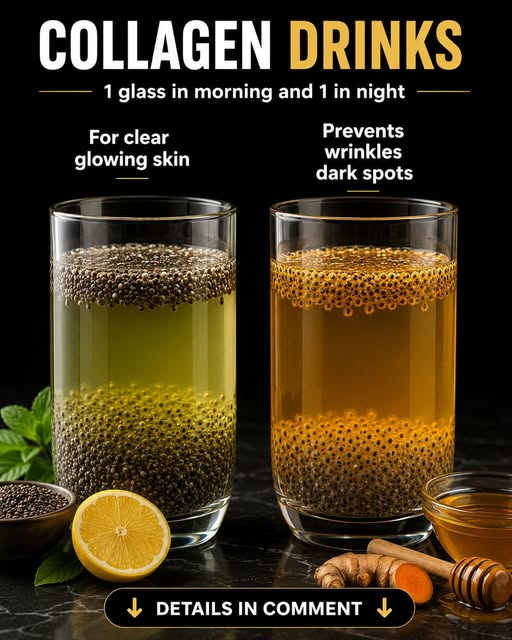
Collagen supports the structure, strength and elasticity of the skin, but its natural production gradually declines with age and can be further affected by ultraviolet exposure, smoking, poor nutrition and inadequate sleep. Drinks made with fruit, seeds and spices may provide protein, vitamin C, healthy fats and antioxidants needed for normal skin function; however, chia seeds, lemon, turmeric and honey do not contain collagen and have not been proven to prevent wrinkles or remove dark spots. Clinical research mainly concerns hydrolysed collagen supplements used consistently for eight to twelve weeks, and a recent meta-analysis found that reported benefits were not confirmed when studies funded by collagen companies were analysed separately. Therefore, “collagen drinks” should be viewed as nutritious collagen-support drinks rather than guaranteed anti-ageing treatments. (PubMed)
Skin type does not substantially change the body’s nutritional requirements for collagen. The following categories simply offer practical recipe variations: lighter and lower-sugar drinks for oily skin, more nourishing options for dry skin and milder recipes for people who prefer less acidic ingredients. Select one drink rather than consuming several each day.

Remedy 1: For Normal Skin
Guava, Yogurt and Chia Collagen-Support Smoothie
Ingredients and Scientific Benefits
- ½ medium guava: Provides vitamin C needed for normal collagen formation.
- ¾ cup plain unsweetened yogurt: Supplies protein and amino acids used to build body tissues.
- 1 teaspoon chia seeds, soaked: Provides fibre and alpha-linolenic acid, a plant omega-3 fat.
- 1 tablespoon rolled oats: Adds soluble fibre and complex carbohydrates.
- 1 teaspoon ground pumpkin seeds: Supplies protein, zinc, copper and beneficial fats.
- ½ cup cold water: Adjusts the consistency and contributes to normal hydration.
How the Ingredients Work Scientifically
Vitamin C is an essential cofactor in collagen synthesis, and prolonged deficiency weakens connective tissue. Guava is an excellent food source of this vitamin, while yogurt and pumpkin seeds supply amino acids required for protein production. Chia seeds are rich in fibre and alpha-linolenic acid, but clinical evidence does not show that chia alone increases skin collagen or removes wrinkles. This smoothie supports normal nutrition; it does not function like a medical collagen treatment. (Office of Dietary Supplements)
Procedure
Soak the chia seeds in three tablespoons of water for approximately 15 minutes. Add the soaked seeds, guava, yogurt, oats, pumpkin seeds and remaining water to a blender. Blend until smooth and drink immediately. Do not add refined sugar.
How Often to Take
Drink one glass with breakfast once daily for five days. It may be continued three to five times weekly for eight to twelve weeks as part of a balanced diet.
Initial Results
Within one to three days, the drink may improve fullness and help maintain regular fluid intake. Changes in wrinkles, dark spots or collagen cannot realistically occur in this period.
Remedy 2: For Combination Skin
Tomato, Red Pepper and Flaxseed Savoury Drink
Ingredients and Scientific Benefits
- 1 medium ripe tomato: Provides lycopene, vitamin C and carotenoids.
- ¼ cup chopped red bell pepper: Supplies a concentrated amount of vitamin C.
- ½ cup peeled cucumber: Adds fluid and creates a refreshing texture.
- ½ cup plain unsweetened yogurt: Provides protein and improves the drink’s consistency.
- 1 teaspoon freshly ground flaxseed: Contains fibre, lignans and alpha-linolenic acid.
- ¼ cup cold water: Makes the mixture easier to blend.
- A small pinch of black pepper: Adds flavour without added sugar.
How the Ingredients Work Scientifically
Tomatoes provide lycopene, an antioxidant studied for protection against ultraviolet-related skin damage. A controlled trial found that regular tomato-paste intake reduced markers of photodamage, but the intervention lasted about twelve weeks and did not replace sunscreen. Red pepper provides vitamin C for collagen synthesis, while yogurt supplies protein. Ground flaxseed provides plant omega-3 fats; however, eating flaxseed is not equivalent to taking the measured flaxseed-oil doses used in skin studies. (PubMed)
Procedure
Wash and chop the tomato, pepper and cucumber. Blend them with the yogurt, ground flaxseed, water and black pepper until smooth. Drink the mixture fresh and do not strain it, as straining removes useful fibre.
How Often to Take
Consume once daily with lunch or as a mid-morning drink for three to five days. Continue three or four times weekly for up to twelve weeks when well tolerated.
Initial Results
The drink may feel refreshing and support normal digestion within the first few days. Photoprotective or collagen-related changes should not be expected before several weeks, and sunscreen remains necessary.
Remedy 3: For Oily or Acne-Prone Skin
Low-Sugar Berry, Green Tea and Oat Cooler
Ingredients and Scientific Benefits
- ¾ cup cooled, unsweetened green tea: Provides polyphenols without added sugar.
- ½ cup strawberries: Supplies vitamin C and natural antioxidants.
- ¼ cup plain unsweetened yogurt: Adds protein.
- 1 teaspoon soaked chia seeds: Provides fibre and beneficial fats.
- 1 tablespoon rolled oats: Helps make the drink more filling.
- ¼ cup cold water: Adjusts the consistency.
How the Ingredients Work Scientifically
This drink is intentionally free from honey, fruit juice and added sugar. Some controlled studies have reported improvement in acne with a lower-glycaemic diet, while other trials have produced less convincing results. A low-sugar smoothie may therefore fit a balanced acne-conscious diet, but it is not an acne cure. Oral green-tea studies have also failed to show consistent visible improvement in photoaged skin, so green tea should be considered a nutritious beverage rather than a wrinkle treatment. (PubMed)
Procedure
Soak the chia seeds for 15 minutes. Blend the strawberries, yogurt, oats, soaked chia, green tea and water. Drink it without adding honey, syrup or sugar.
How Often to Take
Take one glass in the morning on alternate days for at least five days. Continue three times weekly for eight to twelve weeks while maintaining a balanced, lower-sugar diet.
Initial Results
You may notice improved satiety within the first day or two. Oil production and acne are unlikely to change within three days, and persistent acne still requires appropriate skincare or medical treatment.
Remedy 4: For Dry Skin
Papaya, Flaxseed and Oat Hydration Smoothie
Ingredients and Scientific Benefits
- ½ cup ripe papaya: Provides vitamin C and carotenoids.
- ¾ cup plain milk or unsweetened soy milk: Supplies fluid and protein.
- 1 tablespoon plain yogurt: Adds protein and produces a creamy texture.
- 1 teaspoon freshly ground flaxseed: Provides alpha-linolenic acid and fibre.
- 1 tablespoon rolled oats: Adds complex carbohydrates and soluble fibre.
- 1 teaspoon ground sunflower seeds: Supplies vitamin E and unsaturated fats.
- ¼ cup water: Adjusts the drink’s thickness.
How the Ingredients Work Scientifically
A controlled trial found that flaxseed-oil supplementation improved skin hydration, smoothness, scaling and water-loss measurements after several weeks. Ground flaxseed is nutritionally valuable but does not provide the same standardized oil dose, so similar effects cannot be guaranteed. Papaya contributes vitamin C, while milk, soy milk and yogurt provide amino acids used in normal tissue maintenance. (PubMed)
Procedure
Place all ingredients in a blender and process until completely smooth. Allow the drink to stand for two minutes so the oats can soften, then consume it fresh.
How Often to Take
Drink once daily for five days, preferably with breakfast. Continue four or five times weekly for eight to twelve weeks if it fits your calorie and dietary needs.
Initial Results
The drink may support fluid intake and provide a satisfying breakfast within one to three days. Dry skin is more directly improved by topical moisturizer, and research suggests moisturizer can affect skin hydration more reliably than simply increasing water intake. (PubMed)
Remedy 5: For Sensitive Skin
Gentle Banana, Oat and Soy Skin-Support Drink
Ingredients and Scientific Benefits
- ¾ cup unsweetened soy milk: Provides plant protein and naturally occurring isoflavones.
- ½ small ripe banana: Adds natural sweetness and potassium.
- 2 tablespoons cooked and cooled oats: Provide soluble fibre and a smooth texture.
- ¼ cup blueberries: Supply vitamin C and dietary polyphenols.
- 1 teaspoon soaked chia seeds: Adds fibre and alpha-linolenic acid.
- ¼ cup water: Produces a lighter consistency.
How the Ingredients Work Scientifically
There is no drink that specifically treats sensitive skin. This mild recipe avoids citrus, concentrated spices and added sweeteners. Soy-isoflavone trials have reported modest improvements in some signs of ageing after sustained intake, but benefits were measured over weeks or months rather than a few days. People with soy allergy should use plain milk or another tolerated protein source instead. (PubMed)
Procedure
Blend the soy milk, banana, cooked oats, blueberries, soaked chia and water. Drink immediately and avoid storing the mixture at room temperature.
How Often to Take
Consume one glass daily for three to five days. Continue three or four times weekly for eight to twelve weeks when comfortable and well tolerated.
Initial Results
The drink may feel gentle and filling during the first few days. It will not prevent skin reactions, eczema or facial redness. Sensitive or inflamed skin requires fragrance-free topical care and medical assessment when symptoms persist.
Final Tips for Protecting Collagen and Preventing Premature Wrinkles
One well-balanced drink per day is sufficient. The instruction in the image to drink one glass in the morning and another at night is unnecessary for most people. Large quantities of chia and flax may cause bloating, abdominal discomfort or changes in bowel habits, so start with one teaspoon and soak chia seeds before drinking them.
Do not depend on turmeric and honey drinks to remove dark spots. Turmeric has been studied for several skin conditions, but the available trials are small and use varying preparations. Honey mainly adds sugar and calories when consumed in a drink. Neither has been proven to prevent wrinkles or pigmentation. (PubMed)
Apply broad-spectrum, water-resistant SPF 30 or higher every morning. UV exposure is a major contributor to wrinkles and age spots, while sunscreen helps prevent further darkening. Existing dark spots often require months to fade and may need dermatologist-guided treatment. (American Academy of Dermatology)
Sleep adequately, avoid smoking, maintain a stable weight and eat enough protein. Drinking extra water may improve skin hydration slightly in people who normally drink very little, but water alone does not rebuild collagen or erase wrinkles. (PubMed)
Diet Plan to Support Natural Collagen Production
At breakfast, choose one of the drinks above with an egg, plain yogurt or a small serving of lentils for additional protein. For lunch, eat chicken, fish, beans, chickpeas or tofu with whole grains and vegetables. Include guava, kiwi, berries, papaya, tomato or bell pepper during the day for vitamin C. For an evening snack, choose a small handful of walnuts, pumpkin seeds or sunflower seeds. Dinner should contain vegetables and a protein source such as fish, chicken, tofu, beans or lentils.
Continue this balanced diet for at least eight to twelve weeks. Do not expect visible improvement in wrinkles or dark spots after three to five days. Consult a doctor or dermatologist if pigmentation appears suddenly, a dark area changes shape or colour, the skin becomes persistently itchy or inflamed, or ageing changes are causing significant concern. People with diabetes, kidney disease, swallowing difficulties, food allergies or medicines that affect blood clotting should discuss frequent seed drinks or supplements with a healthcare professional.
References for the above remedy
- Myung SK, Park YC. “Effects of Collagen Supplements on Skin Aging: A Systematic Review and Meta-Analysis of Randomized Controlled Trials.”
https://pubmed.ncbi.nlm.nih.gov/40324552/ - Pu SY, et al. “Effects of Hydrolyzed Collagen Supplementation on Skin Hydration and Elasticity: A Systematic Review and Meta-Analysis.”
https://pubmed.ncbi.nlm.nih.gov/37432180/ - National Institutes of Health, Office of Dietary Supplements. “Vitamin C: Fact Sheet for Health Professionals.”
https://ods.od.nih.gov/factsheets/VitaminC-HealthProfessional/ - Teoh SL, et al. “Clinical Evidence on Dietary Supplementation with Chia Seed.”
https://pubmed.ncbi.nlm.nih.gov/29452425/ - Neukam K, et al. “Supplementation of Flaxseed Oil Diminishes Skin Sensitivity and Improves Skin Barrier Function.”
https://pubmed.ncbi.nlm.nih.gov/21088453/ - Rizwan M, et al. “Tomato Paste Rich in Lycopene Protects Against Cutaneous Photodamage in Humans.”
https://pubmed.ncbi.nlm.nih.gov/20854436/ - Smith RN, et al. “A Low-Glycemic-Load Diet Improves Symptoms in Acne Vulgaris Patients.”
https://pubmed.ncbi.nlm.nih.gov/17616769/ - Izumi T, et al. “Oral Intake of Soy Isoflavone Aglycone Improves the Aged Skin of Adult Women.”
https://pubmed.ncbi.nlm.nih.gov/17484381/ - Vaughn AR, Branum A, Sivamani RK. “Effects of Turmeric on Skin Health: A Systematic Review.”
https://pubmed.ncbi.nlm.nih.gov/27213821/ - American Academy of Dermatology Association. “How to Fade Dark Spots in Darker Skin Tones.”
https://www.aad.org/public/everyday-care/skin-care-secrets/routine/fade-dark-spots