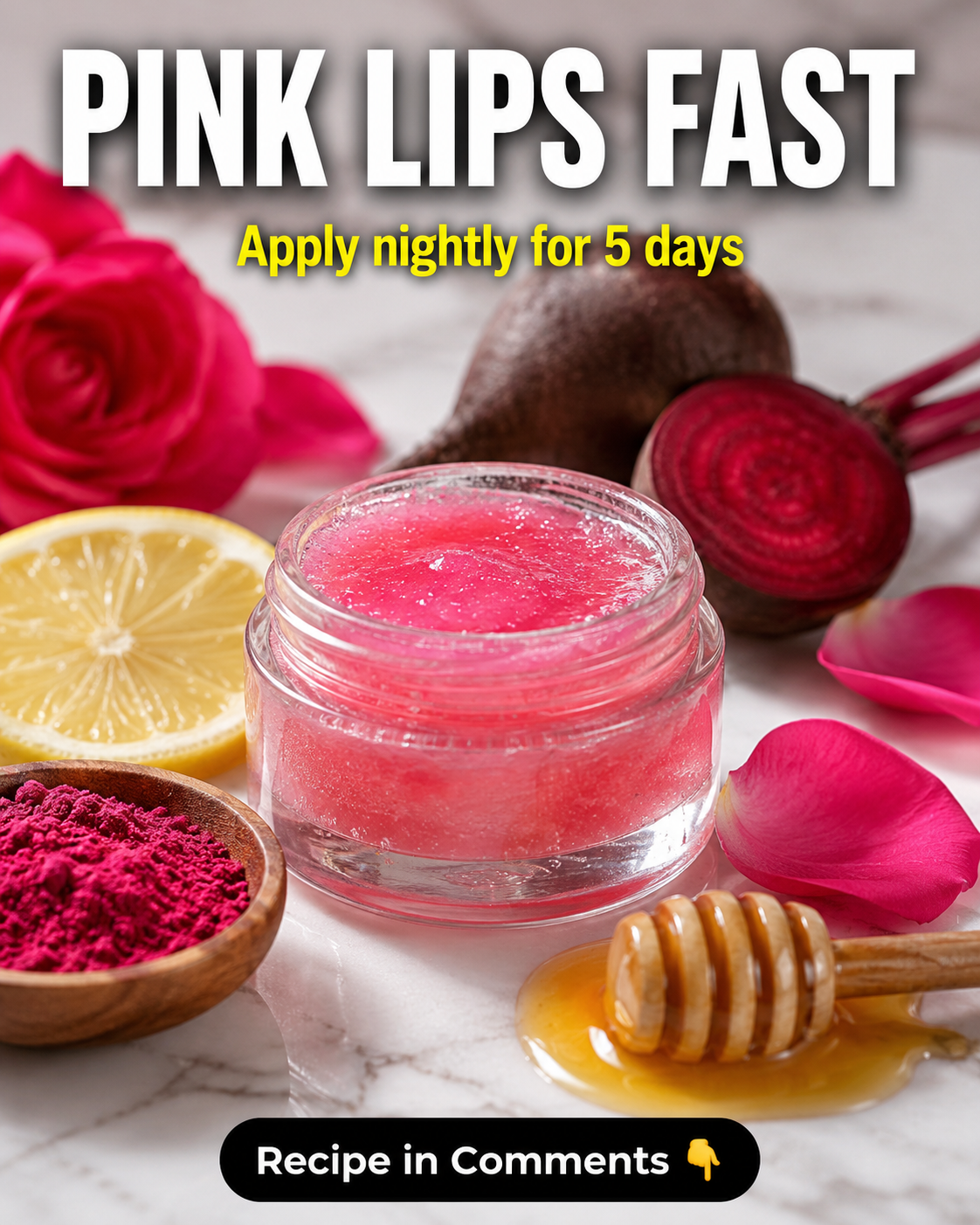
Soft, smooth lips often look brighter because a well-hydrated surface reflects light more evenly. However, naturally dark, brown, mauve, or deeply pigmented lips are completely normal and are influenced by genetics and natural melanin. Sun exposure, repeated lip licking, smoking, dehydration, irritating toothpaste or cosmetics, allergic reactions, and inflammation can sometimes make lips appear darker or uneven. No homemade mixture can permanently change natural lip color in five days, but gentle care may reduce dryness, dullness, peeling, and rough texture within a few days. Persistent or newly developing lip pigmentation should be assessed according to its cause rather than treated with repeated bleaching remedies. (PubMed)
The beetroot shown in the image can create a temporary rosy tint because its natural pigment stains the lip surface. It does not remove melanin. The scientifically supported purpose of the following remedies is to improve moisture, support the lip barrier, reduce irritation, and create a naturally healthier appearance.
Always patch-test each preparation. Apply only to the visible outer lips, not inside the mouth. Do not use these remedies over bleeding cracks, cold sores, infected skin, or unexplained ulcers.
Remedy 1: Beetroot and Coconut Conditioning Veil for Normal Skin
This remedy is suitable for lips that are normally comfortable but occasionally appear dull, slightly rough, or dehydrated.
Ingredients and Scientific Working
Fresh beetroot juice — 2 drops: Beetroot provides a temporary natural red-pink stain. It changes surface appearance briefly but is not a permanent pigmentation treatment.
Virgin coconut oil — 1/2 teaspoon: Coconut oil acts as an emollient and has demonstrated moisturizing benefits in human research involving dry skin. (PubMed)
Cold-pressed sunflower seed oil — 1/4 teaspoon: Sunflower oil contains linoleic-acid-rich lipids that support the protective barrier and help reduce moisture loss. (PubMed)
Finely powdered colloidal oatmeal — 1/4 teaspoon: Colloidal oatmeal supports barrier repair and helps reduce dryness and roughness. (PubMed)
Vegetable glycerin — 2 drops: Glycerin attracts water into the outer skin layer and improves hydration. (PubMed)
Cooled green tea — 1/2 teaspoon: Green tea provides a light water base and naturally occurring antioxidant compounds.
Procedure
Mix the green tea with the oatmeal and allow it to soften for two minutes. Add glycerin and beetroot juice. Apply the mixture gently for five minutes and rinse without rubbing.
While the lips remain slightly damp, press one drop of coconut oil mixed with one drop of sunflower oil over the surface.
How Often to Apply
Apply once nightly for five days. Afterward, use two or three evenings weekly.
Initial Results
The lips may feel softer within one or two applications. Beetroot can create an immediate temporary pink tint, while improved hydration may make the natural color appear fresher within two to three days.
Remedy 2: Green Tea and Jojoba Dual-Zone Treatment for Combination Skin
Some people experience dry corners while the center of the lips remains relatively smooth. This two-zone method provides extra protection where it is needed without applying a heavy layer everywhere.
Ingredients and Scientific Working
Cooled green tea — 1 teaspoon: Green tea supplies antioxidant plant compounds and creates a lightweight base.
Pure aloe vera gel — 1 teaspoon: Aloe-containing topical preparations have demonstrated moisturizing effects, although aloe can still irritate some people. (NCCIH)
Jojoba oil — 3 drops: Jojoba is rich in natural wax esters and is commonly used to improve lubrication and reduce surface friction. (PubMed)
Colloidal oatmeal — 1/2 teaspoon: Oat compounds support moisture retention and help protect dry areas.
Vegetable glycerin — 2 drops: Glycerin helps retain water in the outer lip surface.
Sunflower seed oil — 1 drop: One drop provides extra barrier support for dry corners.
Procedure
Combine green tea, aloe, oatmeal, and glycerin. Apply a thin layer over the lips for five minutes and rinse gently.
Mix jojoba oil with one drop of sunflower oil. Apply the mixture only to dry corners and rough areas. Use a single drop of jojoba oil over the center if needed.
How Often to Apply
Use on alternate nights for five days. Continue two or three times weekly if the lips remain comfortable.
Initial Results
Dry corners may feel less tight within one to three days. The lips may appear more even because rough patches become smoother.
Remedy 3: Rice, Aloe, and Oat Water-Gel for Oily Facial Skin
The lips do not contain oil glands like facial skin, but people with oily or acne-prone skin around the mouth may prefer a light treatment that does not spread a thick oil layer onto nearby skin.
Ingredients and Scientific Working
Rice starch water — 1 teaspoon: Rice-derived ingredients have been studied for moisturizing and barrier-supporting properties. (PubMed)
Pure aloe vera gel — 1 teaspoon: Aloe provides lightweight hydration without a heavy oily finish.
Cooled green tea — 1 teaspoon: Green tea creates a fresh water-based texture and contributes antioxidant polyphenols.
Colloidal oatmeal — 1/4 teaspoon: Finely powdered oatmeal reduces roughness without physical scrubbing.
Vegetable glycerin — 2 drops: A very small amount helps prevent dryness.
Jojoba oil — 1 drop: One drop provides light lubrication and reduces friction.
Procedure
Mix rice starch water, green tea, aloe, oatmeal, and glycerin. Allow the mixture to rest for two minutes.
Apply a very thin layer to the outer lip surface. Leave it on for five minutes, then rinse. Press one drop of jojoba oil over the lips only if they still feel dry.
Prepare the mixture fresh and discard any remainder.
How Often to Apply
Use once nightly for three days. If no irritation occurs, continue every other night for two weeks.
Initial Results
The lips may feel smoother and less tight within one to three days without leaving the surrounding skin greasy.
Remedy 4: Honey, Oat, and Coconut Recovery Treatment for Dry Lips
Dry lips often look dull or darker because flaking and tiny cracks create an uneven surface. Restoring moisture can improve their appearance without attempting to bleach natural pigment.
Ingredients and Scientific Working
Pure honey — 1/2 teaspoon: Honey has moisture-retaining properties and has been studied for antioxidant, anti-inflammatory, and wound-supportive effects. (PubMed)
Virgin coconut oil — 1/2 teaspoon: Coconut oil softens dry skin and reduces moisture loss. (PubMed)
Cold-pressed sunflower seed oil — 1/4 teaspoon: Sunflower oil supports barrier integrity and improves hydration. (PubMed)
Colloidal oatmeal — 1 teaspoon: Oatmeal helps reduce roughness and supports a compromised moisture barrier. (PubMed)
Vegetable glycerin — 3 drops: Glycerin increases moisture retention and helps soften visible flaking.
Boiled and cooled water — 1 teaspoon: Water softens the oatmeal and prevents abrasive rubbing.
Procedure
Mix the oatmeal with cooled water and allow it to soften for five minutes. Add honey and glycerin.
Apply the soft paste to the lips without scrubbing. Leave it on for seven to eight minutes and remove with a damp, soft cloth.
Mix coconut oil and sunflower oil. Press one or two drops over the slightly damp lips to seal in moisture.
How Often to Apply
Apply nightly for five days. Continue three evenings weekly until dryness improves.
Initial Results
Tightness may improve after the first use. After two or three days, peeling may decrease and fine dehydration lines may look temporarily softer.
Remedy 5: Minimal Aloe and Oat Comfort Compress for Sensitive Lips
Sensitive lips may react to fragrances, flavors, rose extracts, essential oils, strongly colored ingredients, or complicated homemade mixtures. A short ingredient list is usually more appropriate.
Ingredients and Scientific Working
Colloidal oatmeal — 1 teaspoon: Oatmeal supports the skin barrier and has clinically demonstrated soothing and moisturizing activity. (PubMed)
Pure aloe vera gel — 1/2 teaspoon: Aloe adds lightweight hydration. Omit it if aloe has caused burning or itching before.
Vegetable glycerin — 2 drops: Glycerin helps retain moisture without exfoliating sensitive lips.
Jojoba oil — 1 drop: A small quantity reduces friction and provides light emollient support.
Boiled and cooled water — 2 teaspoons: Water creates a mild compress rather than a concentrated mask.
Procedure
Mix the oatmeal with cooled water and leave it for five minutes. Add aloe and glycerin.
Dip a small, clean piece of soft cotton cloth into the liquid and place it gently over closed lips for three minutes. Do not wipe or rub.
Rinse with cool-to-lukewarm water and press one drop of jojoba oil over the lips if needed.
How Often to Apply
Use once daily for three days. Continue every other day only if no redness, swelling, itching, or increased peeling develops.
Initial Results
Sensitive lips may feel calmer and less tight within one to three applications. The goal is comfort and barrier repair rather than rapid color change.
Why Lemon Should Not Be Applied to the Lips
Although lemon appears in the image, fresh lemon juice is not recommended for pink lips. Its acidity can sting dry or cracked skin and may worsen irritation. Repeated inflammation around the lips can contribute to discoloration rather than removing it.
Avoid lemon juice, baking soda, toothpaste, undiluted apple-cider vinegar, cinnamon, peppermint oil, strong essential oils, salt, and rough sugar scrubs. Burning or tingling does not mean a remedy is working.
Final Tips for Naturally Healthy-Looking Lips
Use a gentle, fragrance-free lip moisturizer during the day. Before outdoor exposure, apply broad-spectrum SPF 30 or higher lip protection and reapply approximately every two hours. Sun exposure can worsen dryness and contribute to long-term lip damage. (American Academy of Dermatology)
Avoid licking, biting, peeling, or repeatedly rubbing the lips. Saliva creates a wet-and-dry cycle that damages the barrier and can lead to inflammation and post-inflammatory color changes. (DermNet®)
Check products that regularly touch the lips, including toothpaste, mouthwash, lipstick, lip color, flavored balms, and fragrances. Persistent dryness, scaling, itching, swelling, or pigmentation may be caused by contact cheilitis. (DermNet®)
Keep bowls, spoons, cloths, and applicators clean. Prepare all water-based remedies fresh and discard leftovers. Visible softness and glow may begin within two to three days. Continued hydration can make fine surface lines appear softer over time, but home remedies do not permanently remove deep lip lines or natural pigmentation.
Diet Plan for Healthy Lips
A balanced diet cannot change genetically determined lip color, but adequate nutrition supports normal skin renewal and helps prevent some causes of cracking around the mouth.
Breakfast: Eat eggs with whole-grain bread, oatmeal with milk and nuts, or plain yogurt with fruit.
Mid-morning: Choose guava, orange, papaya, kiwi, berries, or another vitamin-C-rich fruit.
Lunch: Include lentils, chickpeas, beans, eggs, fish, chicken, or lean meat with vegetables and whole-wheat roti or rice.
Evening snack: Eat fruit with a small handful of almonds, walnuts, sunflower seeds, or pumpkin seeds.
Dinner: Choose vegetables with lentils, beans, eggs, fish, or chicken. Include leafy vegetables several times weekly.
Hydration: Drink water according to thirst, activity level, and climate. Water supports general hydration but does not directly lighten lip pigment.
Persistent cracks at the mouth corners can sometimes be associated with iron, riboflavin, folate, vitamin B12, zinc, or other nutritional problems. Do not start high-dose supplements without medical assessment. (NCBI)
Continue the selected home remedy for three to five days initially. If it suits your lips, use it two or three times weekly for three to four weeks. Continue the balanced diet for at least eight to twelve weeks.
See a dermatologist, dentist, or doctor if lip darkening begins suddenly, spreads, affects only one area, or continues despite avoiding possible irritants. Medical assessment is also important for persistent bleeding, pain, swelling, crusting, a non-healing ulcer, severe cracking, or a rough patch that does not disappear. (PubMed)
References for the above remedy
- Ho KK, et al. Approaches to the Evaluation of Lip Hyperpigmentation.
https://pubmed.ncbi.nlm.nih.gov/22715817/ - Figueiredo AS, et al. Pigmented Contact Cheilitis: A Systematic Review.
https://pubmed.ncbi.nlm.nih.gov/39396149/ - American Academy of Dermatology. 7 Dermatologists’ Tips for Healing Dry, Chapped Lips.
https://www.aad.org/public/everyday-care/skin-care-basics/dry/heal-dry-chapped-lips - Agero ALC, Verallo-Rowell VM. A Randomized Double-Blind Controlled Trial Comparing Extra Virgin Coconut Oil With Mineral Oil as a Moisturizer for Xerosis.
https://pubmed.ncbi.nlm.nih.gov/15724344/ - Danby SG, et al. Effect of Olive and Sunflower Seed Oil on the Adult Skin Barrier.
https://pubmed.ncbi.nlm.nih.gov/22995032/ - Ilnytska O, et al. Colloidal Oatmeal Improves Skin Barrier Through Multitherapy Activity.
https://pubmed.ncbi.nlm.nih.gov/27272074/ - Breternitz M, et al. Placebo-Controlled, Double-Blind Study of Glycerol-Based Emollients and Skin Hydration.
https://pubmed.ncbi.nlm.nih.gov/18025807/ - Dal’Belo SE, et al. Moisturizing Effect of Cosmetic Formulations Containing Aloe Vera Extract.
https://pubmed.ncbi.nlm.nih.gov/17026654/ - Pazyar N, et al. Jojoba in Dermatology: A Succinct Review.
https://pubmed.ncbi.nlm.nih.gov/24442052/ - Yaghoobi R, et al. Evidence for Clinical Use of Honey in Wound Healing.
https://pubmed.ncbi.nlm.nih.gov/24624197/