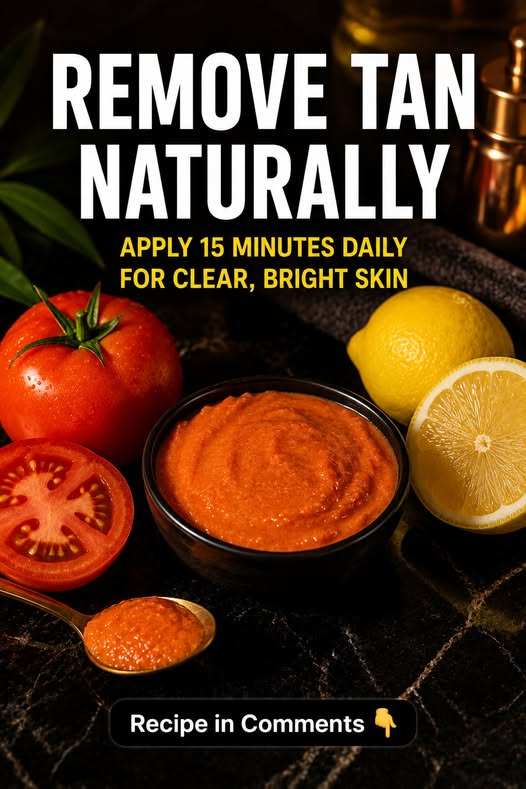
A suntan develops when ultraviolet (UV) radiation stimulates the skin to produce more melanin, its protective pigment. Although a tan is sometimes viewed as a cosmetic issue, dermatologists emphasize that tanning itself is a sign that the skin has been exposed to damaging UV radiation. (American Academy of Dermatology) Once tanning has occurred, there is no scientifically proven kitchen ingredient that can erase accumulated melanin in 15 minutes. However, gentle natural ingredients can hydrate dry sun-exposed skin, calm its appearance, support the skin barrier, and help prevent additional unevenness while normal skin turnover gradually reduces the tan.
The tomato-and-lemon combination commonly promoted for tan removal deserves particular caution. Tomato contains lycopene, and clinical studies have found photoprotective effects when tomato products were eaten consistently for about 12 weeks. This does not prove that applying raw tomato paste removes an existing tan. (PubMed) Lemon juice, meanwhile, is acidic and can irritate facial skin, so the safer remedies below avoid using raw lemon. The most important step in fading a tan is preventing additional UV exposure with shade, protective clothing, and broad-spectrum SPF 30+ sunscreen. (American Academy of Dermatology)
Remedy 1: For Normal Skin – Tomato, Aloe and Oat Recovery Mask
Ingredients
- 1 tablespoon ripe tomato pulp
- 1 tablespoon pure aloe vera gel
- 1 tablespoon finely ground oats
- 1 teaspoon plain unsweetened yogurt
- 1 teaspoon cucumber puree
- ½ teaspoon honey
Scientific Working of Each Ingredient
Tomato: Tomatoes contain lycopene and related carotenoids. Human studies have found that regular dietary tomato products can increase resistance to UV-induced redness and reduce markers of photodamage. (PubMed) These findings support tomato’s antioxidant potential but should not be interpreted as proof that topical tomato “bleaches” a tan.
Aloe vera: Aloe contains compounds including aloesin. Laboratory research has found that aloesin can inhibit tyrosinase, an enzyme involved in melanin production. However, this evidence does not establish homemade aloe masks as clinically proven depigmenting treatments. (PubMed)
Oats: Finely ground oats provide a gentle base and avoid the damage caused by rough physical exfoliation. Clinical studies of colloidal-oat preparations support their moisturizing and skin-barrier benefits. (PubMed)
Yogurt, cucumber and honey: These ingredients mainly contribute moisture, texture, and skin comfort. Their inclusion should not be interpreted as clinically proven tan-removal therapy.
Procedure
Blend the tomato pulp until smooth. Stir in aloe, oats, yogurt, cucumber, and honey. Apply a thin layer to clean skin without scrubbing. Leave it for 10–15 minutes, then rinse thoroughly with cool or lukewarm water.
How Often to Apply
Use once daily or on alternate days for 3–5 days initially. Stop if redness, burning, or itching occurs.
Initial Results
Within 1–3 days, skin may feel softer, smoother, and better hydrated. A true suntan should not be expected to disappear this quickly.
Remedy 2: For Combination Skin – Green Tea, Aloe and Tomato Cooling Mask
Ingredients
- 1 tablespoon cooled brewed green tea
- 1 tablespoon aloe vera gel
- 1 teaspoon tomato pulp
- 1 teaspoon cucumber puree
- 1 teaspoon finely ground oats
- ½ teaspoon honey
Scientific Working of the Remedy
Green tea contains catechin polyphenols with antioxidant and anti-inflammatory properties. Research on topical green and white tea extracts found protection against some UV-related cellular and immune effects, although the extracts had an SPF of only about 1 and were explicitly not replacements for sunscreen. (PubMed)
Aloe provides the lightweight base, while its constituent aloesin has demonstrated tyrosinase-inhibiting activity in experimental research. (PubMed)
Tomato contributes carotenoids, but evidence for photoprotection comes primarily from dietary studies lasting weeks rather than brief topical applications.
Oats help support hydration without abrasive exfoliation.
Procedure
Brew green tea and allow it to cool completely. Mix one tablespoon with the remaining ingredients. Spread over the tanned area and leave for approximately 10 minutes. Rinse without rubbing.
How Often to Apply
Use once daily for 3–5 days. Afterward, two or three applications weekly are sufficient if your skin tolerates it.
Initial Results
Cooling and hydration can make the complexion look fresher within several days. Reduction of actual pigmentation requires considerably longer.
Remedy 3: For Oily Skin – Green Tea, Tomato and Aloe Mask
Ingredients
- 2 tablespoons cooled green tea
- 1 tablespoon tomato pulp
- 1 tablespoon aloe vera gel
- 1 teaspoon finely ground oats
- 1 teaspoon cucumber juice
Why These Ingredients May Help
This formula avoids heavy oils.
Green tea polyphenols have been investigated for their effects on UV-related skin damage. One human study found that topical green and white tea extracts offered protection against certain UV-induced effects, although they did not function as effective sunscreens. (PubMed)
Tomato supplies antioxidant carotenoids such as lycopene. Clinical dietary studies demonstrate photoprotective effects from sustained tomato consumption, including reduced UV-induced erythema. (PubMed)
Aloe makes the mixture easier to spread without introducing a heavy oily base.
Procedure
Mix everything into a smooth paste. Apply it to clean skin and leave it for 10–15 minutes. Wash it off gently with lukewarm water.
Do not rub tomato or oats vigorously against the skin.
How Often to Apply
Use once daily for up to 5 days and then reduce to two or three times weekly.
Initial Results
Temporary oil reduction, softness, and a fresher-looking complexion may become noticeable within 1–3 days. Existing melanin pigmentation will fade more gradually.
Remedy 4: For Dry Skin – Oat, Aloe, Honey and Tomato Moisture Mask
Ingredients
- 1½ tablespoons pure aloe vera gel
- 1 tablespoon finely ground oats
- 1 teaspoon tomato pulp
- 1 teaspoon honey
- 1 teaspoon cucumber puree
- ½ teaspoon virgin coconut oil
Scientific Working of Each Ingredient
Dry, sun-exposed skin needs hydration more than aggressive “de-tanning.”
Oats are particularly appropriate because colloidal-oat-containing preparations have demonstrated improvements in hydration, roughness, and skin-barrier measurements in clinical research. (PubMed)
Aloe creates a water-rich base and contains biologically interesting compounds such as aloesin.
Tomato supplies carotenoids, while coconut oil and honey create a more emollient mixture suitable for dryness.
A better-hydrated skin surface reflects light more evenly, so it may look brighter even before pigmentation changes.
Procedure
Combine everything until creamy. Spread a thin layer across the affected skin and leave it for 10–15 minutes. Rinse gently and moisturize afterward if necessary.
How Often to Apply
Use once daily or every other day for 5 days. Continue two or three times weekly if helpful.
Initial Results
Dryness and roughness may improve relatively quickly. The skin may consequently appear less dull within several days, while tanning itself will take longer to fade.
Remedy 5: For Sensitive Skin – Aloe, Oat and Cucumber Recovery Mask
Sensitive skin should not be treated with an aggressive acidic de-tanning mixture.
Ingredients
- 2 tablespoons pure aloe vera gel
- 1 tablespoon finely ground oats
- 1 tablespoon cucumber puree
- 1 tablespoon cooled green tea
- ½ teaspoon honey, optional
Scientific Working of the Remedy
Colloidal-style finely ground oats are used because research supports oatmeal-containing preparations for improving skin-barrier function and dryness. (PubMed)
Green tea supplies antioxidant polyphenols, while aloe provides a cooling, water-rich base.
This sensitive-skin recipe deliberately eliminates lemon, vinegar, baking soda, essential oils, and rough granules. Irritating already sun-exposed skin can create additional inflammation rather than producing a clearer complexion.
Procedure
Mix the aloe, finely ground oats, cucumber, and cooled tea. Patch-test first. If comfortable, apply for only 5–10 minutes and rinse gently.
How Often to Apply
Start on alternate days for 3–5 days. Do not continue if the mixture causes stinging, itching, or persistent redness.
Initial Results
Skin may feel cooler, softer, and less dry within the first few applications. Sensitive skin should be allowed to recover rather than repeatedly exfoliated in an attempt to remove pigment.
Why Lemon Is Not Included in These Tan-Removal Remedies
Although the image suggests tomato and lemon, raw lemon juice is not necessary for removing a tan. A natural ingredient is not automatically gentle enough for facial skin.
Strongly acidic DIY mixtures may sting or irritate the skin, particularly after significant sun exposure. Instead of trying to “bleach” the skin rapidly, focus on protecting it from additional UV exposure and allowing pigmentation to fade gradually.
Similarly, avoid baking soda, undiluted vinegar, harsh sugar/salt scrubs, and excessive daily exfoliation.
The Most Important Step: Prevent the Tan From Becoming Darker
Home masks are secondary. Sun protection is the essential intervention.
The American Academy of Dermatology recommends a sunscreen that provides broad-spectrum UVA/UVB protection, SPF 30 or higher, and water resistance. (American Academy of Dermatology) Apply it before going outdoors and reapply approximately every two hours when outdoors, as well as after swimming or sweating. (American Academy of Dermatology)
This matters because continuing UV exposure stimulates additional pigmentation. Visible light can also worsen hyperpigmentation, particularly in darker skin tones; tinted sunscreen containing iron oxides can provide additional visible-light protection. (American Academy of Dermatology)
Final Tips for Clear, Bright Skin
Keep the skincare routine gentle, stay adequately hydrated, sleep consistently, and avoid repeatedly scrubbing tanned areas. Wash reusable facial cloths and skincare tools regularly and patch-test every homemade mixture before applying it widely.
A hydrating mask can make the skin feel softer and look fresher within 2–3 days, but genuine removal of an established suntan should not be promised within that period. The skin needs time to shed pigment-containing cells naturally.
Most importantly, never intentionally tan again while trying to fade an existing tan. The AAD states that there is no safe way to tan because UV-induced tanning represents skin damage. (American Academy of Dermatology)
Diet Plan to Support Sun-Exposed Skin
Diet cannot remove a tan overnight, but antioxidant-rich foods can support overall skin health.
For breakfast, choose oats with berries, guava, kiwi, or citrus fruit and a handful of nuts or seeds. Add eggs or plain yogurt for protein.
For lunch, combine tomatoes, leafy greens, carrots, bell peppers, lentils or beans with fish, chicken, eggs, or another protein source. Tomato products are particularly interesting because controlled human studies have demonstrated increased photoprotection after sustained dietary tomato/lycopene intake. (PubMed)
For an afternoon snack, choose whole fruit, nuts, seeds, or unsweetened yogurt rather than sugary drinks and highly processed snacks.
For dinner, include plenty of vegetables with protein and a whole-grain carbohydrate. Foods containing carotenoids, vitamin C, vitamin E, and healthy fats can form part of a balanced diet.
Continue healthy eating and strict sun protection for at least 8–12 weeks, rather than expecting food or masks to reverse tanning within a few days. One tomato-paste clinical trial, for example, evaluated participants after 12 weeks. (PubMed)
If your skin is severely sunburned, blistered, painful, unusually swollen, develops persistent patches of pigmentation, or the discoloration does not gradually improve despite good sun protection, see a doctor or dermatologist rather than repeatedly applying home remedies.
References for the above remedy
- Rizwan M, Rodriguez-Blanco I, Harbottle A, Birch-Machin MA, Watson REB, Rhodes LE. Tomato paste rich in lycopene protects against cutaneous photodamage in humans in vivo: a randomized controlled trial. British Journal of Dermatology.
URL: https://pubmed.ncbi.nlm.nih.gov/20854436/ - Aust O, Stahl W, Sies H, Tronnier H, Heinrich U. Supplementation with tomato-based products increases lycopene, phytofluene, and phytoene levels in human serum and protects against UV-light-induced erythema.
URL: https://pubmed.ncbi.nlm.nih.gov/15830922/ - Jones K, Hughes J, Hong M, Jia Q, Orndorff S. Modulation of melanogenesis by aloesin: a competitive inhibitor of tyrosinase.
URL: https://pubmed.ncbi.nlm.nih.gov/12213089/ - Camouse MM, Domingo DS, Swain FR, et al. Topical application of green and white tea extracts provides protection from solar-simulated ultraviolet light in human skin.
URL: https://pubmed.ncbi.nlm.nih.gov/19492999/ - Gunt HB, Levy SB, Lutrario CA. Clinical Improvements in Very Dry Skin from a Natural Ingredient-Based Moisturizing Cream Compared With a Leading Colloidal Oatmeal Control.
URL: https://pubmed.ncbi.nlm.nih.gov/30005098/ - Capone K, Kirchner F, Klein SL, Tierney NK. Effects of Colloidal Oatmeal Topical Atopic Dermatitis Cream on Skin Microbiome and Skin Barrier Properties.
URL: https://pubmed.ncbi.nlm.nih.gov/32484623/ - American Academy of Dermatology. How to decode a sunscreen label.
URL: https://www.aad.org/public/everyday-care/sun-protection/shade-clothing-sunscreen/understand-sunscreen-labels - American Academy of Dermatology. How to apply sunscreen.
URL: https://www.aad.org/public/everyday-care/sun-protection/shade-clothing-sunscreen/how-to-apply-sunscreen - American Academy of Dermatology. Sunscreen FAQs.
URL: https://www.aad.org/media/stats-sunscreen