A suntan develops when ultraviolet radiation stimulates the skin to produce more melanin as a protective response. The extra pigment cannot be safely washed, scrubbed or bleached away in ten minutes. It fades gradually as pigmented surface cells are naturally replaced. Gentle home care may reduce dryness, calm sun-related irritation and make the complexion look brighter, but preventing further ultraviolet exposure is the most important part of restoring an even-looking tone.
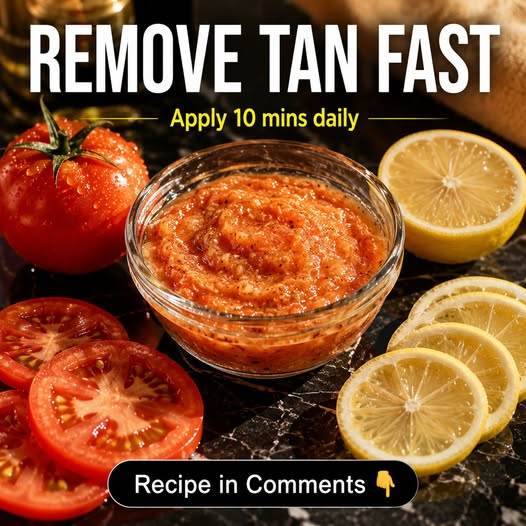
The image suggests applying tomato and lemon. Tomato is more useful as part of the diet because human trials have studied lycopene-rich tomato foods for protection against ultraviolet damage. Raw lemon juice should not be applied to sun-exposed skin. Citrus compounds can react with ultraviolet light and cause phytophotodermatitis, which may lead to redness, blistering and darker pigmentation—the opposite of the desired result. (PubMed)
The exact homemade masks below have not been tested as complete clinical formulas. Their ingredients were selected because standardized versions have evidence for hydration, barrier support, inflammation control or gradual improvement in uneven pigmentation. Patch-test every remedy for 24 hours, prepare only one application and discard all leftovers.
Remedy 1: For Normal Skin
Amla, Soy and Yogurt Tone-Renewal Mask
Ingredients
- 1 teaspoon unsweetened soy milk
- ⅛ teaspoon finely powdered amla
- 1 teaspoon plain unsweetened yogurt
- 1 teaspoon finely ground barley flour
- 1 teaspoon plain aloe vera gel
- 1 drop vegetable glycerin
Scientific Working of Each Ingredient
Standardized soy compounds can interfere with the transfer of melanin-containing structures into surface skin cells. A controlled 12-week trial of a stabilized soy moisturizer reported improvements in mottled pigmentation, overall tone, texture and dullness, with several changes beginning from the second week. Kitchen soy milk is less concentrated, so its effects will be milder. (PubMed)
A randomized trial of a formulated amla-branch extract gel found improvements in measured skin colour, hydration and elasticity after 84 days. Amla powder is not equivalent to the standardized gel, which is why only a small quantity is used. Yogurt supplies moisture and naturally occurring lactate, while barley, aloe and glycerin support a smoother, better-hydrated surface. (PubMed)
Procedure
Mix the soy milk with the amla powder until no dry particles remain. Add yogurt, aloe and glycerin, followed by barley flour. Apply a thin, even layer to clean skin, avoiding the eyelids and broken areas.
Leave the mask on for seven to eight minutes. Rinse with lukewarm water without rubbing or allowing the mixture to dry completely.
How Often to Apply
Apply once daily for the first three days. Continue twice weekly for four weeks when well tolerated.
Initial Results
Within one to three days, normal skin may feel softer and look more refreshed. A visible tan will usually need several weeks to fade.
Remedy 2: For Combination Skin
Licorice and Green Tea Split-Zone Mask
Ingredients
- 1 teaspoon cooled licorice-root infusion
- 1 teaspoon strongly brewed, cooled green tea
- 1 teaspoon plain yogurt
- 1 teaspoon colloidal oatmeal
- 1 teaspoon rice starch
- ½ teaspoon pure honey
Scientific Working of Each Ingredient
Licorice contains compounds that may influence inflammation and melanin production. A clinical study using a standardized cream containing licorice, emblica and belides reported meaningful improvement in melasma over 60 days. Homemade licorice tea is considerably weaker, but it offers a cautious natural option for short-contact use. (PubMed)
Green-tea catechins provide antioxidant and anti-inflammatory activity, while rice starch and oatmeal help maintain the protective barrier. Yogurt provides lightweight moisture, and honey reduces the overly dry feeling that can occur around the cheeks.
Procedure
Prepare weak licorice tea and green tea separately and allow both to cool. Combine the measured liquids with yogurt and honey. Add oatmeal and rice starch to create a soft paste.
Apply a thinner layer over the forehead, nose and chin and a slightly thicker layer over dry cheeks. Leave for eight minutes and rinse while the mask remains moist.
How Often to Apply
Use on days one, three and five. Continue twice weekly for four to six weeks if the skin remains comfortable.
Initial Results
The T-zone may look fresher while the cheeks feel less tight within two or three applications. Pigment changes require longer and depend on strict sun protection.
Remedy 3: For Oily Skin
Turmeric, Green Tea and Gentle Clay Mask
Ingredients
- A very small pinch of culinary turmeric, approximately 1/16 teaspoon
- 1 tablespoon strongly brewed, cooled green tea
- 1 teaspoon cosmetic-grade kaolin clay
- 1 teaspoon plain aloe vera gel
- 1 teaspoon unsweetened soy milk
- 1 teaspoon colloidal oatmeal
Scientific Working of Each Ingredient
Turmeric contains curcumin-related compounds with antioxidant and anti-inflammatory activity. A systematic review found early clinical evidence for turmeric or curcumin preparations in several skin conditions, including photoaging, but the studies used measured formulations rather than ordinary spice masks. Household turmeric should therefore be used sparingly and not treated as an instant skin-lightening agent. (PubMed)
Kaolin temporarily absorbs surface oil, which may make the complexion look clearer, but it does not change natural skin colour. Green tea and soy offer antioxidant and tone-supporting compounds, while aloe and oatmeal help limit tightness and irritation. Irritating oily skin can cause inflammation and make uneven pigmentation more persistent.
Procedure
Mix the green tea, soy milk and aloe. Add the oatmeal and kaolin, followed by the tiny pinch of turmeric. Apply a very thin layer to oily areas without rubbing active pimples.
Leave it on for five minutes only. Rinse before the clay hardens or cracks, then use a lightweight moisturizer.
How Often to Apply
Apply every other day for five days, giving three applications. Afterward, use once weekly for up to four weeks.
Initial Results
Excess shine may look reduced after the first treatment. The surface can feel smoother within one to three uses, but the underlying tan will not disappear immediately.
Remedy 4: For Dry Skin
Soy, Honey and Sunflower Barrier Mask
Ingredients
- 1 tablespoon unsweetened soy milk
- 1 teaspoon pure honey
- 1 tablespoon colloidal oatmeal
- 1 teaspoon plain aloe vera gel
- ¼ teaspoon cold-pressed sunflower seed oil
- 2 drops vegetable glycerin
Scientific Working of Each Ingredient
Dryness makes tanned skin appear dull and uneven because a rough surface reflects light irregularly. Soy offers gradually acting tone-supporting compounds, while honey, aloe and glycerin attract or supply moisture. Colloidal-oatmeal preparations have clinically improved skin hydration and barrier function. (PubMed)
Sunflower seed oil contains linoleic-acid-rich lipids. In a controlled human study, it preserved barrier integrity and improved hydration, whereas topical olive oil weakened the barrier and produced mild redness. The oil is included for dryness management, not as a skin-lightening ingredient. (PubMed)
Procedure
Combine the soy milk, aloe, honey and glycerin. Add the oatmeal and allow it to soften for one minute. Blend in the sunflower oil last.
Apply to slightly damp skin for 10 minutes. Rinse gently and immediately apply a simple moisturizer to retain hydration.
How Often to Apply
Apply once daily for three to five days. Continue three times weekly for another three weeks.
Initial Results
Flaking and tightness may begin improving within one to three days. Better hydration can make the face look brighter, but this is not the same as removing melanin.
Remedy 5: For Sensitive Skin
Barley and Oat Barrier-Comfort Compress
Ingredients
- 1 tablespoon cooled barley water
- 1 tablespoon cooled boiled water
- 1½ teaspoons colloidal oatmeal
- 1 teaspoon rice starch
- 1 drop vegetable glycerin
- 2 drops sunflower seed oil
Scientific Working of Each Ingredient
Sensitive skin should not be treated with strong acids, concentrated herbal extracts or frequent exfoliation. Irritation can stimulate additional pigmentation and make a tan look more uneven.
Formulated beta-glucan skincare has improved hydration and barrier recovery in clinical research, while oatmeal supports skin pH, hydration and barrier function. Barley water is less concentrated than a beta-glucan formulation, but it creates a mild, soothing base. Glycerin attracts water, sunflower oil reduces moisture loss and rice starch creates a soft texture without abrasive particles. (PubMed)
Procedure
Prepare barley water by simmering one teaspoon of pearl barley in one cup of water for about 10 minutes. Strain and cool it completely.
Combine one tablespoon of barley water with the boiled water, oatmeal and rice starch. Allow the mixture to soften for two minutes before adding glycerin and sunflower oil. Patch-test it for 24 hours. Apply a very thin layer for five minutes and rinse gently.
How Often to Apply
Use every other day for five days. Continue once weekly only when no burning, itching or prolonged redness develops.
Initial Results
Sensitive skin may feel calmer and less dry within one to three applications. This remedy protects the barrier rather than aggressively targeting pigment.
Final Tips for Fading a Tan Safely
Apply broad-spectrum sunscreen every morning and reapply it when spending extended time outdoors. Wear a hat, use shade and limit direct midday sun. A randomized study in Indian skin types IV and V found improvements in pigmentation and radiance after 12 weeks of regular sunscreen use. Another large randomized trial found less measurable photoaging among people assigned to daily sunscreen. (PubMed)
Do not apply lemon or lime juice, bleach, toothpaste, baking soda, undiluted vinegar, essential oils or coarse sugar scrubs. Avoid rubbing the face with raw tomato, dry flour or fruit peels. Lemon-related phototoxic reactions can progress from redness and blistering to prolonged hyperpigmentation. (PubMed)
Visible softness and glow may begin within two or three days. Fine dehydration lines can look gradually smoother, but established wrinkles are not removed by these masks. A recent tan may need approximately two to six weeks to fade, provided that additional ultraviolet exposure is controlled.
Continue one well-tolerated remedy for four to six weeks rather than applying several masks together. Consult a dermatologist when pigmentation remains unchanged after eight to twelve weeks, forms symmetrical facial patches, spreads, becomes itchy or appears after a severe sunburn. Seek medical care promptly for blistering, marked swelling, severe pain or an irregular pigmented spot that changes in colour, border or size.
Diet Plan to Support Skin Recovery from Sun Exposure
Follow this balanced eating pattern for at least eight to twelve weeks. Diet does not replace sunscreen or erase an existing tan, but antioxidant-rich foods may support the skin’s response to ultraviolet stress.
Breakfast: Eat eggs, oatmeal, plain yogurt or beans with guava, orange, papaya, berries or another vitamin-C-rich fruit.
Lunch: Choose fish, chicken, lentils, beans or chickpeas with leafy vegetables and brown rice or whole-grain bread.
Snack: Have a whole fruit with a small handful of unsalted walnuts, almonds or pumpkin seeds.
Dinner: Include a protein source with tomatoes, carrots, spinach, broccoli, pumpkin or peppers.
Cooked tomato with a small amount of dietary oil is a useful option. In a randomized trial, women consumed lycopene-rich tomato paste with olive oil for 12 weeks and developed greater protection against ultraviolet-related skin effects than the control group. This supports eating tomatoes regularly; it does not prove that rubbing raw tomato on the face removes a tan. (PubMed)
Drink water according to thirst, sleep regularly and avoid extreme detox diets. Continue the diet and sun-protection plan for at least two to three months. When persistent pigmentation is accompanied by ongoing rashes, hormonal symptoms or unexplained skin changes, see a doctor.
References for the above remedy
- Wallo W, Nebus J, Leyden JJ. Efficacy of a soy moisturizer in photoaging: a double-blind, vehicle-controlled study.
https://pubmed.ncbi.nlm.nih.gov/17941363/ - Costa A, et al. Association of emblica, licorice and belides in the clinical treatment of melasma.
https://pubmed.ncbi.nlm.nih.gov/21152784/ - Pientaweeratch S, et al. Phyllanthus emblica branch extract and improvements in skin colour, hydration and aging signs.
https://pubmed.ncbi.nlm.nih.gov/34522633/ - Vaughn AR, Branum A, Sivamani RK. Effects of turmeric on skin health: a systematic review of clinical evidence.
https://pubmed.ncbi.nlm.nih.gov/27213821/ - Capone K, et al. Effects of colloidal oatmeal cream on skin-barrier properties.
https://pubmed.ncbi.nlm.nih.gov/32484623/ - Danby SG, et al. Effects of olive oil and sunflower seed oil on the adult skin barrier.
https://pubmed.ncbi.nlm.nih.gov/22995032/ - Fluhr JW, Darlenski R, Surber C. Glycerol and its functions in skin hydration and barrier repair.
https://pubmed.ncbi.nlm.nih.gov/18510666/ - Hughes MCB, et al. Sunscreen and prevention of skin aging: a randomized trial.
https://pubmed.ncbi.nlm.nih.gov/23732711/ - Matthews MR, et al. Lemon-related phytophotodermatitis and burn-like skin injuries.
https://pubmed.ncbi.nlm.nih.gov/29324427/ - Rizwan M, et al. Lycopene-rich tomato paste protects against ultraviolet-related skin damage in humans.
https://pubmed.ncbi.nlm.nih.gov/20854436/