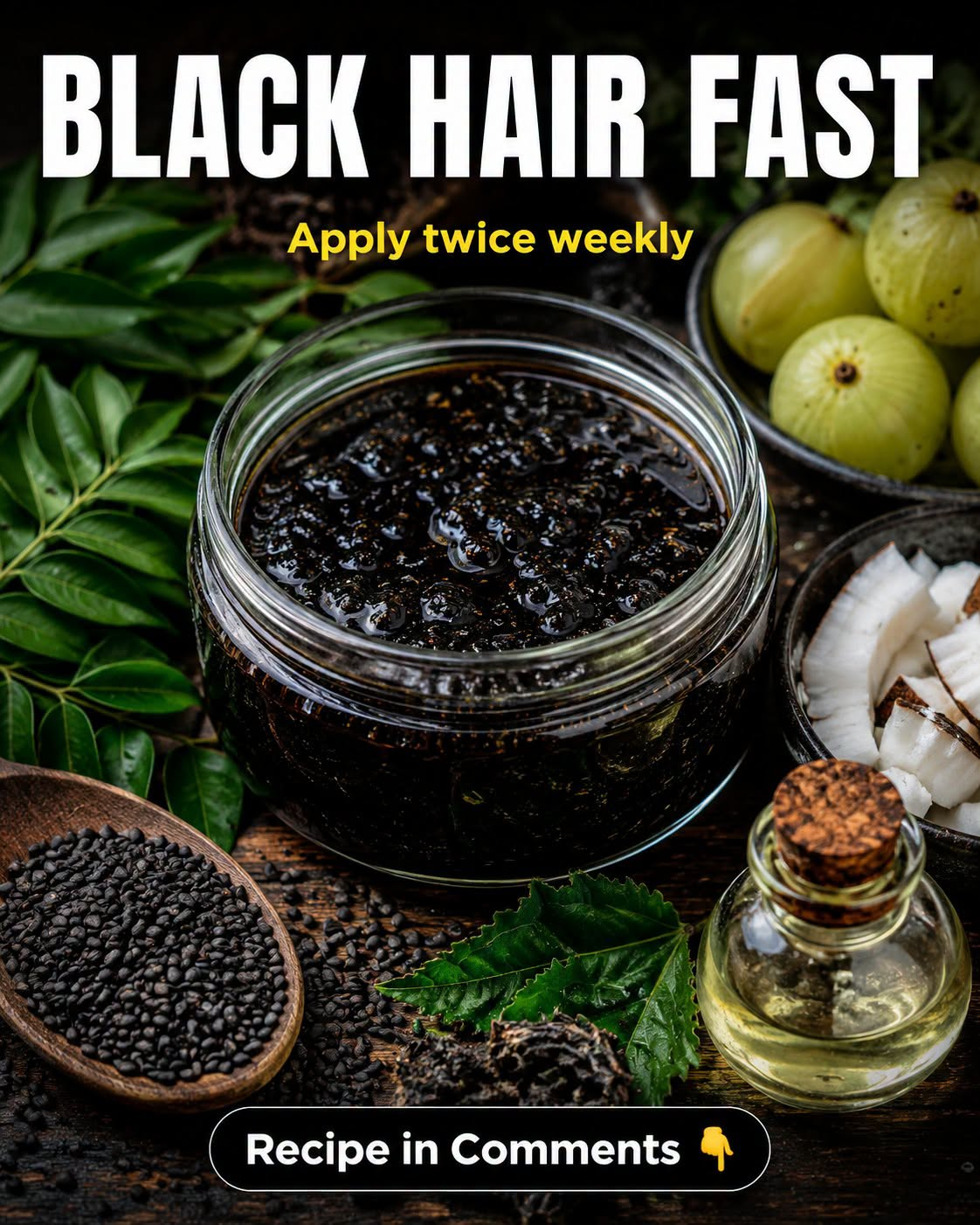
Gray or white strands can become noticeable early and may affect confidence, especially when natural hair is dark. However, a homemade oil containing amla, curry leaves, black sesame or coconut cannot permanently turn an already gray strand black within a few days. Gray hair develops when pigment-producing cells inside the follicle reduce or stop making melanin. Current research does not confirm that common kitchen remedies can reliably restart this process. Natural plant dyes can nevertheless coat gray strands, produce a darker appearance and improve shine while nutrition and medical care address potentially reversible causes of premature graying. (PMC)
Henna and indigo have the strongest practical evidence among natural darkening ingredients. Henna deposits a copper-red pigment on keratin, while indigo layered over that base produces brown-to-black tones. Studies of herbal colorants have documented visible coloring of gray hair, but the results are cosmetic and gradually fade; they do not prove restoration of natural follicular pigment. (PMC)
Remedy 1: Two-Step Henna and Indigo Treatment for a Normal Scalp
Ingredients and Their Scientific Benefits
- Pure henna powder – 4 tablespoons: Its lawsone pigment binds to hair keratin and creates the warm base needed for darker indigo coverage.
- Pure indigo powder – 4 tablespoons: Indigo deposits blue-toned pigment over henna, creating a dark brown or black appearance.
- Warm water – about ¾ cup: Hydrates the powders and allows an even paste to form.
- Pure aloe vera gel – 1 tablespoon: Helps make the henna mixture easier to spread and may soothe mild scalp dryness.
- Virgin coconut oil – 1 teaspoon: Used after coloring to reduce friction and protect the hair shaft.
- Colloidal oatmeal – 1 teaspoon: Added to the aftercare rinse to soothe temporary dryness.
How This Remedy Works Scientifically
Henna used alone usually creates orange, auburn or reddish-brown tones. Indigo used after henna overlays a cooler plant pigment, producing much darker results. Coconut oil does not make gray hair black, but laboratory research shows that it can penetrate hair and reduce protein loss, helping colored strands remain smoother and less prone to breakage. (PMC)
Procedure
Mix the henna with enough warm water to make a yoghurt-like paste. Add the aloe gel, cover the bowl and follow the dye-release time provided for the pure powder. Apply to clean, dry hair from roots to ends while wearing gloves. Leave for 60–120 minutes and rinse thoroughly with water.
Immediately prepare a fresh indigo paste with warm water. Apply it over the henna-treated hair, concentrating on gray areas. Leave for 45–90 minutes and rinse. Do not shampoo until the following day. After 24–48 hours, mix coconut oil with the oatmeal and a little water, apply for 15 minutes and shampoo gently.
How Often to Apply
Use the complete coloring treatment every four to six weeks. Applying it twice weekly is unnecessary and may irritate the scalp.
Initial Results
Gray strands should appear darker on the first day. The shade commonly deepens during the following 24–48 hours. This is deposited color, not permanent biological repigmentation.
Remedy 2: Amla, Henna and Indigo Root Glaze for a Combination Scalp
Ingredients and Their Scientific Benefits
- Pure henna powder – 2 tablespoons: Provides a keratin-binding base pigment.
- Pure indigo powder – 3 tablespoons: Produces a cooler and deeper final tone.
- Amla powder – 1 teaspoon: Contains tannins and antioxidant compounds and can help reduce the overly bright copper tone of henna.
- Aloe vera gel – 1 tablespoon: Adds lightweight hydration to dry sections.
- Rice starch – 1 teaspoon: Forms a soft paste and can help reduce the greasy feeling around oily roots.
- Sunflower seed oil – ½ teaspoon: Conditions dry ends without being applied heavily to the scalp.
- Warm water – as required: Activates and spreads the botanical powders.
How This Remedy Works Scientifically
Amla is traditionally used in dark-hair preparations, but human evidence that it restores lost melanin is insufficient. Its more realistic role in this remedy is to modify the warmth of henna and support the consistency of the paste. Plant-colorant research supports the ability of combinations containing henna, indigo and tannin-rich botanicals to deposit color on gray fibers. (PMC)
Procedure
Mix the henna, amla and enough water to create a smooth paste. Let it rest according to the henna instructions. Apply mainly to gray roots and leave for 60–90 minutes. Rinse.
Prepare the indigo separately with water and rice starch. Apply immediately over the colored roots and leave for 45–60 minutes. Rinse well. Once the hair is dry, rub the sunflower oil between your palms and apply only to rough ends.
How Often to Apply
Repeat the root treatment every three to five weeks. Use sunflower oil on the ends once or twice weekly when needed.
Initial Results
The root color may look dark brown initially and become deeper during the next two days. Dry ends may look smoother after the first light oil application.
Remedy 3: Lightweight Indigo Root Refresher for an Oily Scalp
Ingredients and Their Scientific Benefits
- Pure indigo powder – 3 tablespoons: Refreshes dark pigment on roots that already have a henna base.
- Pure henna powder – 1 tablespoon: Helps improve color adherence where the previous base has faded.
- Aloe vera gel – 1 tablespoon: Provides hydration without a heavy oily coating.
- Rice starch – 1 teaspoon: Improves paste texture and absorbs some surface oil.
- Colloidal oatmeal – 1 teaspoon: Supports a calmer skin barrier.
- Cooled boiled water – about ⅓ cup: Creates a fresh, spreadable paste.
How This Remedy Works Scientifically
Oily scalps generally do not need thick oil mixtures before coloring because heavy residues may reduce even pigment contact. This root-focused paste uses little or no oil. Indigo provides the visible darkening, while aloe and oatmeal are included for comfort rather than repigmentation. Clinical research on colloidal oatmeal supports its barrier-protective and soothing effects on irritated skin. (PubMed)
Procedure
Use this remedy only when the hair has previously been treated with henna or a henna-indigo base. Shampoo the scalp the day before and avoid applying oil afterward.
Combine henna, rice starch, oatmeal and water. Let the mixture rest briefly, then stir in freshly mixed indigo and aloe. Apply immediately to visible gray roots. Leave for 40–60 minutes and rinse thoroughly. Do not store leftover paste.
How Often to Apply
Use every three to four weeks as a root refresher, not twice weekly.
Initial Results
Root contrast may become less noticeable immediately. The final shade usually settles over one to two days.
Remedy 4: Dark-Color Routine with Coconut and Honey Aftercare for a Dry Scalp
Ingredients and Their Scientific Benefits
- Pure henna powder – 3 tablespoons: Creates the first pigment layer.
- Pure indigo powder – 3 tablespoons: Darkens the henna-treated strands.
- Warm water – about ½ cup: Forms the coloring pastes.
- Virgin coconut oil – 1 tablespoon: Helps reduce hair-protein loss and dryness.
- Raw honey – 1 teaspoon: Acts as a humectant and has limited clinical evidence for helping scalp scaling.
- Aloe vera gel – 1 tablespoon: Provides water-based soothing care.
- Colloidal oatmeal – 1 teaspoon: Helps reduce a tight, dry feeling.
How This Remedy Works Scientifically
The henna and indigo provide cosmetic darkening, while the remaining ingredients are used as a separate conditioning mask. Coconut oil has demonstrated protection against hair protein loss. A small clinical study also reported improvement in scaling and itching when diluted honey was used for seborrheic dermatitis and dandruff, although honey is not a treatment for every scalp condition. (PubMed)
Procedure
Perform the two-step henna and indigo process described in Remedy 1. Wait 48 hours before applying the conditioning mask so the color has time to settle.
Mix coconut oil, honey, aloe and oatmeal. Apply lightly to the scalp and thoroughly through the dry lengths. Leave for 20 minutes, then shampoo with lukewarm water.
How Often to Apply
Repeat the color every four to six weeks. The conditioning mask may be used twice weekly for three to four weeks.
Initial Results
Color becomes visible immediately and deepens within 48 hours. Hair may feel softer after the first conditioning treatment, but existing gray follicles will not begin producing pigment within three days.
Remedy 5: Minimal Patch-Tested Darkening Paste for a Sensitive Scalp
Ingredients and Their Scientific Benefits
- Pure henna powder – 2 tablespoons: Deposits a warm plant pigment on gray strands.
- Pure indigo powder – 2 tablespoons: Produces a deeper brown-black tone when layered over henna.
- Pure aloe vera gel – 1 tablespoon: May reduce dryness and scaling in some people.
- Colloidal oatmeal – 1 teaspoon: Helps support sensitive skin’s protective barrier.
- Cooled boiled water – as required: Creates a simple paste without perfume or essential oils.
How This Remedy Works Scientifically
Sensitive skin benefits from fewer ingredients. Even pure henna or natural indigo can occasionally trigger allergic contact dermatitis, so “natural” does not automatically mean reaction-free. The FDA recommends a skin test before every hair-dye application and advises against coloring an inflamed, scratched or damaged scalp. (PubMed)
Procedure
Patch-test henna and indigo separately 48 hours before use. Also test the final shade on a hidden strand.
When there is no reaction, prepare and apply henna first for 60 minutes. Rinse and apply freshly mixed indigo for 30–45 minutes. After rinsing, mix aloe and oatmeal with water and apply for five minutes before a final gentle rinse.
How Often to Apply
Use no more than once every five to six weeks. Stop immediately if burning, swelling, blistering or increased itching develops.
Initial Results
The strand color should change on the day of application and deepen within one to two days. Sensitive scalps should be observed closely for at least three days.
Final Tips for Maintaining Dark, Healthy-Looking Hair
Avoid products marketed as “black henna” unless their full ingredients are clearly disclosed. Some contain paraphenylenediamine, or PPD, which can cause severe allergic reactions and future sensitization. Always wear gloves, keep dye away from the eyes and never use hair dye on eyebrows or eyelashes. Wait at least 14 days after bleaching, relaxing or perming before applying another dye. (U.S. Food and Drug Administration)
Do not add lemon juice, undiluted essential oils, baking soda or strong vinegar to these mixtures. They can irritate the scalp and are not proven to restore melanin. Prepare water-containing mixtures fresh and discard leftovers.
For genuine color maintenance, apply the botanical dye every four to six weeks rather than twice weekly. Twice-weekly care should be limited to a mild conditioning mask for dry hair.
Diet Plan to Support Natural Hair Pigmentation
Diet cannot guarantee the reversal of genetic or age-related graying, but correcting a documented deficiency may support healthier pigment production.
Breakfast: Eggs or fortified cereal with oats and a vitamin-C-rich fruit.
Lunch: Lentils, chickpeas, fish or chicken with spinach, vegetables and whole grains.
Snack: A small handful of black sesame seeds, pumpkin seeds, almonds or walnuts.
Dinner: Fish, lean meat, tofu or beans with leafy vegetables, mushrooms and brown rice.
Important nutrients: Vitamin B12, folate, iron, copper, calcium, vitamin D and adequate protein.
Studies have found associations between premature graying and vitamin B12 deficiency, low ferritin, thyroid abnormalities and several other nutritional factors. Association does not prove that supplements will reverse gray hair, so high-dose vitamins or minerals should not be taken without professional advice and appropriate testing. (PubMed)
Continue a balanced diet for at least three months and assess botanical color every four to six weeks. Consult a dermatologist or doctor if graying begins suddenly, appears unusually early, progresses rapidly or occurs with fatigue, weight changes, hair loss, pale skin, numbness or menstrual problems. Blood tests may be needed for vitamin B12, iron status and thyroid function.
References for the above remedy
- Poonia K, et al. Premature Graying of Hair: A Comprehensive Review and Recent Insights.
https://pmc.ncbi.nlm.nih.gov/articles/PMC11444426/ - Kumar AB, Shamim H, Nagaraju U. Premature Graying of Hair: Review with Updates.
https://pmc.ncbi.nlm.nih.gov/articles/PMC6290285/ - Cui H, et al. Recent Advancements in Natural Plant Colorants Used for Hair Dye Applications.
https://pmc.ncbi.nlm.nih.gov/articles/PMC9692289/ - Singh V, et al. Study of Colouring Effect of Herbal Hair Formulations on Graying Hair.
https://pmc.ncbi.nlm.nih.gov/articles/PMC4471652/ - Rele AS, Mohile RB. Effect of Mineral Oil, Sunflower Oil and Coconut Oil on Prevention of Hair Damage.
https://pubmed.ncbi.nlm.nih.gov/12715094/ - Sonthalia S, et al. Vitamin B12, Ferritin and Thyroid Function with Premature Canities.
https://pubmed.ncbi.nlm.nih.gov/28584374/ - Sharma N, et al. Association of Epidemiological and Biochemical Factors with Premature Graying of Hair.
https://pubmed.ncbi.nlm.nih.gov/30607040/ - Al-Waili NS. Therapeutic and Prophylactic Effects of Crude Honey on Seborrheic Dermatitis and Dandruff.
https://pubmed.ncbi.nlm.nih.gov/11485891/ - Capone K, et al. Effects of Colloidal Oatmeal on Skin Barrier Function.
https://pubmed.ncbi.nlm.nih.gov/32484623/ - U.S. Food and Drug Administration. Hair Dyes: Safety Issues and Consumer Guidance.
https://www.fda.gov/cosmetics/cosmetic-products/hair-dyes