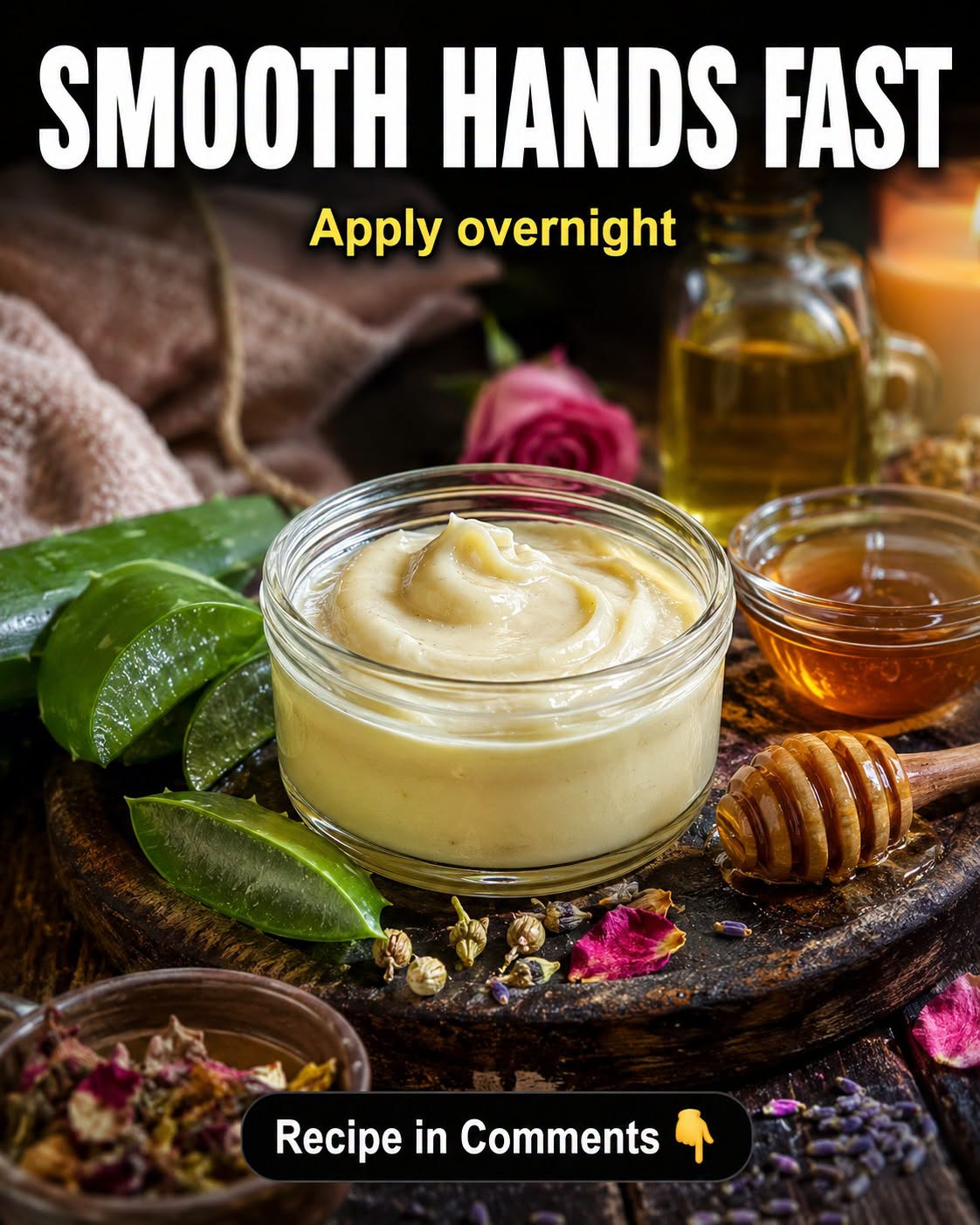
Rough, dry or dull-looking hands can develop from frequent washing, detergents, cold weather, low humidity and repeated exposure to water. Because the hands are constantly used and washed, their protective barrier can lose moisture faster than many other areas of the body. A carefully prepared overnight hand treatment can temporarily soften rough texture, improve hydration and make dehydration lines less noticeable. Dermatologists generally recommend applying moisturising ingredients to slightly damp skin and protecting the hands from further irritation. However, natural ingredients can also cause allergies, so every remedy should be patch-tested first. (American Academy of Dermatology)
The following remedies use ingredients with research supporting their individual moisturising, soothing or barrier-supporting properties. The exact homemade mixtures have not been tested as complete clinical formulations, so they should be viewed as supportive skincare rather than medical treatment.
Remedy 1: Oat, Aloe and Honey Overnight Veil for Normal Skin
Ingredients and Their Scientific Benefits
- Pure aloe vera gel – 1 tablespoon: Aloe contains water-binding compounds that can increase surface hydration and improve the feel of dry skin.
- Finely ground colloidal oatmeal – 1 teaspoon: Oat compounds form a protective film, calm irritation and support recovery of the outer skin barrier.
- Honey – 1 teaspoon: Honey acts as a natural humectant, helping attract and retain moisture. Use it only on intact, unbroken skin.
- Vegetable glycerin – ½ teaspoon: Glycerin draws water into the outer layer of skin and helps reduce roughness.
- Cold-pressed sunflower seed oil – 1 teaspoon: Its linoleic-acid-rich lipids help soften skin and support the protective barrier.
- Cooled boiled water – 1 teaspoon: This keeps the mixture spreadable and provides moisture for the humectants to hold.
How This Remedy Works Scientifically
This mixture combines three types of moisturising action. Aloe, glycerin and honey attract water; oatmeal calms and protects the surface; sunflower oil slows moisture loss. Clinical research supports colloidal oatmeal for improving dryness, while aloe and glycerin have demonstrated measurable hydration benefits in topical preparations. (PubMed)
Procedure
Mix all ingredients in a clean bowl until creamy. Wash your hands with lukewarm water, pat them gently and leave them slightly damp. Massage a very thin layer over the backs of the hands, knuckles and fingers. Wear clean cotton gloves overnight. Rinse in the morning and discard any leftover mixture.
How Often to Apply
Apply nightly for three to five nights.
Initial Results
After the first night, hands may feel softer and less tight. By days two or three, mild flaking and dehydration lines may appear less visible.
Remedy 2: Rice-Starch and Oat Hydration Cream for Combination Skin
Ingredients and Their Scientific Benefits
- Rice starch – 1 tablespoon: Rice starch has been studied as a soothing bath additive that can help damaged skin recover its barrier function.
- Colloidal oatmeal – 1 teaspoon: It helps reduce roughness and supports water retention.
- Aloe vera gel – 1 tablespoon: It provides lightweight hydration without creating a very greasy coating.
- Vegetable glycerin – ¼ teaspoon: A small amount increases hydration without making the mixture excessively sticky.
- Sunflower seed oil – ½ teaspoon: It softens dry knuckles while keeping the treatment lighter than a heavy butter.
- Cooled boiled water – 1 to 2 teaspoons: It activates the starch and helps form a smooth paste.
How This Remedy Works Scientifically
Combination-type hands may feel dry over the knuckles but become sweaty or uncomfortable on the palms. Rice starch and oatmeal create a soft, water-based base, while a small amount of sunflower oil reduces water loss over dry areas. In a clinical study, rice-starch bathing improved the healing capacity of experimentally damaged skin. (PubMed)
Procedure
Stir the rice starch into the cooled water. Add the oatmeal, aloe, glycerin and sunflower oil, then mix thoroughly. Apply a slightly thicker layer to the backs of the hands and knuckles, but use very little on the palms. Put on clean cotton gloves and leave overnight.
How Often to Apply
Use on alternate nights for four to six days.
Initial Results
A smoother surface may be noticeable after one or two applications. Dry knuckles may feel more flexible within two to three days.
Remedy 3: Lightweight Aloe and Rice Gel for Oily or Clammy Hands
Ingredients and Their Scientific Benefits
- Pure aloe vera gel – 1½ tablespoons: Supplies lightweight moisture and may help calm temporary irritation.
- Rice starch – 1 teaspoon: Absorbs some surface moisture while supporting a smoother texture.
- Colloidal oatmeal – ½ teaspoon: Provides soothing beta-glucans and barrier-supporting compounds.
- Vegetable glycerin – ¼ teaspoon: Helps prevent the gel from drying too quickly on the skin.
- Sunflower seed oil – 3 to 4 drops: Adds only a small amount of barrier-supporting lipid.
- Cooled boiled water – 1 teaspoon: Creates a thin, easily spreadable consistency.
How This Remedy Works Scientifically
Clammy hands do not necessarily need a heavy oil treatment. This formula relies mainly on aloe, rice starch and oatmeal, with only a few drops of oil. It hydrates rough areas while reducing the greasy feeling that can occur with thick overnight balms. Aloe-containing formulations have shown increased skin hydration, while oatmeal can help restore barrier function. (PMC)
Procedure
Combine the starch and oatmeal first. Add aloe, glycerin and water, followed by the sunflower oil. Apply a thin coat mainly to the backs of the hands and around the nails. Leave the palms nearly bare if they sweat easily. Wear loose cotton gloves overnight.
How Often to Apply
Apply every other night for three to five applications.
Initial Results
The hands may feel smoother without excessive heaviness after the first use. Rough patches may begin improving within two or three days.
Remedy 4: Coconut, Shea and Oat Recovery Balm for Dry Skin
Ingredients and Their Scientific Benefits
- Virgin coconut oil – 1 teaspoon: A controlled trial found it effective as a moisturiser for mild-to-moderate xerosis.
- Unrefined shea butter – 1 teaspoon: Its fatty components act as emollients that fill spaces between dry surface cells.
- Sunflower seed oil – 1 teaspoon: Supplies linoleic acid and helps support barrier lipids.
- Vegetable glycerin – ½ teaspoon: Attracts water and improves surface hydration.
- Colloidal oatmeal – 1 teaspoon: Reduces roughness and helps soothe dryness-related discomfort.
- Aloe vera gel – 1 teaspoon: Adds water and a lighter humectant component to the balm.
How This Remedy Works Scientifically
Very dry skin benefits from combining humectants with richer emollients. Glycerin and aloe provide hydration, while coconut oil, sunflower oil and shea butter form a lipid-rich layer that slows evaporation. Virgin coconut oil has performed similarly to mineral oil in a randomised trial involving xerosis, although individual tolerance varies. (PubMed)
Procedure
Warm the shea butter and coconut oil between clean fingertips without overheating. Mix in the sunflower oil, oatmeal, glycerin and aloe. Apply immediately to slightly damp hands, concentrating on knuckles and cuticles. Cover with cotton gloves overnight. Because the mixture contains water and no preservative, do not store leftovers.
How Often to Apply
Use nightly for five to seven nights, then reduce to two or three nights weekly.
Initial Results
Tightness may decrease after the first night. Flaking can improve within two to three days, but deeper cracking usually requires longer treatment.
Remedy 5: Minimal Oat and Rice Barrier Paste for Sensitive Skin
Ingredients and Their Scientific Benefits
- Colloidal oatmeal – 1 tablespoon: Helps soothe itching, dryness and irritation while supporting barrier repair.
- Rice starch – 1 tablespoon: Creates a gentle protective paste and may assist recovery of irritated skin.
- Cooled boiled water – 1½ tablespoons: Hydrates the mixture without adding fragrance.
- Vegetable glycerin – ¼ teaspoon: Holds water in the outer skin layer.
- Sunflower seed oil – ½ teaspoon: Provides a light emollient layer.
- Plain shea butter – ¼ teaspoon: Helps seal moisture over especially dry areas.
How This Remedy Works Scientifically
Sensitive skin generally benefits from fewer ingredients and no perfume, essential oils, lemon juice or strong exfoliants. Oatmeal and rice starch have both been studied for compromised skin barriers, while glycerin and sunflower oil provide hydration and lipid support. (PubMed)
Procedure
Mix the oatmeal and rice starch with water. Add the glycerin, sunflower oil and softened shea butter. Patch-test the mixture on a small area for 24 hours before using it overnight. When tolerated, apply a thin layer and wear clean cotton gloves. Stop immediately if burning, swelling or increased redness occurs.
How Often to Apply
Use every other night for three to five days.
Initial Results
Mild tightness may improve after one use. A calmer, softer texture may become noticeable within two to three days.
Final Tips for Keeping Hands Smooth
Use lukewarm rather than very hot water, pat instead of rubbing the hands dry and moisturise after every wash. Wear protective gloves while washing dishes or handling cleaning chemicals. Keep cotton gloves, towels and manicure tools clean. Avoid lemon, baking soda, undiluted essential oils and coarse sugar scrubs because they may irritate already damaged skin.
Patch-test every new ingredient, particularly aloe, oats, honey, coconut oil and shea butter. Overnight treatments can improve surface softness quickly, but true barrier recovery may take one to two weeks. Fine lines caused by dehydration can appear softer over time; home remedies cannot permanently remove structural wrinkles.
Diet Plan to Support Healthy, Smooth Hands
Follow this simple pattern for at least two to four weeks:
| Meal | Suggested Foods |
|---|---|
| Breakfast | Oatmeal with berries, seeds and plain yoghurt, or eggs with whole-grain bread |
| Mid-morning | Water and a vitamin-C-rich fruit such as guava, orange or kiwi |
| Lunch | Lentils, beans, chicken or fish with vegetables and whole grains |
| Snack | A small handful of walnuts, almonds or sunflower seeds |
| Dinner | Fish, legumes or lean meat with leafy vegetables, carrots and brown rice |
| Daily hydration | Drink according to thirst, activity and climate; increase fluids during hot weather |
Adequate water intake may improve skin hydration most noticeably in people who previously consumed too little. Vitamin C supports normal collagen synthesis, while dietary fatty acids contribute to skin-barrier structure. A balanced diet supports skin health but does not replace topical care or medical treatment. (PMC)
Continue the selected remedy for five to seven days and maintain gentle hand care for two weeks. See a doctor or dermatologist if the problem persists, repeatedly returns, becomes painful, or includes deep cracks, bleeding, swelling, blisters, pus, severe itching or spreading redness. These signs may indicate hand eczema, an allergy, infection or another condition requiring proper diagnosis.
References for the above remedy
- American Academy of Dermatology Association. “Dermatologists’ Top Tips for Relieving Dry Skin.”
https://www.aad.org/public/everyday-care/skin-care-basics/dry/dermatologists-tips-relieve-dry-skin - American Academy of Dermatology Association. “4 Skin Care Tips for Your Hands.”
https://www.aad.org/public/everyday-care/skin-care-basics/care/skin-care-tips-hands - Kalaaji AN, et al. Randomized controlled study of a colloidal oatmeal moisturiser for skin dryness.
https://pubmed.ncbi.nlm.nih.gov/25607563/ - Agero ALC, Verallo-Rowell VM. Extra virgin coconut oil compared with mineral oil for xerosis.
https://pubmed.ncbi.nlm.nih.gov/15724344/ - Fluhr JW, et al. “Glycerol and the Skin: Holistic Approach to Its Origin and Functions.”
https://pubmed.ncbi.nlm.nih.gov/18510666/ - Dal’Belo SE, et al. Moisturising effects of cosmetic formulations containing Aloe vera.
https://pubmed.ncbi.nlm.nih.gov/17026654/ - Danby SG, et al. Effect of olive and sunflower seed oil on the adult skin barrier.
https://pubmed.ncbi.nlm.nih.gov/22995032/ - Lin TK, et al. Anti-inflammatory and skin-barrier-repair effects of topical plant oils.
https://pmc.ncbi.nlm.nih.gov/articles/PMC5796020/ - De Paepe K, et al. Effect of rice starch on damaged skin-barrier function.
https://pubmed.ncbi.nlm.nih.gov/12353708/ - Suwiński G, et al. Honey-enriched hand creams and their effects on skin parameters.
https://pmc.ncbi.nlm.nih.gov/articles/PMC11677624/