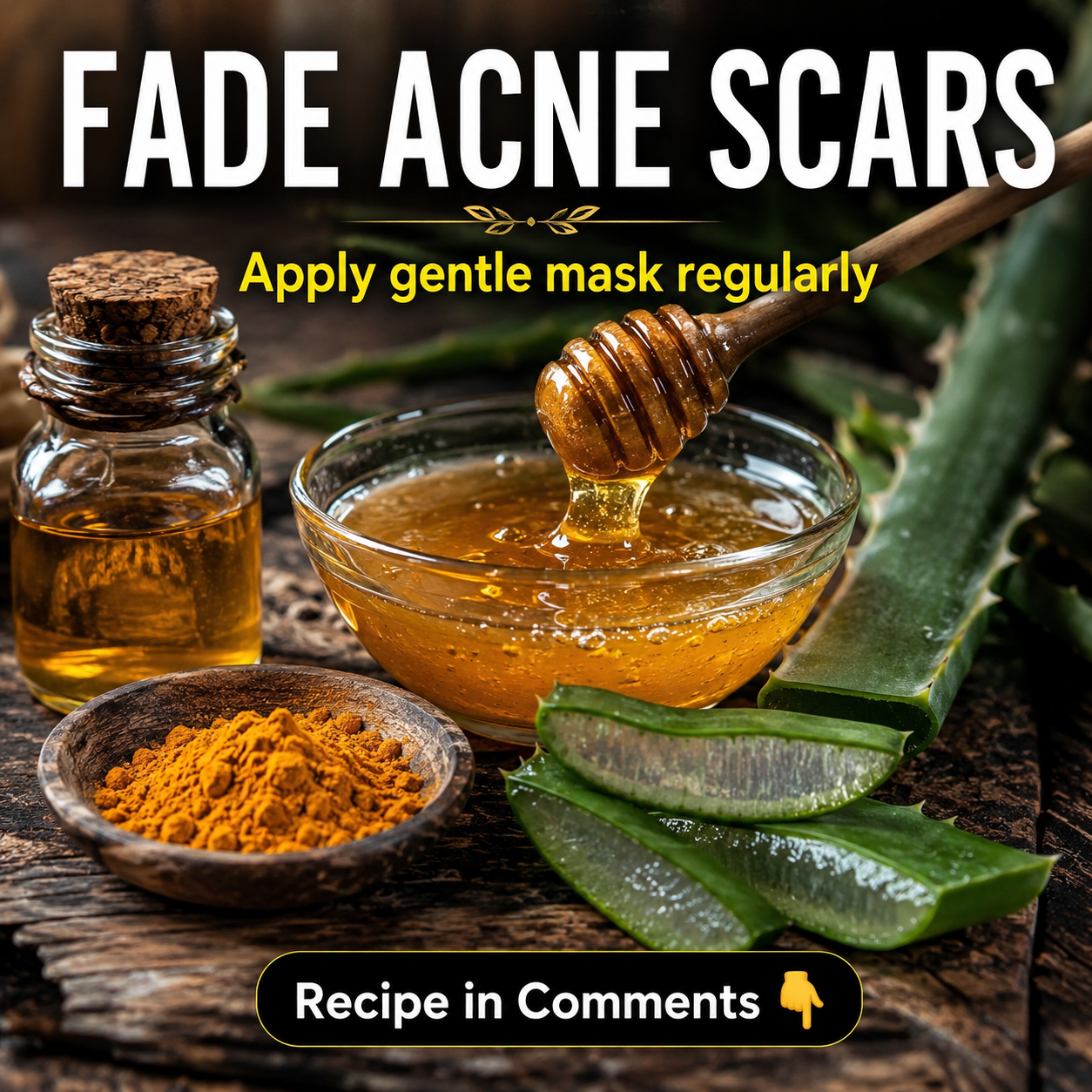
Acne scars can affect the overall texture, brightness and confidence of the skin even after active acne disappears. These marks develop because inflammation from acne can disturb normal collagen production and trigger excess pigmentation. While deep scars such as ice-pick scars and severe indentations often require dermatological procedures, mild post-acne marks and uneven texture may improve with consistent skin-supporting care. Natural ingredients like aloe vera, honey, turmeric, oatmeal, green tea and plant oils contain compounds that may support hydration, reduce irritation and protect the skin barrier. The key is choosing a gentle remedy according to your skin type because oily, dry, sensitive and combination skin respond differently.
The following remedies focus on supporting healthy skin recovery rather than promising instant scar removal. Consistent use, sun protection and a balanced diet are important for achieving a smoother-looking complexion.
Remedy 1: For Normal Skin
Aloe Vera, Honey and Turmeric Repair Mask
Ingredients
- Pure aloe vera gel – 1 tablespoon
- Raw honey – 1 teaspoon
- Turmeric powder – ¼ teaspoon
- Colloidal oatmeal powder – 1 teaspoon
- Green tea water – 1 tablespoon
- Rose water – 1 teaspoon
Scientific Working of Each Ingredient
Aloe Vera – Skin Repair and Hydration Support
Aloe vera contains polysaccharides such as acemannan that help maintain moisture and support the skin barrier. Hydrated skin repairs itself more efficiently and may appear smoother.
Honey – Natural Humectant and Protective Ingredient
Honey attracts water molecules and contains antioxidant compounds. It helps maintain a moist environment that supports normal skin recovery.
Turmeric – Antioxidant Protection
Curcumin, the active compound in turmeric, has antioxidant and anti-inflammatory properties. It may help calm redness associated with post-acne marks.
Colloidal Oatmeal – Barrier Strengthening
Oat compounds such as beta-glucans support skin hydration and help reduce dryness or irritation.
Green Tea – Environmental Protection
Green tea contains catechins that help neutralize free radicals that contribute to skin ageing and uneven appearance.
Rose Water – Gentle Refreshing Support
Rose water provides light hydration and may help reduce the feeling of irritation.
Procedure
- Mix aloe vera gel, honey, turmeric and oatmeal powder in a clean bowl.
- Add green tea water slowly until a smooth paste forms.
- Apply a thin layer over clean skin.
- Leave for 10–15 minutes.
- Rinse with normal water and apply a moisturizer.
How Often to Apply
Apply 3 times weekly for at least 3–4 weeks.
Initial Results
Within 2–3 days, skin may feel softer and more hydrated. Improvement in uneven tone and acne marks generally requires several weeks.
Remedy 2: For Combination Skin
Green Tea and Niacin-Like Botanical Balancing Mask
Ingredients
- Green tea water – 2 tablespoons
- Aloe vera gel – 1 tablespoon
- Honey – ½ teaspoon
- Oat flour – 1 teaspoon
- Cucumber juice – 1 teaspoon
- Jojoba oil – 2 drops
Scientific Working of Each Ingredient
Green Tea – Controls Oxidative Stress
Green tea polyphenols help protect skin from oxidative damage and may support calmer-looking skin.
Aloe Vera – Lightweight Hydration
Aloe provides moisture without creating a heavy oily layer, making it suitable for combination skin.
Honey – Moisture Balance
Honey prevents excessive dryness caused by cleansing and helps maintain softness.
Oat Flour – Gentle Smoothing
Fine oatmeal particles remove surface impurities without harsh exfoliation.
Cucumber – Cooling Hydration
Cucumber contains water and antioxidant compounds that provide a refreshing effect.
Jojoba Oil – Lightweight Barrier Support
Jojoba resembles some components of natural skin oils and helps reduce moisture loss without feeling excessively greasy.
Procedure
- Combine all ingredients into a thin mask.
- Apply mainly on areas with acne marks.
- Leave for 10 minutes.
- Wash gently without rubbing.
- Apply a light moisturizer.
How Often to Apply
Use every alternate day for 3 weeks.
Initial Results
The skin may look fresher within a few applications, while dark acne marks usually need longer continuous care.
Remedy 3: For Oily Skin
Clay, Aloe and Green Tea Acne Mark Support Mask
Ingredients
- Multani mitti (fuller’s earth) – 1 teaspoon
- Aloe vera gel – 1 tablespoon
- Green tea water – 2 tablespoons
- Honey – ½ teaspoon
- Turmeric powder – a small pinch
- Neem leaf powder – ¼ teaspoon
Scientific Working of Each Ingredient
Multani Mitti – Oil Absorption
Clay minerals absorb excess surface oil and help improve the appearance of oily skin texture.
Aloe Vera – Prevents Over-Drying
Aloe adds hydration while avoiding the heavy feeling of thick creams.
Green Tea – Anti-Oxidative Support
Catechins in green tea help protect skin cells from environmental stress.
Honey – Moisture Protection
Honey reduces the dry feeling that can occur after oil-absorbing masks.
Turmeric – Calming Action
Curcumin provides antioxidant benefits and may help reduce visible redness.
Neem – Traditional Skin Ingredient
Neem contains plant compounds with antimicrobial properties, though it should be used carefully because some people may experience irritation.
Procedure
- Mix clay with green tea water.
- Add aloe vera, honey, turmeric and neem powder.
- Apply a thin layer.
- Remove before the mask completely cracks.
- Wash and moisturize.
How Often to Apply
Use 2 times weekly.
Initial Results
Oiliness may appear reduced after the first few uses. Acne marks require consistent application over several weeks.
Remedy 4: For Dry Skin
Nourishing Avocado and Honey Scar-Support Mask
Ingredients
- Mashed avocado – 1 tablespoon
- Honey – 1 teaspoon
- Aloe vera gel – 1 teaspoon
- Oatmeal powder – 1 teaspoon
- Sweet almond oil – 3 drops
- Milk – 1 teaspoon
Scientific Working of Each Ingredient
Avocado – Fatty Acid Support
Avocado contains natural lipids and antioxidants that help soften dry skin.
Honey – Hydration Support
Honey attracts moisture and improves skin softness.
Aloe Vera – Water Balance
Aloe provides hydration without blocking pores.
Oatmeal – Barrier Comfort
Oatmeal supports dry, irritated skin by improving moisture retention.
Almond Oil – Emollient Protection
Plant oils soften rough areas and reduce water loss.
Milk – Gentle Moisturizing Components
Milk contains proteins and fats that provide temporary softness.
Procedure
- Mash avocado until smooth.
- Add remaining ingredients.
- Apply for 15 minutes.
- Wash gently.
- Apply moisturizer immediately after.
How Often to Apply
Apply 3 times weekly.
Initial Results
Dryness and rough texture may improve within a few days, making scars appear less noticeable.
Remedy 5: For Sensitive Skin
Soothing Oat and Aloe Barrier Mask
Ingredients
- Colloidal oatmeal – 1 tablespoon
- Aloe vera gel – 1 tablespoon
- Cooled boiled water – 2 tablespoons
- Honey – ½ teaspoon
- Chamomile tea water – 1 tablespoon
Scientific Working of Each Ingredient
Colloidal Oatmeal – Sensitive Skin Protection
Oat compounds support the skin barrier and are commonly used in products designed for irritated skin.
Aloe Vera – Cooling Hydration
Aloe provides moisture and a soothing sensation.
Honey – Protective Moisture Layer
Honey helps prevent excessive dryness.
Chamomile – Plant Antioxidants
Chamomile contains flavonoids that provide antioxidant activity.
Water – Gentle Dilution
Dilution reduces the chance of irritation from concentrated ingredients.
Procedure
- Mix oatmeal with water to create a soft paste.
- Add aloe and honey.
- Apply a thin layer.
- Leave for 5–10 minutes.
- Rinse gently.
How Often to Apply
Use 2 times weekly.
Initial Results
Sensitive skin may feel calmer and softer within several applications. Stop if burning or irritation occurs.
Final Tips for Fading Acne Scars Naturally
- Always apply sunscreen because UV exposure can make acne marks darker.
- Never pick pimples because repeated inflammation increases scar risk.
- Avoid harsh scrubs that damage the skin barrier.
- Keep pillowcases, towels and makeup tools clean.
- Perform a patch test before applying any new ingredient.
- Maintain regular sleep because skin repair processes are linked with healthy sleep cycles.
- Avoid lemon juice and baking soda on acne scars because they may irritate skin.
Visible hydration improvements may appear within 2–3 days, but pigmentation and scar appearance generally improve slowly over several weeks or months.
If scars are deep, raised, painful or unchanged after several months, consult a dermatologist for professional options.
Diet Plan for Healthy Scar Recovery
A skin-supporting diet should provide protein, antioxidants and essential fats.
Morning
- Warm water
- Eggs, oats or yogurt
- One vitamin-C-rich fruit (orange, guava, kiwi)
Lunch
- Vegetables or salad
- Lentils, chicken, fish or beans
- Whole grains such as brown rice or whole wheat roti
Evening
- Nuts (almonds/walnuts)
- Green tea
- Fresh fruit
Dinner
- Protein source
- Cooked vegetables
- Healthy fats from seeds or fish
Drink enough water daily and reduce excessive sugar, fried foods and highly processed snacks.
Continue home remedies for 4–6 weeks. If acne scars remain unchanged, worsen, or new painful acne develops, consult a dermatologist.
References for the above remedy
- American Academy of Dermatology – Acne Scars: Diagnosis and Treatment
https://www.aad.org/public/diseases/acne/derm-treat/scars - Colloidal oatmeal and skin barrier benefits – Journal of Drugs in Dermatology
https://pubmed.ncbi.nlm.nih.gov/27272074/ - Aloe vera dermatological applications – Indian Journal of Dermatology
https://www.ncbi.nlm.nih.gov/pmc/articles/PMC2763764/ - Green tea polyphenols and skin protection – Journal of Nutrition
https://pubmed.ncbi.nlm.nih.gov/10917926/ - Honey in dermatology and wound healing – National Library of Medicine
https://pmc.ncbi.nlm.nih.gov/articles/PMC5661189/ - Curcumin and skin health research – Nutrients Journal
https://www.mdpi.com/2072-6643/11/11/2763 - Sun protection and prevention of pigmentation – American Academy of Dermatology
https://www.aad.org/public/everyday-care/sun-protection/sunscreen - Healthy diet and skin health – World Health Organization
https://www.who.int/news-room/fact-sheets/detail/healthy-diet