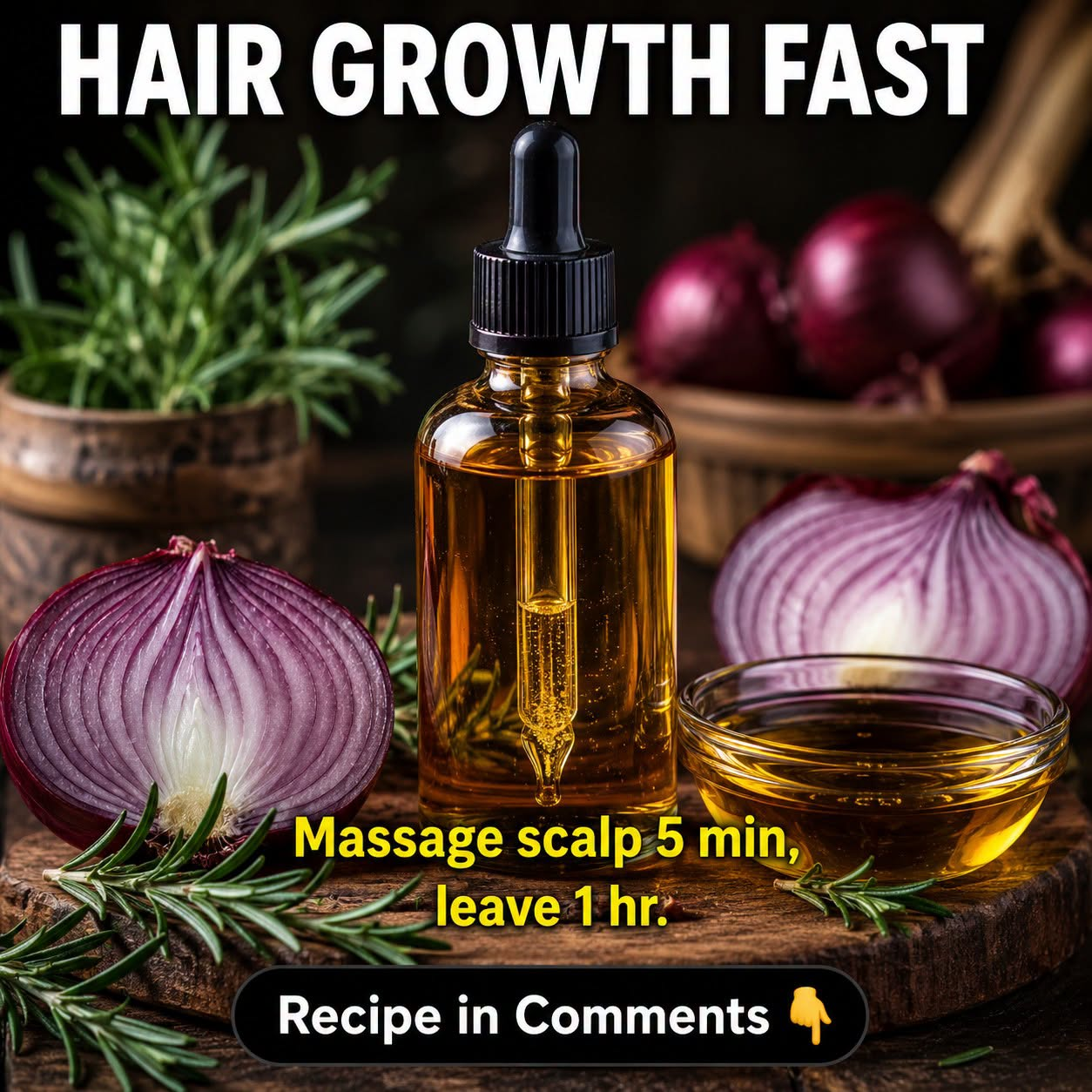
Hair thinning, excessive shedding, weak strands, and slow-looking growth can affect confidence and make hair appear less healthy. Natural ingredients such as rosemary oil, onion juice, pumpkin seed oil, coconut oil, and gentle scalp massage may support certain hair-loss conditions or help reduce breakage. However, no home remedy can create new long hair within three days. In clinical research, rosemary oil was studied for six months, onion juice for patchy alopecia areata was used for several weeks, and pumpkin seed oil studies also measured results over months. (PubMed)
The realistic early benefits of a home routine are softer hair, reduced dryness, less breakage, improved scalp comfort, and better shine. Visible new growth normally requires consistent care and enough time for the hair cycle to respond. The exact homemade mixtures below have not been tested as complete clinical formulas; the evidence relates mainly to selected individual ingredients. Always perform a 24-hour patch test before applying onion juice, essential oils, or plant extracts to the entire scalp.

Remedy 1: Rosemary and Pumpkin Seed Pre-Wash Oil for a Normal Scalp
Ingredients and Scientific Benefits
- 2 tablespoons coconut oil: Helps penetrate the hair fibre and may reduce protein loss and damage during washing. (PubMed)
- 1 tablespoon pumpkin seed oil: Pumpkin seed oil has been studied for pattern hair loss, although oral and topical research used controlled preparations rather than homemade mixtures. (PubMed)
- 1 tablespoon grapeseed oil: Provides a lightweight carrier that helps dilute essential oils.
- 5 drops rosemary essential oil: Rosemary oil showed an improvement in hair count after six months in a clinical comparison involving people with androgenetic alopecia. (PubMed)
- 2 drops lavender essential oil: Lavender was included with rosemary, thyme, and cedarwood in a controlled aromatherapy study for alopecia areata. (PubMed)
How the Ingredients May Work
Rosemary is the main growth-focused ingredient in this blend. Its proposed effects include supporting scalp microcirculation and influencing processes involved in the hair-growth cycle, although the exact mechanism in humans is still being studied. Pumpkin seed oil contains plant compounds that may influence androgen-related pathways. Coconut oil does not create new follicles, but it can protect existing hair from protein loss, helping the hair retain length with less breakage. Grapeseed oil safely dilutes the essential oils, while lavender provides additional botanical support based on limited clinical evidence.
Procedure
Combine all oils in a clean glass container. Apply a small amount along the scalp in sections. Massage gently with the fingertips for five minutes without scratching. Leave the oil on for 30–60 minutes, then wash with a gentle shampoo. Do not leave essential-oil mixtures on overnight during the first week.
How Often to Apply
Apply every other day for the first five days. If there is no itching, burning, redness, or increased shedding, continue two or three times weekly for at least three months.
Initial Results
Within one to three days, the hair may feel softer and appear shinier. New growth should not be expected this quickly. Reduced breakage may become noticeable after several weeks, while any genuine improvement in density may require three to six months.
Remedy 2: Diluted Onion Scalp Treatment for Combination Scalp
Ingredients and Scientific Benefits
- 1 tablespoon freshly extracted red-onion juice: A small clinical study found greater regrowth with crude onion juice than tap water in people with patchy alopecia areata. (PubMed)
- 1 tablespoon cooled boiled water: Dilutes the strong onion juice and may reduce irritation.
- 1 teaspoon pure aloe vera gel: Provides lightweight moisture and may reduce the dry feeling caused by onion juice.
- 1 teaspoon finely powdered plain oats: Supports scalp comfort and helps calm temporary dryness.
- ½ teaspoon honey: Acts as a humectant and helps prevent the mixture from becoming excessively drying.
How the Ingredients May Work
Onion contains sulfur-containing compounds and antioxidant substances that have been proposed to support the environment around hair follicles. The available human evidence is specifically related to patchy alopecia areata and should not be interpreted as proof that onion juice reverses every type of thinning. Aloe, oats, and honey are included mainly to improve scalp comfort; they are not proven replacements for medical hair-loss treatment.
Procedure
Blend half a small onion and strain it through clean cloth. Mix one tablespoon of the juice with the remaining ingredients. Apply only to the scalp, not through the full hair length. Leave for 10–15 minutes during the first application. If well tolerated, later applications may remain for up to 30 minutes. Rinse thoroughly and shampoo gently.
How Often to Apply
Use on alternate days for five days to assess tolerance. Afterward, apply two or three times weekly for up to eight weeks.
Initial Results
The scalp may feel cleaner within one to three applications, but visible regrowth is not expected during this period. Stop immediately if the scalp develops burning, swelling, intense itching, blisters, or worsening redness.
Remedy 3: Rosemary, Green Tea, and Caffeine Scalp Gel for an Oily Scalp
Ingredients and Scientific Benefits
- 2 tablespoons pure aloe vera gel: Creates a lightweight, non-greasy base.
- 1 tablespoon strongly brewed, cooled green tea: Supplies antioxidant polyphenols that may support scalp condition.
- 1 teaspoon cooled black coffee prepared without sugar: Provides caffeine; controlled topical caffeine preparations have shown promising results for some types of hair loss. (PubMed)
- 1 teaspoon finely powdered oats: Gives the mixture a gentle gel texture without using harsh scrubbing particles.
- 1 drop rosemary essential oil: Adds a small quantity of the best-studied natural topical ingredient for pattern hair loss. (PubMed)
How the Ingredients May Work
Caffeine has been studied in standardized scalp formulations and may influence follicle activity, but ordinary coffee is not scientifically equivalent to a tested caffeine product because its concentration varies. Rosemary oil may support growth over long-term use. Aloe and oats provide lightweight moisture, while green tea contributes antioxidants. This remedy is designed to avoid heavy oils that may feel uncomfortable on an oily scalp.
Procedure
Mix the ingredients thoroughly until smooth. Apply a thin layer to the scalp, especially around areas of mild thinning. Do not rub coffee grounds into the skin. Massage gently for three minutes, leave for 15 minutes, and rinse with lukewarm water.
How Often to Apply
Use every other day for five days. If the scalp remains comfortable, continue two times weekly for eight to twelve weeks.
Initial Results
The scalp may feel fresher and less oily after one to three uses. Hair growth cannot be judged after only a few days. Take monthly photographs under the same lighting rather than checking the mirror every day.
Remedy 4: Coconut and Rosemary Repair Oil for a Dry Scalp and Breakage
Ingredients and Scientific Benefits
- 2 tablespoons virgin coconut oil: Helps reduce protein loss from damaged and undamaged hair. (PubMed)
- 1 tablespoon pumpkin seed oil: Provides fatty acids and has emerging evidence in pattern-hair-loss research. (PubMed)
- 1 teaspoon argan oil: Coats dry hair and may help protect it from some forms of physical damage. (PubMed)
- 1 teaspoon jojoba oil: Acts as a lightweight carrier and helps the mixture spread evenly.
- 4 drops rosemary essential oil: Provides the main growth-supporting botanical ingredient.
How the Ingredients May Work
Dry, fragile hair often appears to “stop growing” because it breaks before length becomes noticeable. Coconut oil can enter the hair shaft and reduce protein loss, helping hair remain stronger during washing and grooming. Argan and jojoba oils improve softness and reduce friction. Rosemary oil targets the scalp rather than the hair fibre and requires consistent long-term use before possible regrowth can be assessed.
Procedure
Warm the oil container between the hands; do not heat it directly. Apply a small amount to the scalp and spread the remainder over dry ends. Massage gently for five minutes. Leave for one hour, then shampoo. Avoid excessive oil because repeated heavy washing may worsen dryness.
How Often to Apply
Apply twice during the first five days. Continue two times weekly for at least eight weeks.
Initial Results
Hair may feel smoother and less rough after the first treatment. Reduced tangling and improved shine may appear within three days. Less breakage requires continued gentle care, while new growth takes considerably longer.
Remedy 5: Oat and Aloe Scalp-Comfort Mask for Sensitive Scalp
Ingredients and Scientific Benefits
- 1 tablespoon finely powdered colloidal oatmeal: Supports the skin barrier and helps soothe dryness.
- 2 tablespoons cooled boiled water: Creates a simple fragrance-free base.
- 1 teaspoon pure inner-leaf aloe vera gel: Adds light hydration.
- ½ teaspoon honey: Helps retain moisture.
- ¼ teaspoon sunflower seed oil: Softens dry skin and provides barrier-supporting fatty acids.
How the Ingredients May Work
A sensitive scalp may become more irritated when exposed to onion juice, concentrated rosemary oil, fragrance, or multiple essential oils. Essential oils can trigger irritant or allergic contact dermatitis in some individuals. (DermNet®) This gentle mixture is intended to improve scalp comfort and reduce dryness rather than directly stimulate new hair growth. A calm scalp may support healthier hair care, but it does not treat genetic, hormonal, autoimmune, or scarring hair loss.
Procedure
Mix the ingredients into a smooth, soft paste. Apply a thin layer to the scalp without rubbing. Leave for five to ten minutes, then rinse with cool to lukewarm water. Do not add rosemary, peppermint, lemon, cinnamon, or onion to this sensitive-scalp recipe.
How Often to Apply
Use every other day for three applications. Continue once or twice weekly only if the scalp responds comfortably.
Initial Results
Dryness, tightness, or mild discomfort may improve within one to three days. This mask should not be used to delay diagnosis of persistent itching, severe scaling, painful sores, or unexplained hair loss.
Final Tips for Faster-Looking, Healthier Hair
Massage the scalp gently rather than aggressively. One small study linked standardized scalp massage with increased hair thickness after prolonged use, but the change occurred over months rather than days. (PubMed)
Avoid tight ponytails, frequent heat styling, rough towel drying, repeated bleaching, and forceful brushing. Protecting existing strands from damage allows more length to remain visible. Use clean combs, wash pillowcases regularly, and avoid sharing hair tools.
Natural does not always mean safe. Never apply undiluted rosemary, lavender, peppermint, thyme, or cedarwood essential oil directly to the scalp. Do not use onion juice on broken, infected, inflamed, or recently scratched skin. Perform a patch test for 24 hours before full application.
Visible softness and reduced dryness may begin within two or three days. Less breakage may require several weeks. Real improvement in hair density usually needs at least three to six months and depends on the cause of hair loss.
Diet Plan for Stronger Hair Growth
Hair follicles require adequate energy, protein, vitamins, and minerals. Deficiencies involving iron, vitamin D, zinc, B vitamins, or inadequate protein intake may contribute to hair problems in some people. However, unnecessary high-dose supplements can also be harmful and should not be taken without a medical reason. (PubMed)
Breakfast
Eat two eggs, plain yogurt, lentils, or another protein source. Add oats or whole-grain bread with one serving of fruit such as guava, orange, berries, or apple.
Mid-Morning
Choose a small handful of almonds, walnuts, pumpkin seeds, or roasted chickpeas. Drink water according to thirst.
Lunch
Eat chicken, fish, lentils, beans, eggs, or lean meat with vegetables. Include whole-wheat roti, brown rice, or another minimally processed carbohydrate. Add vitamin-C-rich vegetables or fruit to support normal iron absorption.
Evening Snack
Choose yogurt, fruit, roasted chickpeas, or unsweetened green tea. Avoid replacing balanced meals with hair supplements.
Dinner
Include a protein source such as fish, chicken, lentils, beans, tofu, or eggs. Add leafy vegetables and a moderate portion of whole grains.
Continue this balanced diet as a long-term routine rather than a three-day treatment. Do not start iron, zinc, vitamin D, biotin, or other high-dose supplements unless a healthcare professional identifies a deficiency or recommends them.
How Long Should You Continue the Remedy?
Use only one remedy suited to your scalp type. Assess tolerance during the first three to five days, then continue consistently for at least eight to twelve weeks. Rosemary-based routines may require approximately six months before meaningful changes can be evaluated. (PubMed)
See a doctor or dermatologist if hair loss is sudden, occurs in round bald patches, causes widening of the part, continues to worsen, or is accompanied by pain, pus, severe itching, heavy scaling, redness, or scarring. Hair loss may be related to hereditary factors, autoimmune disease, thyroid problems, nutritional deficiency, major illness, stress, medication, or hormonal changes. Identifying the cause early improves the chance of choosing appropriate treatment. (American Academy of Dermatology)
References for the above remedy
- Panahi Y, et al. Rosemary Oil vs Minoxidil 2% for the Treatment of Androgenetic Alopecia.
https://pubmed.ncbi.nlm.nih.gov/25842469/ - Sharquie KE, Al-Obaidi HK. Onion Juice, a New Topical Treatment for Alopecia Areata.
https://pubmed.ncbi.nlm.nih.gov/12126069/ - Hay IC, et al. Randomized Trial of Aromatherapy: Successful Treatment for Alopecia Areata.
https://pubmed.ncbi.nlm.nih.gov/9828867/ - Cho YH, et al. Effect of Pumpkin Seed Oil on Hair Growth in Men with Androgenetic Alopecia.
https://pubmed.ncbi.nlm.nih.gov/24864154/ - Ibrahim IM, et al. Pumpkin Seed Oil Versus Minoxidil 5% Foam for Female Pattern Hair Loss.
https://pubmed.ncbi.nlm.nih.gov/33544448/ - Rele AS, Mohile RB. Effect of Mineral Oil, Sunflower Oil, and Coconut Oil on Prevention of Hair Damage.
https://pubmed.ncbi.nlm.nih.gov/12715094/ - Koyama T, et al. Standardized Scalp Massage Results in Increased Hair Thickness.
https://pubmed.ncbi.nlm.nih.gov/26904154/ - Almohanna HM, et al. The Role of Vitamins and Minerals in Hair Loss: A Review.
https://pubmed.ncbi.nlm.nih.gov/30547302/ - American Academy of Dermatology. Hair Loss: Diagnosis and Treatment.
https://www.aad.org/public/diseases/hair-loss/treatment/diagnosis-treat - DermNet. Allergic Contact Dermatitis to Essential Oils.
https://dermnetnz.org/topics/allergic-contact-dermatitis-to-essential-oils