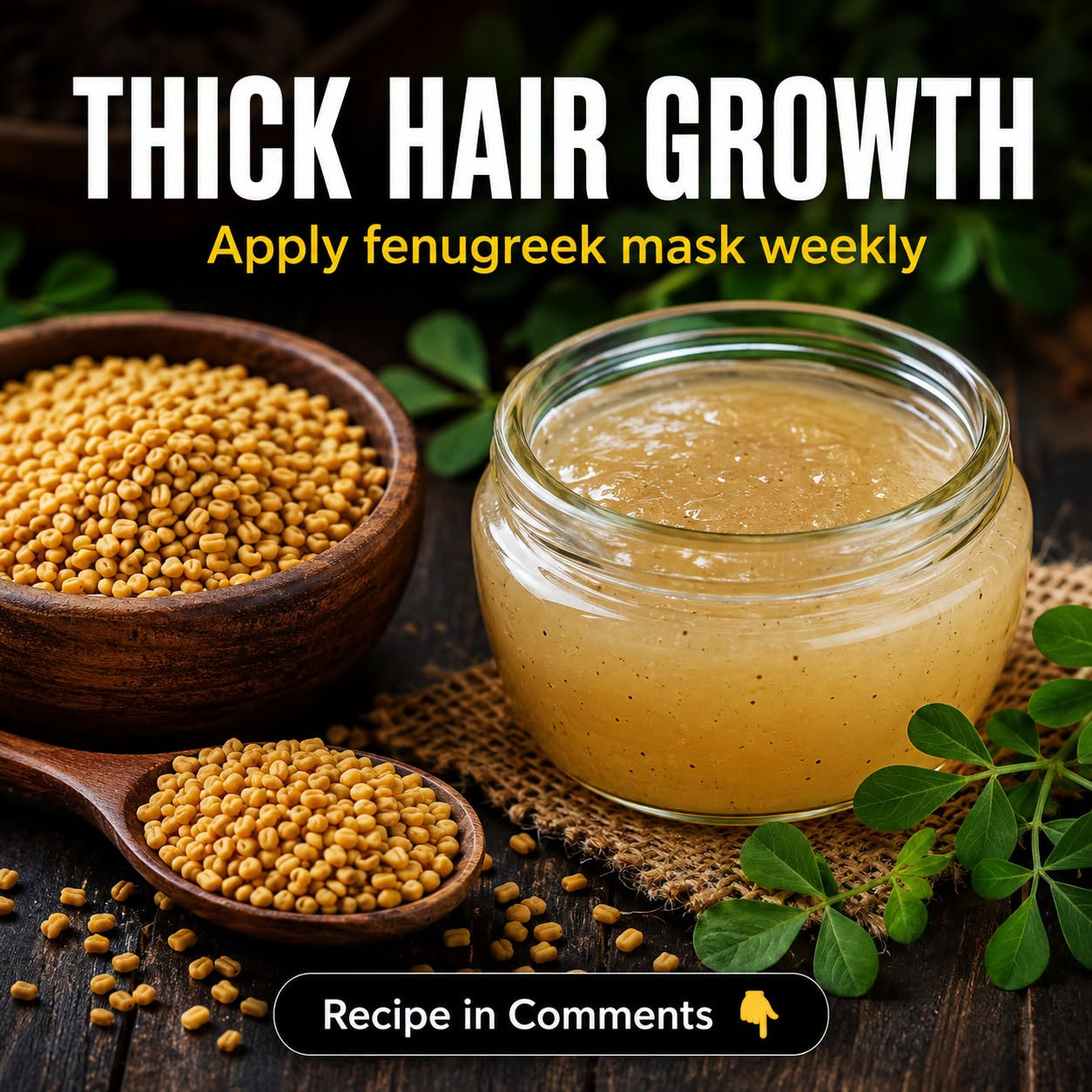
Thick hair growth is not only about making hair longer; it is about reducing breakage, supporting a healthy scalp, improving moisture balance, and giving hair strands a fuller appearance. The image shows a fenugreek mask, which is a popular natural remedy because fenugreek seeds become mucilaginous when soaked, creating a slippery paste that can coat the hair, reduce dryness, and make strands feel stronger. However, it is important to be realistic: fenugreek alone is not clinically proven to regrow hair like medical treatments, but it can support scalp comfort and hair conditioning. For stronger evidence, natural ingredients such as rosemary oil, pumpkin seed oil, caffeine, aloe vera, and good nutrition have better scientific support for hair density, scalp health, or hair-loss support. Rosemary oil was compared with 2% minoxidil in a 6-month randomized trial for androgenetic alopecia, and pumpkin seed oil showed positive results in a 24-week placebo-controlled trial in men with pattern hair loss. (PubMed)
Remedy 1: For Normal Scalp and Hair
Ingredients
Fenugreek seeds: 2 tablespoons, soaked to create a protein-rich conditioning paste.
Aloe vera gel: 1 tablespoon, helps soothe the scalp and add lightweight hydration.
Rosemary essential oil: 1 drop only, supports scalp stimulation when safely diluted.
Coconut milk: 1 tablespoon, softens hair lengths and reduces dryness.
Honey: ½ teaspoon, helps hair hold moisture.
Plain yogurt: 1 tablespoon, gives a creamy texture and mild scalp-conditioning effect.
Scientific Working of Each Ingredient
Fenugreek seeds contain mucilage, protein, and plant compounds that help coat the hair shaft, making hair feel thicker and smoother. Aloe vera is used for soothing skin and scalp irritation, while rosemary oil has human clinical evidence for improving hair count over months in androgenetic alopecia. Coconut milk and yogurt add softness, helping reduce breakage. Honey acts as a humectant, pulling moisture toward the hair and scalp.
Procedure
Soak fenugreek seeds overnight in water. In the morning, blend them into a smooth paste. Add aloe vera gel, coconut milk, honey, yogurt, and 1 drop of rosemary oil. Apply to the scalp first, then spread through hair lengths. Cover with a shower cap for 25–30 minutes. Rinse well with lukewarm water and use a mild shampoo if needed.
How Often to Apply
Apply once weekly. For the first cycle, observe the scalp for 3–5 days to check for itching, flakes, or irritation. Continue for 8–12 weeks for visible hair-quality improvement.
Initial Results
Within 1–3 days, hair may feel softer, smoother, and less rough. True thickness improvement needs consistent use and reduced breakage over several weeks.
Remedy 2: For Combination Scalp
Ingredients
Fenugreek powder: 1½ tablespoons, supports hair coating and softness.
Green tea: 3 tablespoons cooled, helps refresh oily roots.
Aloe vera gel: 1 tablespoon, hydrates dry areas without heaviness.
Rosemary oil: 1 drop, diluted in the full mask for scalp support.
Jojoba oil: ½ teaspoon, used for dry ends only.
Oat water: 2 tablespoons, helps calm mild scalp tightness.
Scientific Working of Each Ingredient
Combination scalp often has oily roots but dry ends. Fenugreek gives slip and reduces roughness, while green tea provides antioxidant support and may help reduce greasy feel. Aloe vera balances hydration without making roots heavy. Rosemary oil is included in a very low dilution because clinical research supports its use over months. Jojoba oil resembles natural scalp sebum, so it is useful on dry ends but should not be overused on oily roots.
Procedure
Mix fenugreek powder with cooled green tea and let it sit for 20 minutes until thick. Add aloe vera gel, oat water, and rosemary oil. Apply to the scalp in a thin layer. Apply jojoba oil separately only on dry ends. Leave the mask for 20–25 minutes, then rinse thoroughly.
How Often to Apply
Use once weekly for 8 weeks. During the first 3–5 days after use, check whether the scalp feels balanced or too oily.
Initial Results
In 2–3 days, roots may feel fresher and ends may feel less dry. Hair can look fuller because the strands feel more coated and less frizzy.
Remedy 3: For Oily Scalp
Ingredients
Fenugreek seeds: 1 tablespoon, soaked and blended for scalp conditioning.
Rosemary tea: 3 tablespoons cooled, gives a refreshing herbal base.
Aloe vera gel: 1 tablespoon, hydrates without oiliness.
Green tea: 2 tablespoons cooled, helps reduce greasy scalp feel.
Caffeine coffee water: 1 tablespoon cooled, supports scalp stimulation.
Tea tree oil: 1 drop only, helps oily, flaky scalp when diluted safely.
Scientific Working of Each Ingredient
Oily scalp needs a light mask that does not leave heavy residue. Fenugreek gives conditioning without using thick oils. Green tea and rosemary tea refresh the scalp. Caffeine-based topical formulas have clinical research suggesting benefit for androgenetic alopecia, though better-designed studies are still needed. Tea tree oil has evidence for dandruff improvement when used in controlled dilution, so only 1 drop is used here to avoid irritation. (PMC)
Procedure
Blend soaked fenugreek with rosemary tea, green tea, aloe vera, and cooled coffee water. Add only 1 drop of tea tree oil and mix well. Apply to the scalp only, not the full hair length if your hair gets greasy fast. Leave for 15–20 minutes. Rinse carefully and shampoo lightly.
How Often to Apply
Use once weekly. If oiliness is high, use this mask for 4 weeks, then continue every 10 days.
Initial Results
Within 1–3 days, scalp may feel cleaner and less greasy. Hair may appear more lifted at the roots because heavy oil buildup is reduced.
Remedy 4: For Dry Hair and Dry Scalp
Ingredients
Fenugreek seeds: 2 tablespoons, soaked overnight for a soft paste.
Aloe vera gel: 1 tablespoon, adds water-based moisture.
Virgin coconut oil: ½ teaspoon, helps reduce moisture loss in dry hair.
Honey: 1 teaspoon, supports hydration.
Avocado mash: 1 tablespoon, gives natural fatty softness.
Rosehip oil: 3 drops, supports smoothness and shine.
Scientific Working of Each Ingredient
Dry hair often looks thin because it breaks easily. Fenugreek mucilage coats the hair and improves slip during detangling. Aloe vera and honey provide moisture support. Coconut oil has research showing it can reduce protein loss from hair when used properly, making it useful for dry and damaged hair. Avocado and rosehip oil give fatty acids that soften rough strands and improve shine.
Procedure
Blend soaked fenugreek into a smooth paste. Add aloe vera, honey, avocado, coconut oil, and rosehip oil. Apply generously to the scalp and hair lengths. Comb gently with fingers only. Leave for 30 minutes, then rinse well. Shampoo lightly and avoid hot water.
How Often to Apply
Apply once weekly for 8–12 weeks. For very dry hair, use only aloe vera or a tiny amount of coconut oil on ends during the next 3–5 days.
Initial Results
Within 1–2 days, hair may feel softer, less tangled, and less rough. Breakage reduction can make hair look thicker over time.
Remedy 5: For Sensitive Scalp
Ingredients
Fenugreek powder: 1 teaspoon only, mild amount for patch testing.
Aloe vera gel: 1 tablespoon, soothes scalp discomfort.
Colloidal oatmeal water: 2 tablespoons, supports sensitive skin barrier.
Chamomile tea: 2 tablespoons cooled, gives a calming effect.
Honey: ¼ teaspoon, adds light moisture.
Pumpkin seed oil: ½ teaspoon, used only if tolerated.
Scientific Working of Each Ingredient
Sensitive scalp needs a low-risk mask. Fenugreek can cause allergic reactions in some people, especially those sensitive to legumes, peanuts, or chickpeas, so the quantity is kept small. Aloe vera and oatmeal help calm the scalp surface. Chamomile gives a gentle soothing effect. Pumpkin seed oil has clinical evidence as an oral supplement for hair growth in male pattern hair loss, but here it is used topically only as a light nourishing oil, not as a guaranteed regrowth cure. Fenugreek safety warnings include possible allergic reactions, so patch testing is essential. (NCCIH)
Procedure
Mix all ingredients into a thin paste. Apply a small amount behind the ear or on one small scalp area for 24 hours before full use. If there is no redness, itching, burning, or swelling, apply a thin layer to the scalp for 10–15 minutes. Rinse completely with cool water.
How Often to Apply
Use once every 10–14 days at first. If tolerated well for 3–5 days after application, use once weekly.
Initial Results
In 2–3 days, scalp may feel calmer and less dry. Stop immediately if itching, redness, bumps, or burning occurs.
Final Tips
Do not expect fenugreek to grow thick hair overnight. Hair grows slowly, and visible density changes usually need 8–12 weeks or more. The first improvement from a fenugreek mask is usually softer hair, less dryness, reduced tangling, and a fuller look because strands are better conditioned. Always rinse fenugreek very well because leftover paste can cause buildup and itching. Never apply essential oils directly to the scalp without dilution. Avoid tight hairstyles, harsh brushing, excessive heat styling, and frequent chemical treatments because breakage can make hair look thinner. Wash pillow covers, combs, scarves, and hair towels regularly. If hair fall is sudden, patchy, severe, or linked with scalp pain, dandruff, infection, thyroid symptoms, anemia, recent illness, childbirth, or medication changes, see a dermatologist. Hair loss has many causes, and dermatologists recommend identifying the cause before choosing treatment. (American Academy of Dermatology)
Diet Plan
Continue the hair remedy and diet plan for at least 8–12 weeks because hair growth cycles are slow. Start your morning with water and a protein-rich breakfast such as eggs, Greek yogurt, lentils, oats with nuts, or a smoothie with seeds. At lunch, include protein such as chicken, fish, beans, lentils, tofu, paneer, or eggs with vegetables and whole grains. Add iron-rich foods such as spinach, lentils, beans, red meat if suitable, pumpkin seeds, and dates. Include vitamin C foods like guava, oranges, lemon, bell peppers, or strawberries to support iron absorption. Eat zinc and omega-3 sources such as walnuts, chia seeds, flaxseeds, pumpkin seeds, sardines, or salmon. Avoid crash dieting because low protein and nutrient deficiency can worsen shedding. Research reviews link hair loss with deficiencies in nutrients such as iron, vitamin D, zinc, and protein, but over-supplementation of some nutrients can also worsen hair loss, so supplements should not be taken blindly. (PMC)
References for the above remedy
- Panahi Y, et al. “Rosemary oil vs minoxidil 2% for the treatment of androgenetic alopecia.” PubMed. URL: https://pubmed.ncbi.nlm.nih.gov/25842469/
- Cho YH, et al. “Effect of Pumpkin Seed Oil on Hair Growth in Men with Androgenetic Alopecia.” PMC. URL: https://pmc.ncbi.nlm.nih.gov/articles/PMC4017725/
- Dhurat R, et al. “An Open-Label Randomized Multicenter Study Assessing a Caffeine-Based Topical Liquid in Male Androgenetic Alopecia.” PMC. URL: https://pmc.ncbi.nlm.nih.gov/articles/PMC5804833/
- Satchell AC, et al. “Treatment of dandruff with 5% tea tree oil shampoo.” PubMed. URL: https://pubmed.ncbi.nlm.nih.gov/12451368/
- Rele AS, Mohile RB. “Effect of mineral oil, sunflower oil, and coconut oil on prevention of hair damage.” PubMed. URL: https://pubmed.ncbi.nlm.nih.gov/12715094/
- NCCIH. “Fenugreek: Usefulness and Safety.” URL: https://www.nccih.nih.gov/health/fenugreek
- Guo EL, Katta R. “Diet and hair loss: effects of nutrient deficiency and supplement use.” PMC. URL: https://pmc.ncbi.nlm.nih.gov/articles/PMC5315033/
- Almohanna HM, et al. “The Role of Vitamins and Minerals in Hair Loss: A Review.” Springer. URL: https://link.springer.com/article/10.1007/s13555-018-0278-6
- American Academy of Dermatology. “Hair Loss Resource Center.” URL: https://www.aad.org/public/diseases/hair-loss