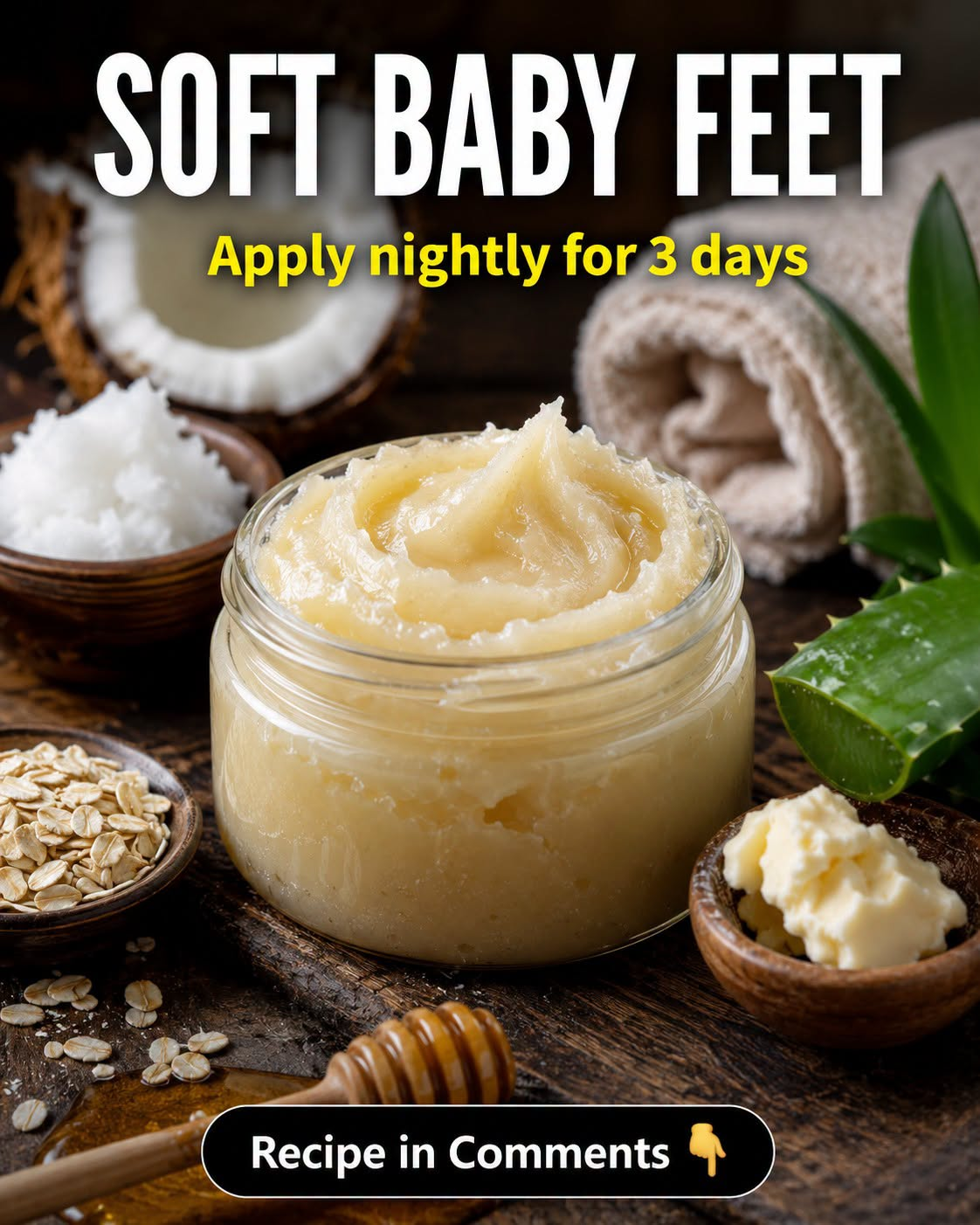
“Soft baby feet” usually means smooth soles, comfortable heels, and skin with less roughness, flaking, and visible buildup. Dry feet can develop because of frequent walking, open-backed footwear, hot weather, long showers, harsh soap, friction, low humidity, aging, or naturally thick skin on the soles. Although a moisturizing routine may make feet feel noticeably softer within one to three days, thick calluses and deep heel cracks cannot be safely removed overnight. Consistent hydration and gentle care are more effective than aggressive scraping.
Natural ingredients such as virgin coconut oil, sunflower seed oil, colloidal oatmeal, glycerin, aloe vera, and rice starch have research related to skin hydration or barrier support. Coconut oil improved mild-to-moderate dry skin in a randomized trial, while sunflower seed oil helped preserve the protective skin barrier and improve hydration. (PubMed)
The exact homemade mixtures below have not been tested as complete clinical formulas. Their ingredients are used as gentle supportive care rather than a medical treatment. Prepare each mixture fresh, patch-test it first, and never apply a homemade remedy over bleeding fissures, infected skin, ulcers, or unexplained wounds.
Remedy 1: Coconut, Rice, and Oat Softening Wrap for Normal Feet
This balanced treatment is suitable for feet that are generally healthy but become mildly rough after walking, wearing sandals, or spending time in dry weather.
Ingredients and Scientific Working
Finely powdered colloidal oatmeal — 1 tablespoon: Colloidal oatmeal contains soothing oat compounds that support the skin barrier and improve dryness, scaling, roughness, and moisture retention. (PubMed)
Rice starch water — 2 tablespoons: Research found that exposure to rice-starch water improved the recovery capacity of experimentally damaged skin. (PubMed)
Virgin coconut oil — 1 teaspoon: Coconut oil works as an emollient, filling spaces between dry surface cells and helping reduce moisture loss. A randomized clinical study found it effective for mild-to-moderate xerosis. (PubMed)
Pure aloe vera gel — 1 teaspoon: Aloe-containing cosmetic formulas have demonstrated moisturizing effects and increased skin hydration. (PubMed)
Vegetable glycerin — 1/4 teaspoon: Glycerin attracts water to the outer skin layer. Human studies have found improved moisture levels after using glycerol-based preparations. (PubMed)
Boiled and cooled water — 1 tablespoon: Water softens the oatmeal and creates a smooth, non-abrasive texture.
Procedure
Mix the oatmeal with rice starch water and cooled water. Allow it to soften for five minutes. Add aloe gel and glycerin. Apply the creamy mixture over the heels and soles, avoiding the spaces between the toes.
Leave it on for ten minutes and rinse gently. Pat the feet dry, then massage one teaspoon of coconut oil over slightly damp heels. Wear clean cotton socks overnight.
How Often to Apply
Apply nightly for three to five days. After the feet become softer, continue two or three nights weekly.
Initial Results
Within one to three days, mild roughness may feel smoother and the heels may appear less dry. Thick calluses will require a longer routine.
Remedy 2: Dual-Zone Aloe and Sunflower Treatment for Combination Feet
Some people have dry heels but normal or slightly sweaty skin near the toes. Applying a heavy oil over the entire foot may trap unnecessary moisture, so this treatment uses different care for different areas.
Ingredients and Scientific Working
Pure aloe vera gel — 1 tablespoon: Aloe provides light hydration without creating a thick greasy layer. (PubMed)
Rice starch water — 2 tablespoons: Rice starch provides a soft base and supports skin-barrier recovery. (PubMed)
Colloidal oatmeal — 1 teaspoon: Oat compounds help reduce roughness and support moisture retention. (PubMed)
Vegetable glycerin — 1/4 teaspoon: Diluted glycerin helps the outer skin hold water. (PubMed)
Cold-pressed sunflower seed oil — 1 teaspoon: Sunflower oil contains linoleic-acid-rich lipids and demonstrated favorable effects on hydration and barrier integrity in a human study. (PubMed)
Cooled green tea — 1 tablespoon: Green tea creates a lightweight water base and supplies antioxidant plant compounds.
Procedure
Combine aloe, rice water, oatmeal, glycerin, and green tea. Apply this light mixture over the tops and soles of the feet, avoiding the toe spaces.
After eight minutes, rinse and dry carefully. Massage sunflower oil only into rough heels and dry outer edges. Do not spread the oil between the toes.
How Often to Apply
Use on alternate nights for five days. Continue three times weekly when needed.
Initial Results
The heels may feel more flexible within two or three uses, while the rest of the foot remains light rather than oily.
Remedy 3: Green Tea and Oat Fresh-Foot Gel for Sweaty Feet
Sweaty feet can still develop rough soles, but thick overnight oil may not be comfortable. This water-based remedy focuses on gentle hydration while keeping the spaces between the toes dry.
Ingredients and Scientific Working
Strong cooled green tea — 2 tablespoons: Green tea provides antioxidant polyphenols in a light, non-oily liquid base.
Pure aloe vera gel — 1 tablespoon: Aloe supplies water-based hydration and helps improve the feel of dry skin. (PubMed)
Rice starch water — 1 tablespoon: Rice starch supports a smooth surface and may assist barrier recovery. (PubMed)
Finely powdered colloidal oatmeal — 1 teaspoon: Colloidal oatmeal has moisturizing, soothing, and barrier-supporting properties. (PubMed)
Vegetable glycerin — 1/8 teaspoon: A small amount supports hydration without making the gel excessively sticky.
Boiled and cooled water — 1 tablespoon: Water creates a light, easy-to-rinse texture.
Procedure
Mix all ingredients and leave the oatmeal to soften for five minutes. Apply a thin layer only to rough soles and heels. Leave it on for five to seven minutes and rinse.
Dry the entire foot thoroughly, especially between the toes. Wear clean, breathable socks and allow footwear to dry before wearing it again.
How Often to Apply
Use once daily for three days, then every other day as needed.
Initial Results
The soles may feel less tight within one to three days without a heavy oily finish.
This remedy does not treat athlete’s foot. Itchy, peeling, white, cracked, or burning skin between the toes may indicate a fungal infection and usually requires an appropriate antifungal treatment. (nhs.uk)
Remedy 4: Coconut, Honey, and Sunflower Heel Balm for Very Dry or Callused Feet
This richer remedy is designed for intact but very dry heels. Do not apply it to bleeding cracks, ulcers, infected areas, or open wounds.
Ingredients and Scientific Working
Virgin coconut oil — 1 tablespoon: Coconut oil improves softness and reduces water loss from dry skin. (PubMed)
Cold-pressed sunflower seed oil — 1 teaspoon: Sunflower oil supplies barrier-supporting lipids and has been shown to improve skin hydration. (PubMed)
Pure honey — 1 teaspoon: Honey has humectant and emollient properties in cosmetic preparations. Medical research also supports wound-related uses, although household honey should not be used as a substitute for sterile medical-grade honey on open wounds. (PubMed)
Colloidal oatmeal — 2 teaspoons: Oatmeal supports hydration and helps improve visible scaling and roughness. (PubMed)
Pure aloe vera gel — 1 teaspoon: Aloe provides a water-rich component and improves spreadability.
Vegetable glycerin — 1/4 teaspoon: Glycerin helps draw moisture into the thick outer heel skin. (PubMed)
Procedure
Mix the oatmeal, aloe, honey, and glycerin. Apply the paste to intact rough heels for ten minutes and rinse.
Blend coconut oil with sunflower oil. Massage a thin layer over the heels while they are slightly damp. Put on clean cotton socks and leave the oils on overnight.
For thick calluses, healthy adults without diabetes, poor circulation, numbness, or open cracks may first soak the feet in warm water for five to ten minutes and gently use a wet pumice stone. Never remove enough skin to cause pain or bleeding. (American Academy of Dermatology)
How Often to Apply
Use nightly for five days, then three nights weekly for three to four weeks.
Initial Results
Dry heels may feel softer after the first or second application. Thick calluses may begin to feel less hard within several days but usually need weeks of consistent care.
Remedy 5: Minimal Oat and Rice Comfort Compress for Sensitive Feet
Sensitive skin may react to fragrances, essential oils, strong scrubs, or complicated mixtures. This remedy uses a shorter ingredient list and no harsh exfoliation.
Ingredients and Scientific Working
Colloidal oatmeal — 1 tablespoon: Oatmeal has demonstrated soothing, antioxidant, moisturizing, and barrier-supporting activity. (PubMed)
Rice starch water — 2 tablespoons: Rice starch creates a gentle, non-scrubbing base and has evidence related to barrier recovery. (PubMed)
Vegetable glycerin — 1/4 teaspoon: Glycerin supports water retention and helps reduce tightness. (PubMed)
Cold-pressed sunflower seed oil — 3 drops: A small quantity provides emollient lipids without creating a thick coating. (PubMed)
Boiled and cooled water — 2 tablespoons: Additional water produces a gentle compress.
Procedure
Mix the oatmeal, rice starch water, glycerin, and cooled water. Allow the oats to soften for ten minutes.
Dip a clean, soft cloth into the liquid and place it over dry heels for five minutes. Do not rub. Pat dry and press three drops of sunflower oil over the affected area.
How Often to Apply
Apply once daily for three days. Continue every other night only if no itching, burning, swelling, or increased redness develops.
Initial Results
Sensitive feet may feel calmer and less tight within one to three applications. Stop immediately if irritation increases.
Final Tips for Keeping Feet Soft
Wash feet with warm rather than hot water and dry them completely. Long, hot soaking can worsen dryness, so keep routine foot baths short. Apply moisturizer while the skin is still slightly damp because this helps retain water. (Mayo Clinic)
Do not put oils, creams, or homemade masks between the toes. Excess moisture in these spaces may encourage skin breakdown or infection. (CDC)
Avoid cutting calluses with blades, scissors, nail tools, or razors. Do not aggressively scrub with salt, sugar, rough stones, or metal files. Wear comfortable closed-back shoes when possible because open-backed footwear may allow the heel skin to spread and crack. (American Academy of Dermatology)
Keep socks clean, alternate footwear, and avoid walking barefoot on rough surfaces. Visible softness may begin within two to three days, but severe roughness and heel fissures require longer care.
Diet Plan for Healthy Skin and Feet
Food cannot remove a callus or soften heels overnight, but balanced nutrition supports normal skin renewal and repair.
Breakfast: Choose eggs with whole-grain bread, oatmeal with milk and nuts, or plain yogurt with fruit.
Mid-morning: Eat guava, orange, papaya, berries, kiwi, or another vitamin-C-rich fruit.
Lunch: Include lentils, beans, chickpeas, eggs, fish, chicken, or lean meat with vegetables and whole-wheat roti or rice.
Evening snack: Choose fruit with almonds, walnuts, pumpkin seeds, or sunflower seeds.
Dinner: Eat vegetables with lentils, beans, fish, eggs, or chicken. Include healthy fats in moderate amounts.
Hydration: Drink water according to thirst, physical activity, and weather. Adequate hydration supports general health, but drinking extra water alone will not remove thick heel skin.
Continue the balanced diet for at least eight to twelve weeks. Use the home remedy suited to your feet for three to five days initially. When it is well tolerated, continue two or three times weekly for three to four weeks.
See a doctor, dermatologist, or podiatrist if heel cracks are deep, painful, bleeding, swollen, warm, producing discharge, or failing to improve. People with diabetes, reduced circulation, foot numbness, or a history of foot ulcers should not soak, scrape, or self-remove calluses without professional guidance. The CDC advises people with diabetes to inspect their feet daily and seek care for skin changes or sores. (CDC)
References for the above remedy
- Agero ALC, Verallo-Rowell VM. A Randomized Double-Blind Controlled Trial Comparing Extra Virgin Coconut Oil With Mineral Oil as a Moisturizer for Xerosis.
https://pubmed.ncbi.nlm.nih.gov/15724344/ - Danby SG, et al. Effect of Olive and Sunflower Seed Oil on the Adult Skin Barrier.
https://pubmed.ncbi.nlm.nih.gov/22995032/ - Ilnytska O, et al. Colloidal Oatmeal Improves Skin Barrier Through Multitherapy Activity.
https://pubmed.ncbi.nlm.nih.gov/27272074/ - Reynertson KA, et al. Anti-Inflammatory Activities of Colloidal Oatmeal.
https://pubmed.ncbi.nlm.nih.gov/25607907/ - De Paepe K, et al. Effect of Rice Starch as a Bath Additive on the Barrier Function of Damaged Skin.
https://pubmed.ncbi.nlm.nih.gov/12353708/ - Dal’Belo SE, et al. Moisturizing Effect of Cosmetic Formulations Containing Aloe Vera Extract.
https://pubmed.ncbi.nlm.nih.gov/17026654/ - Chrit L, et al. An In Vivo Randomized Study of Human Skin Moisturization by a New Confocal Raman Fiber-Optic Microprobe.
https://pubmed.ncbi.nlm.nih.gov/16679823/ - Burlando B, Cornara L. Honey in Dermatology and Skin Care: A Review.
https://pubmed.ncbi.nlm.nih.gov/24305429/ - American Academy of Dermatology. How to Care for Dry, Cracked Heels.
https://www.aad.org/public/everyday-care/skin-care-basics/dry/dry-heels - Centers for Disease Control and Prevention. Your Feet and Diabetes.
https://www.cdc.gov/diabetes/diabetes-complications/diabetes-and-your-feet.html