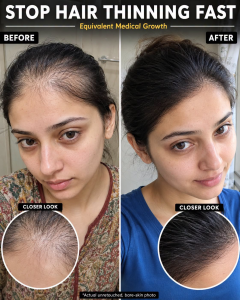
Hair thinning can affect confidence quickly because the scalp becomes more visible around the hairline, crown, or parting. The image topic says “equivalent medical growth,” but it is important to be honest: no home remedy can guarantee the same result as medical treatment, and hair growth normally takes months, not days. Hair loss may happen because of genetics, stress, low iron or vitamin D, thyroid problems, postpartum shedding, tight hairstyles, dandruff, scalp inflammation, or hormonal changes. Dermatology guidance states that effective hair-loss treatment begins with finding the cause, because different types of hair loss need different care. (American Academy of Dermatology)
These remedies are designed by scalp type. They use natural ingredients with the best available supportive evidence, such as diluted rosemary oil, onion juice for patchy alopecia areata support, pumpkin seed oil, green tea, aloe vera, and coconut oil for hair-shaft protection. Use them consistently for at least 8–12 weeks, because visible hair density changes usually require a full hair-growth cycle.
Remedy 1: For Normal Scalp
Ingredients
1 teaspoon pumpkin seed oil: Contains phytosterols and fatty acids; a clinical trial found improved hair count with pumpkin seed oil supplementation in men with androgenetic alopecia over 24 weeks. (PMC)
1 teaspoon aloe vera gel: Soothes the scalp and supports a healthier scalp environment.
1 drop rosemary essential oil: A randomized trial compared rosemary oil with 2% minoxidil in androgenetic alopecia over 6 months and found increased hair count in both groups. (PubMed)
1 tablespoon cooled green tea: Provides antioxidant catechins and may support oil balance around follicles.
Half teaspoon raw honey: Helps keep the scalp surface hydrated.
1 teaspoon coconut oil: Helps reduce hair protein loss and breakage, making hair look thicker over time. (PubMed)
Scientific Working of This Remedy
Rosemary oil may support scalp microcirculation and follicle activity, while pumpkin seed oil provides fatty acids and phytosterols that may support healthier hair growth pathways. Aloe and honey reduce dryness, green tea adds antioxidant support, and coconut oil protects the hair shaft from protein loss. This combination targets both scalp health and breakage, so the hair can look fuller and stronger.
Procedure
Mix pumpkin seed oil, aloe vera gel, green tea, honey, and coconut oil. Add only 1 drop of rosemary essential oil and mix well. Apply to the scalp, especially thinning areas. Massage gently for 4–5 minutes using fingertips, not nails. Leave for 45 minutes, then wash with a mild shampoo.
How Often to Apply
Apply 3 times weekly for 8–12 weeks.
Initial Results
Within 1–3 days, the scalp may feel less dry and the hair may look softer. Real reduction in thinning needs at least 8–12 weeks.
Remedy 2: For Combination Scalp
Ingredients
1 tablespoon onion juice: A small clinical study found topical onion juice helped regrowth in patchy alopecia areata compared with tap water, but it may irritate some scalps. (PubMed)
1 tablespoon aloe vera gel: Dilutes onion juice and reduces harshness.
1 teaspoon pumpkin seed oil: Nourishes dry areas without making the scalp too greasy.
1 tablespoon cooled green tea: Helps refresh oily areas.
1 drop rosemary essential oil: Supports follicle stimulation when safely diluted.
Half teaspoon honey: Adds moisture and helps reduce dryness after washing.
Scientific Working of This Remedy
Combination scalp usually has oily roots but dry, weak strands. Onion juice contains sulfur compounds that may support keratin structure and has limited clinical evidence in patchy alopecia areata. Aloe reduces irritation, green tea supports oil balance, pumpkin seed oil nourishes the scalp, honey hydrates, and diluted rosemary oil supports circulation around the follicle area.
Procedure
Strain fresh onion juice through a clean cloth. Mix it with aloe vera, green tea, pumpkin seed oil, honey, and rosemary oil. Apply only to thinning patches or the hairline, not the entire scalp if you are sensitive to smell or irritation. Leave for 20 minutes. Wash thoroughly.
How Often to Apply
Use twice weekly for 8 weeks. Do not use daily because onion juice can irritate the scalp.
Initial Results
In 1–3 days, the scalp may feel cleaner and less oily. Hair regrowth, if it happens, is usually slow and may take 8–12 weeks or longer.
Remedy 3: For Oily Scalp
Ingredients
2 tablespoons cooled green tea: Catechins provide antioxidant support and may help reduce scalp greasiness.
1 teaspoon aloe vera gel: Hydrates without oiliness.
1 teaspoon fresh onion juice: Used in a small amount to avoid irritation.
1 drop rosemary essential oil: Diluted for follicle-supporting massage.
Half teaspoon jojoba oil: Lightweight oil that spreads easily and does not feel heavy.
Half teaspoon rice water: Adds a smooth feel to strands and reduces roughness.
Scientific Working of This Remedy
Oily scalp can make thinning look worse because hair clumps together and exposes the scalp. Green tea refreshes the scalp and may reduce sebum appearance. Aloe hydrates without heaviness, onion juice provides sulfur-based support, rosemary oil encourages scalp massage benefits, jojoba gives light conditioning, and rice water improves strand feel so hair looks less limp.
Procedure
Mix green tea, aloe vera, onion juice, jojoba oil, rice water, and rosemary oil. Apply with cotton or fingertips only on thinning areas. Massage for 3 minutes. Leave for 15–20 minutes and shampoo well.
How Often to Apply
Use every other day for the first week, then 2–3 times weekly for 8–12 weeks.
Initial Results
Oiliness may reduce within 1–2 days, and hair may appear less flat. Growth changes require patience.
Remedy 4: For Dry Scalp
Ingredients
1 teaspoon coconut oil: Protects hair from protein loss and reduces breakage.
1 teaspoon pumpkin seed oil: Adds nourishing fatty acids.
2 teaspoons aloe vera gel: Hydrates and soothes dry scalp.
Half teaspoon raw honey: Helps retain moisture.
1 drop rosemary essential oil: Diluted in oils for safe scalp massage.
1 teaspoon plain yogurt: Gives mild lactic-acid scalp softening when dryness causes flaking.
Scientific Working of This Remedy
Dry scalp can increase breakage and make the hairline look thinner. Coconut oil reduces protein loss from the hair shaft, pumpkin seed oil nourishes, aloe and honey hydrate, yogurt gently softens flaky buildup, and rosemary oil supports scalp massage. This remedy is best for hair that looks dull, rough, and weak.
Procedure
Mix coconut oil and pumpkin seed oil first. Add aloe, honey, yogurt, and rosemary oil. Apply to the scalp and lightly coat the roots. Massage for 5 minutes. Leave for 30–45 minutes, then wash gently.
How Often to Apply
Use 3 times weekly for 8–12 weeks.
Initial Results
Dryness and roughness may improve in 1–3 days. Hair may look shinier and less brittle.
Remedy 5: For Sensitive Scalp
Ingredients
1 tablespoon aloe vera gel: Calms and hydrates sensitive scalp.
1 tablespoon colloidal oatmeal water: Helps reduce itching and barrier discomfort.
1 tablespoon cooled green tea: Provides gentle antioxidant support.
Half teaspoon pumpkin seed oil: Adds mild nourishment.
Half teaspoon coconut oil: Protects weak strands from breakage.
1 teaspoon boiled cooled water: Dilutes the mixture to reduce irritation risk.
Scientific Working of This Remedy
Sensitive scalp should not be treated with strong onion juice, undiluted essential oils, lemon, ginger, or harsh scrubs. Aloe hydrates, oatmeal calms irritation, green tea supports the scalp with antioxidants, pumpkin seed oil nourishes, coconut oil protects hair fibers, and water keeps the mixture mild. This remedy focuses on reducing breakage and scalp stress rather than forcing stimulation.
Procedure
Mix all ingredients into a light scalp mask. Apply to a small patch first for 15 minutes. If there is no burning or itching, apply to thinning areas. Leave for 20 minutes and rinse with a mild shampoo.
How Often to Apply
Use twice weekly for 4 weeks. If tolerated well, continue 2–3 times weekly for 8–12 weeks.
Initial Results
Itching, dryness, or tightness may improve within 1–3 days. Stop immediately if burning, swelling, rash, or heavy shedding occurs.
Final Tips
Do not expect overnight hair regrowth. A realistic first goal is reduced breakage, less scalp irritation, and healthier-looking roots within 1–2 weeks. Visible improvement in density usually takes 8–12 weeks, while stronger results may need 3–6 months.
Avoid tight ponytails, harsh brushing, frequent heat styling, bleaching, and scratching the scalp. Wash according to scalp type: oily scalp may need more frequent washing, while dry scalp may need gentler washing. Use a wide-tooth comb, avoid pulling wet hair, and keep pillowcases, combs, and hair towels clean.
See a dermatologist if hair thinning is sudden, patchy, painful, rapidly worsening, associated with scalp redness or scaling, or continuing for more than 6–8 weeks. Also seek medical advice if you have fatigue, irregular periods, recent childbirth, thyroid symptoms, anemia symptoms, or unexplained weight change. Mayo Clinic notes that hair loss can be temporary or permanent and may be caused by heredity, hormonal changes, medical conditions, or aging. (Mayo Clinic)
Diet Plan for Hair Thinning
Continue this diet plan for at least 12 weeks along with the suitable scalp remedy.
Morning: Eat eggs, oats, Greek yogurt, lentils, or chickpea toast. Add fruit rich in vitamin C, such as guava, orange, kiwi, or berries, because vitamin C supports iron absorption and collagen formation.
Lunch: Take chicken, fish, lentils, beans, tofu, or paneer with whole wheat roti, brown rice, or quinoa. Add spinach, carrots, tomatoes, cucumber, and capsicum.
Snack: Eat pumpkin seeds, walnuts, almonds, sunflower seeds, dates, or fruit. Pumpkin seeds provide zinc and healthy fats, while nuts support overall scalp and hair health.
Dinner: Choose fish, lentil soup, vegetable curry, beans, eggs, or tofu with a small serving of whole grains.
Weekly focus: Include iron-rich foods such as lentils, beans, spinach, lean meat, or eggs. Add vitamin D sources like sunlight exposure, eggs, and fortified foods if available. A review on vitamins and minerals in hair loss notes that deficiencies of nutrients such as iron, vitamin D, and zinc may be relevant in some hair-loss cases, but unnecessary supplementation is not recommended without deficiency testing. (PMC)
If the problem persists after 8–12 weeks, or if shedding is severe, see a doctor or dermatologist for blood tests and diagnosis.
References for the above remedy
- American Academy of Dermatology Association. “Hair loss: Diagnosis and treatment.” URL: https://www.aad.org/public/diseases/hair-loss/treatment/diagnosis-treat
- Mayo Clinic. “Hair loss: Symptoms and causes.” URL: https://www.mayoclinic.org/diseases-conditions/hair-loss/symptoms-causes/syc-20372926
- Panahi, Y., et al. “Rosemary oil vs minoxidil 2% for the treatment of androgenetic alopecia.” URL: https://pubmed.ncbi.nlm.nih.gov/25842469/
- Sharquie, K. E., & Al-Obaidi, H. K. “Onion juice, a new topical treatment for alopecia areata.” URL: https://pubmed.ncbi.nlm.nih.gov/12126069/
- Cho, Y. H., et al. “Effect of pumpkin seed oil on hair growth in men with androgenetic alopecia.” URL: https://pmc.ncbi.nlm.nih.gov/articles/PMC4017725/
- Dhurat, R., et al. “A caffeine-based topical liquid should be considered as not inferior to minoxidil 5% solution in men with androgenetic alopecia.” URL: https://pmc.ncbi.nlm.nih.gov/articles/PMC5804833/
- Rele, A. S., & Mohile, R. B. “Effect of mineral oil, sunflower oil, and coconut oil on prevention of hair damage.” URL: https://pubmed.ncbi.nlm.nih.gov/12715094/
- Almohanna, H. M., et al. “The role of vitamins and minerals in hair loss: A review.” URL: https://pmc.ncbi.nlm.nih.gov/articles/PMC6380979/
- Hekmatpou, D., et al. “The effect of Aloe vera clinical trials on prevention and healing of skin wound.” URL: https://pmc.ncbi.nlm.nih.gov/articles/PMC6330525/